

Chemical inventory management isn't just about keeping a list of what's on your shelves. It's the complete, living system you use to track a chemical's entire journey through your facility, from the moment you order it to the day it's properly disposed of.
Think of it this way: effective management means you can confidently answer, at any moment, exactly what you have, where it is, and how to handle it safely.
What Is Chemical Inventory Management Really About?
Imagine your chemical storeroom is a dynamic library. Each bottle, drum, or container is a book with its own unique story, risks, and rules for handling. Chemical inventory management is the librarian’s system—the entire process of cataloguing and tracking each "book" from its arrival until it leaves. This is far from a simple admin task; for any organisation that works with hazardous substances, it's a mission-critical function.
At its heart, a solid inventory system answers four non-negotiable questions for every single chemical you hold:
- What is it? This means having a precise, up-to-the-minute record of all chemicals, including their names, quantities, and CAS numbers.
- Where is it? Knowing the exact location of every container prevents lost materials and is absolutely vital for a quick response during an emergency.
- How do I handle it safely? This covers everything from correct storage and personal protective equipment (PPE) to the specific procedures outlined in its Safety Data Sheet (SDS).
- What are the risks? Pinpointing the hazards associated with each substance is the cornerstone of preventing incidents and keeping your team safe.
The High Stakes of Getting It Wrong
Let's be clear: failing to manage your chemical library properly has serious consequences. The stakes are incredibly high and go well beyond a bit of disorganisation. Poor chemical management can directly lead to workplace incidents, costly research delays, and crippling regulatory fines.
A disorganised chemical inventory isn't just inefficient; it's a ticking clock. Every unlabelled container, misplaced SDS, or unknown substance represents a potential safety failure or compliance breach waiting to happen.
The scale of this challenge is massive, particularly in busy industrial regions. Take Belgium, for instance, where the basic chemical manufacturing industry is projected to hit a market size of €29.3 billion in 2026. This incredible growth only magnifies the challenge for HSE managers trying to track substances across sprawling sites. A robust inventory system isn't a nice-to-have; it's essential for staying compliant with CLP and GHS regulations.
Compliance doesn't stop at your facility's gate, either. It extends to the safe transport of chemicals. For materials that need special handling, knowing how to obtain an ADR Licence is a critical piece of the puzzle. Without a clear, accurate view of your inventory, meeting these complex transport rules becomes a guessing game, adding yet another layer of risk.
Ultimately, a strong system is the foundation of a safe, efficient, and compliant workplace. For more practical advice, check out our guide on improving chemical safety in the workplace.
The Core Workflows of Modern Chemical Management
Effective chemical inventory management isn’t a single task, but a series of connected workflows that need to work in perfect harmony. Think of it like a relay race: if one runner fumbles the baton, the whole team fails. When one part of your chemical management process breaks down, the entire system is put at risk.
This is why seeing the bigger picture is so crucial. The infographic below shows how a central inventory system is the backbone supporting the core pillars of safety, compliance, and operational efficiency.
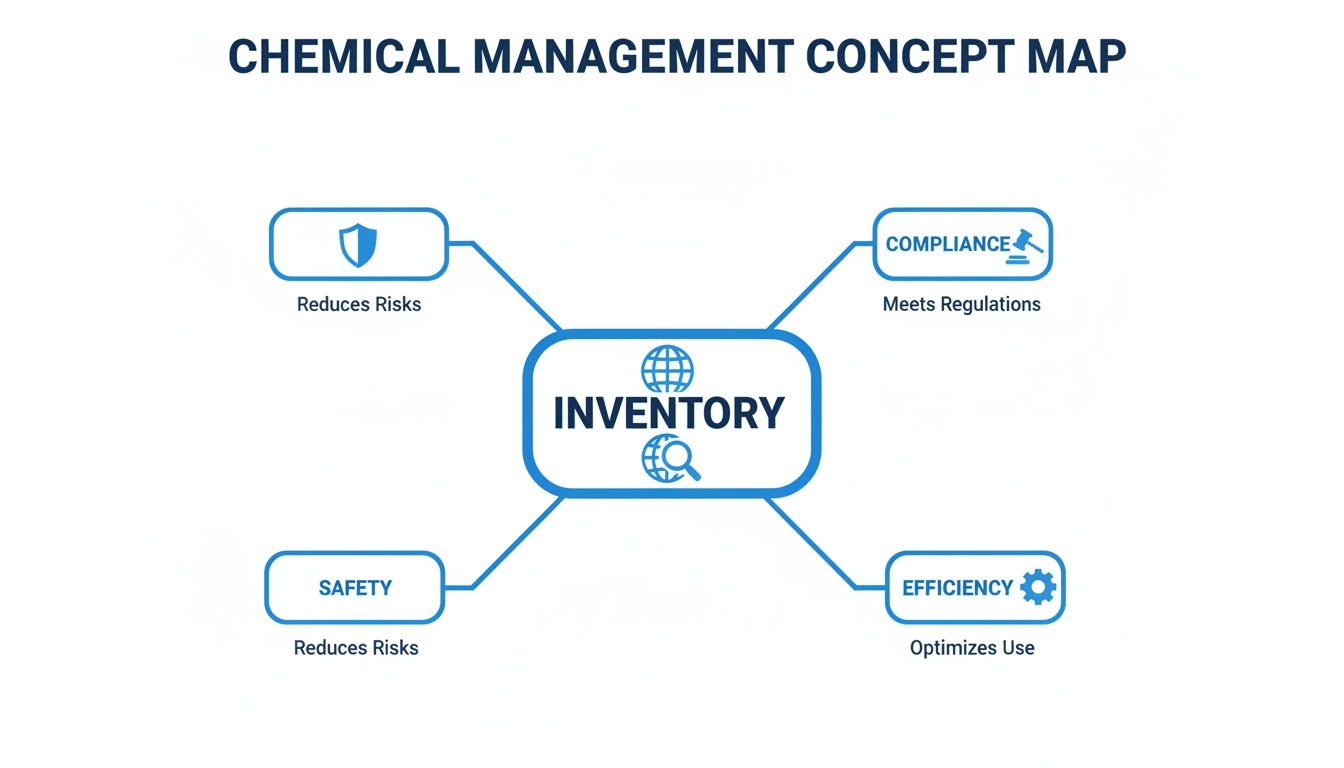
As you can see, every single workflow is designed to push accurate, up-to-the-minute data into that central system. In turn, that data empowers your team to make smarter, safer decisions. Let's break down the essential stages of this process.
Chemical Intake and Real-Time Tracking
The journey starts the very moment a new chemical arrives on-site. This intake process is your first, and arguably most important, chance to get things right. A sloppy receiving process, where containers just sit on a loading dock without being logged, immediately creates dangerous blind spots in your inventory.
Modern systems give each container a digital identity using barcodes or QR codes right at the door. This links the substance to its quantity, location, arrival date, and expiry date. This isn't just about having a list; it’s about creating a traceable lifecycle for every chemical you handle, from cradle to grave. Without this foundational step, everything that follows is built on guesswork.
Centralised SDS Management
Every chemical is accompanied by its Safety Data Sheet (SDS) — the official rulebook for handling it safely. But an SDS is completely useless if it's locked away in a filing cabinet or lost in someone's email inbox. A core workflow of any respectable system is creating a centralised, instantly accessible SDS library.
This means any employee, anywhere in the facility, can pull up the correct, most current SDS for any chemical they're about to use. This is an absolute non-negotiable for complying with regulations like REACH and CLP. An accessible library ensures that vital safety information, like PPE requirements or first-aid measures, is right there when it's needed most.
Compliant Container Labelling
Communicating hazards clearly is the bedrock of workplace safety. Proper labelling, compliant with Globally Harmonised System (GHS) or Classification, Labelling and Packaging (CLP) standards, is a critical workflow. This includes making sure every container—both the original and any secondary ones you pour into—displays the correct pictograms, signal words, and hazard statements.
An effective management system makes this second nature by:
- Automatically generating compliant labels directly from the chemical's SDS data.
- Flagging unlabelled or incorrectly labelled containers during routine audits.
- Making it simple for staff to print replacement labels for the smaller bottles and beakers used in daily operations.
Smart Storage and Segregation
Knowing what chemicals you have is only half the battle; you also have to store them correctly. When stored together, certain chemicals can react violently, creating massive fire, explosion, or toxic release hazards. A critical workflow here involves using chemical compatibility data to dictate your storage practices.
Storing incompatible chemicals together is like planting a landmine in your storeroom. A robust management system acts as a minesweeper, using segregation rules to identify and prevent these hidden dangers before they can cause harm.
This means your system should automatically flag potential storage conflicts. For instance, it should warn a stockroom manager if they try to place a strong acid next to a flammable liquid. To get a better handle on this vital topic, take a look at our detailed guide on using a chemical storage compatibility chart. This proactive approach transforms storage from a risky guessing game into a data-driven safety protocol.
Proactive Procurement Controls
The absolute safest way to handle a hazardous chemical is to prevent it from ever entering your facility if it isn't essential or poses too great a risk. An often-overlooked workflow is tying your inventory controls directly into your procurement process. Before a new chemical is even ordered, it should be thoroughly vetted.
This involves screening the substance against regulatory lists (like the REACH SVHC lists) and checking if a safer alternative already exists in your inventory. This proactive check stops your organisation from accidentally bringing in banned or highly restricted substances, saving you from major compliance headaches and making the entire workplace safer.
What to Look for in Good Management Software
Making the jump from spreadsheets and binders to a dedicated software platform is the single biggest improvement you can make to your chemical inventory management. The right tool doesn't just put your old lists on a screen; it completely changes how you approach safety and compliance, shifting your team from putting out fires to preventing them in the first place. But with so many options out there, what features actually matter?
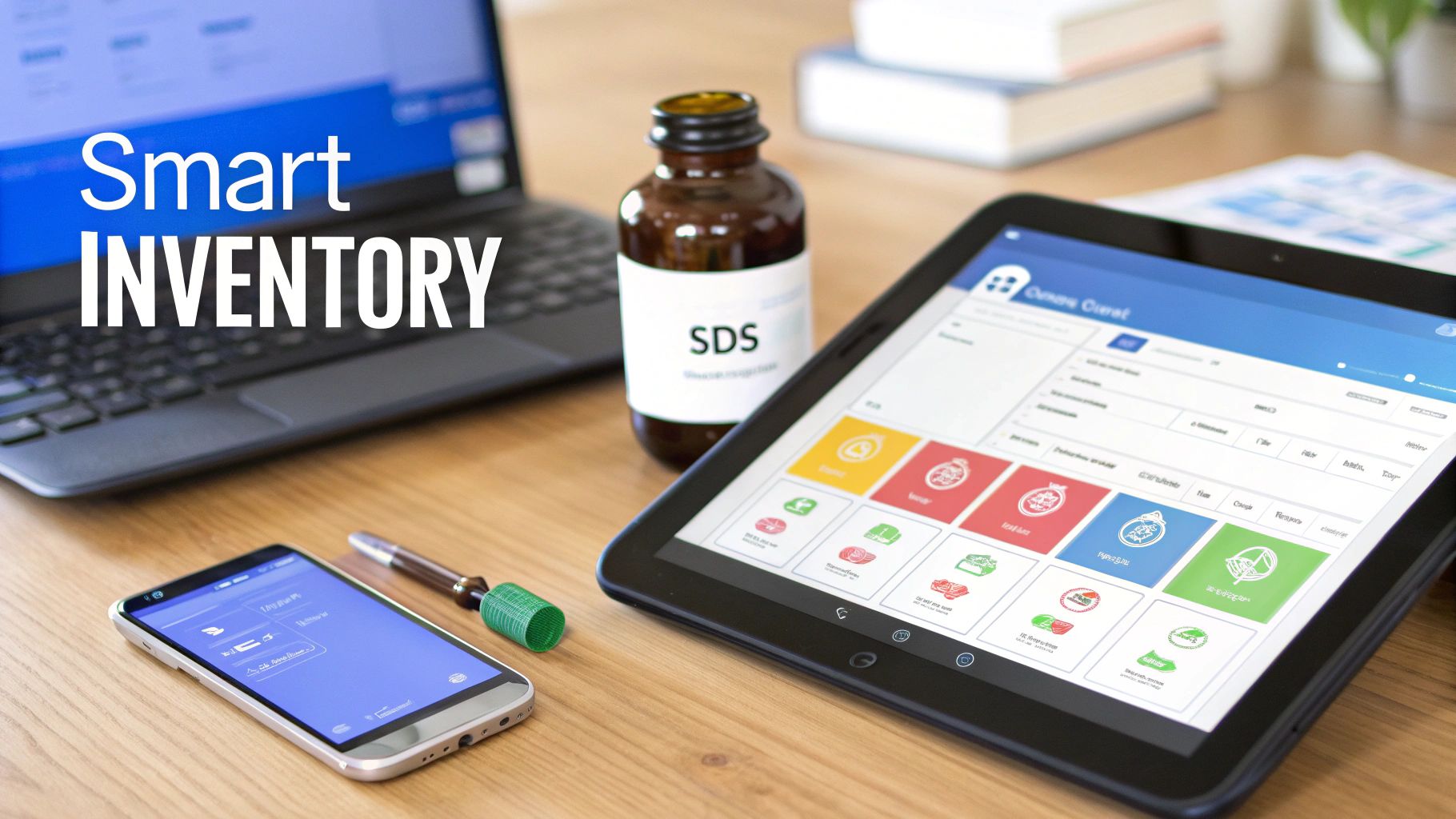
Think of effective management software as the central hub for your entire chemical safety programme. It connects every part of the process—from a new chemical arriving at the door to its final disposal—with live data, automated safety checks, and clear communication. This move from separate, clunky processes to one integrated system pays off immediately in both safety and efficiency.
Automated Data Extraction and a Centralised SDS Library
The bedrock of any great system is its ability to get rid of manual data entry. Typing out information from a Safety Data Sheet (SDS) is not just mind-numbingly slow, it’s a surefire way to introduce errors. You need a solution that automates this crucial first step.
Modern software should be a smart partner, not just a digital filing cabinet. Its main job is to do the grunt work—pulling out data, checking it, and organising it—so your team can focus on making smart safety decisions.
The best platforms use smart technology to automatically read uploaded SDSs, accurately grabbing details like CAS numbers, hazard classifications, and required PPE. All this information flows into a central, searchable library, giving every employee instant access to the right safety guidance. To learn more, check out our guide on choosing a Safety Data Sheet management system.
Real-Time Regulatory Screening and Alerts
Keeping up with ever-changing regulations can feel like a full-time job. A must-have feature is the software's ability to check your entire inventory against global and local regulatory lists, all in real time.
This means the system should be constantly cross-referencing your chemicals against key watch lists, such as:
- REACH and CLP regulations in Europe
- Substances of Very High Concern (SVHC) lists
- OSHA and TSCA rules in the United States
- Other country-specific lists of banned or restricted substances
When you add a new chemical or a regulation gets updated, the system must send an immediate alert. This proactive screening is vital for procurement, as it stops non-compliant chemicals from even making it through your door and helps you avoid serious fines.
Mobile Access with Barcode and QR Code Scanning
Safety doesn't just happen behind a desk. Your team needs critical information out on the shop floor, in the warehouse, or in the lab. Mobile access isn't a "nice-to-have"; it's essential. A solid system will have a mobile app that lets users scan a container’s barcode or QR code.
With just one scan, they should be able to see everything they need on their phone or tablet:
- The complete Safety Data Sheet
- Clear PPE instructions
- First-aid procedures
- Storage compatibility warnings
This feature closes the gap between the digital inventory and the physical containers, putting potentially life-saving information directly into your workers' hands when they need it most. This kind of tech is becoming the standard. For instance, Belgium's chemical warehousing market is growing quickly, thanks in part to barcode-linked software for better tracking. Platforms like NextSDS make it easier to handle complex reporting to portals like ECHA by validating supplier data and keeping libraries organised.
Integrated Risk Assessment and Reporting Modules
Finally, a truly powerful system does more than just track what you have—it helps you actively manage risk. Look for built-in tools that let you perform formal risk assessments using the hazard data already logged in your inventory. This directly links your chemical stock to your wider EHS strategy, helping you prioritise what needs attention to keep your people safe.
The software should also make reporting a breeze, generating compliance documents for audits or regulatory filings in just a few clicks. This turns what used to be days of painstaking work into a quick, automated task, freeing up your EHS team to focus on bigger-picture safety improvements.
When you're evaluating different software options, it helps to separate the absolute must-haves from the more advanced features. This table breaks down what you should prioritise based on your organisation's needs.
| Priority | Feature | Primary Benefit |
|---|---|---|
| Essential | Centralised SDS Library | Ensures everyone has instant access to up-to-date safety information. |
| Essential | Automated Data Extraction | Eliminates manual entry errors and saves significant administrative time. |
| Essential | Mobile Access & Barcode Scanning | Puts critical safety data in workers' hands at the point of use. |
| Essential | Basic Regulatory Screening | Provides foundational compliance checks against major watch lists. |
| Advanced | Real-Time Regulatory Alerts | Proactively flags compliance risks as regulations change. |
| Advanced | Integrated Risk Assessment Tools | Connects inventory data directly to formal EHS risk management processes. |
| Advanced | Automated Procurement Checks | Prevents non-compliant chemicals from being ordered in the first place. |
| Advanced | Customisable Reporting & Analytics | Delivers deep insights into chemical usage, risk profiles, and compliance trends. |
Starting with the "Essential" features will build a strong foundation for your chemical management programme. As your needs grow more complex, the "Advanced" features will provide the strategic tools needed to maintain a best-in-class safety culture.
Your Roadmap to a Digital Inventory System
Making the leap from familiar spreadsheets to a dedicated digital platform can feel daunting. I've seen many companies hesitate, worried about the complexity. But if you break the journey down into a structured, step-by-step roadmap, what seems like a monumental project becomes a series of manageable, achievable goals. A clear plan doesn't just get you through the implementation; it's what ensures you get real, long-term value from your new chemical inventory management system.
Think of it like building a house. You wouldn't just start laying bricks without a solid foundation and a detailed blueprint. This implementation roadmap is your blueprint. It’ll guide you through each phase to make sure your new system is built correctly, fits your unique needs, and, most importantly, is actually used by your team.

Phase 1: Build Your Team and Define Your Scope
First things first, you need to assemble a cross-functional team. This can't be just an IT or EHS project siloed away from everyone else. Success hinges on getting buy-in from everyone who touches a chemical container. Your team should have voices from EHS, procurement, the lab or production floor, and warehouse operations.
Once you've got your team together, the group’s first job is to define the scope. What are the biggest headaches you're trying to solve? Is the primary goal to nail down regulatory compliance, to seriously improve worker safety, or to make day-to-day operations more efficient? Pinpointing these goals right at the start will be your North Star for every decision that follows.
Phase 2: Conduct a Foundational Physical Audit
Before you can bring your inventory into the digital world, you have to know exactly what you have in the real world. That means rolling up your sleeves and conducting a thorough, wall-to-wall physical audit of every single chemical container in every storage location. Yes, it’s tedious, but this step is absolutely critical for creating a clean, accurate baseline.
Garbage in, garbage out. A digital system is only as good as the data it holds. Starting with a meticulous physical audit ensures your new platform becomes a source of truth from day one, not a digital version of old mistakes.
Think of this audit as a much-needed reset. It's your chance to safely dispose of expired or unneeded chemicals, match your records to what’s actually on the shelf, and confirm every container is properly labelled. It stops old inaccuracies from haunting your new, powerful system.
Phase 3: Configure the Software
With a clean baseline established, it’s time to start configuring your chosen software, like NextSDS, to mirror your real-world operations. This isn't a "one-size-fits-all" step. It’s about tailoring the platform to work the way you do.
Key configuration steps usually include:
- Mapping Locations: You'll digitally recreate your physical layout by defining buildings, rooms, and even specific storage cabinets.
- Defining User Roles: This is where you set up permission levels for different people, making sure team members only have access to the functions they need for their jobs.
- Establishing Workflows: Customise your approval processes for new chemical requests and procurement checks so they match your internal policies perfectly.
Phase 4: Migrate Data and Populate SDSs
Now for the fun part: bringing your new system to life. You’ll start by uploading the clean, verified data from your physical audit. Modern platforms make this much easier than it used to be, often using automated tools to pull key information directly from Safety Data Sheets. This alone saves countless hours of manual entry and drastically cuts down on human error.
This is also the moment to build your central SDS library. Get all of your safety documents uploaded into the system, checking that they’re the latest versions and are correctly linked to their chemical records. Some systems, like NextSDS, even have a "Magic Mailbox" feature that automates this by grabbing SDSs sent directly from your suppliers via email.
Phase 5: Drive User Adoption Through Training
A powerful system is completely useless if nobody knows how to use it properly. A structured rollout and comprehensive training are non-negotiable for getting your team on board. My advice? Don't just hold one long, boring session. Instead, plan role-specific training that focuses on the exact tasks each user group will perform.
A great way to start is with a pilot programme in a single department. This lets you work out any kinks before a full-scale launch. This phased approach builds confidence and creates internal champions who can help their colleagues. Don't forget to celebrate the early wins and actively ask for feedback—it shows your team their input is valued.
Phase 6: Measure Success and Continuously Improve
Your implementation journey isn't over when you go live. The final, ongoing phase is to measure your success against the goals you set back in Phase 1. Use Key Performance Indicators (KPIs) to track your progress and demonstrate the real-world value of your investment.
Relevant KPIs could include things like:
- A reduction in the time it takes to conduct manual audits.
- A decrease in the number of non-compliant chemicals found on-site.
- Faster access to SDSs during drills or real incidents.
In competitive markets, these kinds of efficiency gains are crucial. Take the Benelux region, a core part of Europe's second-largest chemicals market. It's home to 183 top companies all facing intense regulatory pressures. With forecasts showing only modest growth due to high costs, firms are increasingly looking to digital tools to manage both compliance and efficiency. For them, robust management platforms are essential for survival and growth. You can discover more insights in the Benelux chemical manufacturers and distributors report on researchandmarkets.com.
Regularly reviewing these metrics allows you to fine-tune your processes, adapt to new challenges, and make sure your system continues to deliver maximum value for years to come.
Common Management Pitfalls and How to Sidestep Them
Investing in a digital system is a huge step forward, but even the best technology can stumble if it runs into common, predictable roadblocks. Great chemical inventory management is as much about dodging bad habits as it is about adopting good tools. Knowing what these potential issues are is your best line of defence.
Think of these pitfalls like hidden potholes on the road to a safer, more compliant workplace. A smart driver knows where they are and how to steer around them. Let's look at the most frequent mistakes organisations make and map out some clear strategies to keep your journey smooth.
The 'Garbage In, Garbage Out' Problem
The most common point of failure happens right at the start: poor initial data. If you move an inventory riddled with inaccuracies, duplicates, and outdated information into a new system, you’ve just built a faster, more expensive way to be wrong. This classic "garbage in, garbage out" scenario kills user trust from day one and can lead to seriously dangerous safety decisions.
Imagine a system that lists a mild irritant in a location that actually holds a highly corrosive acid. That’s not just a clerical error; it’s a major hazard waiting to happen. The only way to sidestep this is with a thorough, wall-to-wall physical audit before you go live. You have to verify every container, check every label, and get rid of old data to make sure your system starts with a clean, reliable foundation.
Low User Adoption from Poor Training
You can have the most powerful software in the world, but it’s completely useless if your team slips back into using old spreadsheets because they don't understand the new system. Low user adoption is a quiet project killer. It usually stems from generic, one-size-fits-all training that doesn't connect with how people actually do their jobs.
To avoid this, training needs to be role-specific and ongoing. A lab technician needs to know how to quickly scan a container and find PPE info, whereas a procurement officer needs to understand how to screen new chemical requests. Run targeted sessions for different user groups, create simple quick-reference guides, and find internal champions who can support their colleagues. The goal is to make the system a tool that helps them, not another hurdle they have to jump over.
A new system should feel like a helping hand, not another box to tick. When employees see how it makes their work safer and easier—not just more complicated—they become your greatest advocates for success.
Failing to Integrate with Procurement
A massive blind spot for many organisations is treating inventory as a standalone function, completely disconnected from purchasing. When the procurement team operates in its own silo, unvetted and potentially non-compliant chemicals can keep flowing into your facility, undoing all your hard work. This creates a constant cycle of trying to fix problems after they’ve already arrived.
The solution is to build a firewall. Integrate your inventory system directly with your procurement process so that every new chemical request is automatically screened before an order is ever placed. This proactive check ensures that banned substances are flagged and that safer alternatives already in stock are considered first. This simple change transforms your system from a reactive record-keeper into a proactive guardian of your facility’s safety.
To sidestep other common management pitfalls related to product security and accountability, consider implementing robust solutions like tamper-evident bags, especially for sensitive or regulated chemicals. This adds another layer of control, ensuring container integrity from receiving to disposal.
FAQs: Your Chemical Management Questions, Answered
As facilities start to get serious about their chemical inventory management, a lot of practical questions pop up. It makes sense. The people on the ground—EHS managers, lab techs, and even the procurement team—are the ones who have to make these systems work in the real world. Let's tackle some of the most common questions I hear.
These aren't just about ticking boxes. They get to the heart of what it takes to build a programme that’s not just compliant on paper, but actually works day-to-day. We're talking about everything from how often you need to physically count your stock to dealing with multilingual safety documents and handling waste correctly.
How Often Should We Conduct a Full Physical Inventory?
This is a big one, and the short answer is: you need to do a full, wall-to-wall physical inventory at least once per year. Think of it as your annual reset button. It’s a critical check to make sure the chemicals you have on the shelf perfectly match what your digital records say.
But let's be realistic—especially in a busy lab or production facility—a lot can change in a year. That annual audit is essential, but it shouldn't be your only check. It needs to be backed up by more frequent spot-checks, particularly for certain types of chemicals.
I generally advise clients to set up a more regular schedule for specific categories:
- High-Risk Chemicals: Anything highly toxic, reactive, or carcinogenic needs a closer eye. Checking these quarterly, or even monthly, isn't overkill; it's just good sense.
- High-Turnover Chemicals: Think about the solvents or reagents you burn through and reorder constantly. These are prime candidates for discrepancies, and regular checks help you catch small errors before they snowball.
- Regulated Substances: If you work with chemicals that have strict reporting thresholds, you have to track them diligently to make sure you don't accidentally cross a legal limit.
I like to tell people the annual audit is like a deep clean for your inventory data. The more frequent spot-checks are the daily tidying up that stops small inaccuracies from piling up and becoming a real mess.
This is where a good digital system really earns its keep. When you have a platform that uses barcode or QR code scans to track every time a container is moved or used, you have a live, perpetually accurate record. This drastically cuts down on the pain of manual counts and turns that big annual audit from a headache-inducing search for errors into a straightforward verification exercise.
How Do You Manage SDS for Chemicals in Multiple Languages?
In today's globalised workforce, having Safety Data Sheets (SDS) in multiple languages isn’t just a nice-to-have; it's a legal and ethical must. Regulations like CLP in Europe are very clear: safety information must be provided in the official language of the country where the chemical is used. This is to make sure every single employee, no matter their first language, can understand the hazards and the precautions they need to take.
When you have a multilingual team or operate in different countries, this gets complicated fast. Trying to manually source, store, and distribute different language versions for hundreds of chemicals using shared drives or, worse, binders, is a recipe for chaos and non-compliance.
This is a problem that modern chemical inventory management software was built to solve. A robust system will let you link multiple language versions of an SDS directly to a single chemical record.
It sounds simple, but it’s a powerful fix:
- Centralised Library: Every language version is stored in one place that everyone can access.
- Easy Access: An employee can just click a dropdown menu and select the language they need.
- Guaranteed Compliance: The system ensures the right, compliant document is always available to the right person, in a language they can actually understand.
This approach eliminates the administrative nightmare, but more importantly, it closes a massive safety gap. It ensures that critical information—like first-aid instructions or what PPE to wear—is never lost in translation during an emergency.
Can a Digital System Help with Chemical Waste Management?
Absolutely. In fact, I'd argue that any system that doesn't include waste management is incomplete. Proper chemical management follows a substance from 'cradle-to-grave,' and its final disposal is a crucial part of that lifecycle. Getting waste management wrong can lead to serious environmental damage and some of the most eye-watering regulatory fines out there.
A digital platform gives you the oversight you need to handle your chemical waste streams responsibly and efficiently. It transforms waste management from a reactive, end-of-the-line problem into a proactive, integrated part of your workflow.
Here’s how a digital system gives you that end-to-end support:
- Minimising Waste Generation: By tracking expiry dates, the system can automatically flag chemicals that are nearing the end of their shelf life. This gives managers a heads-up to use these substances first, before they become waste, which cuts down on both disposal costs and your environmental footprint.
- Accurate Waste Tracking: As soon as a chemical container is marked for disposal, its status is updated in the system. This allows you to track your waste volumes precisely for annual environmental reports, getting rid of all the guesswork.
- Generating Disposal Documentation: The system can help you create the necessary paperwork for waste disposal, like manifests and profiles, making sure everything is accurate and compliant with strict handling regulations.
- Ensuring Segregation: The same compatibility rules you use for your active inventory can be applied to your waste. The software can guide your team on how to segregate different types of chemical waste to prevent dangerous reactions in your accumulation areas.
By connecting your active inventory directly to your waste stream, a digital system fosters a much more sustainable way of working. It gives you the data-driven tools you need to reduce waste at the source and ensure that what's left is handled safely, compliantly, and responsibly.
Ready to move beyond questions and start implementing real solutions? NextSDS offers a complete chemical management platform that automates everything from SDS management and regulatory screening to waste tracking, ensuring your organisation is safe, compliant, and efficient. Take control of your chemical inventory by visiting https://nextsds.com to learn more.