

At its core, a chemical inventory management system is the digital command center for every chemical your organization uses, stores, or handles. Forget about clunky spreadsheets and scattered paper binders. This is a dedicated software platform built to track, manage, and report on your entire chemical inventory with precision. It’s a proactive strategy for safety and compliance, not just a simple list.
Beyond Spreadsheets: Understanding Chemical Management
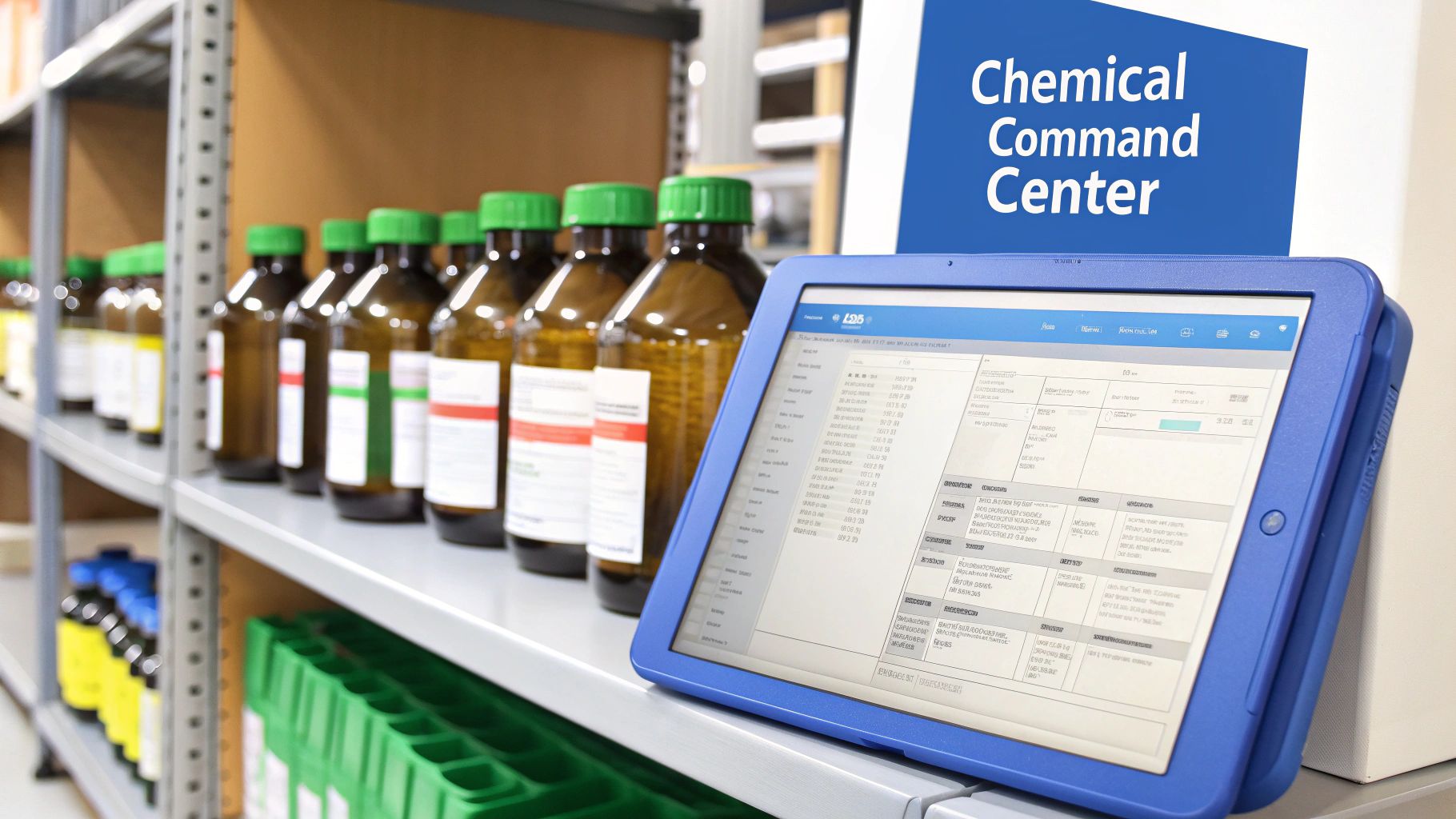
Think about trying to run a massive library without a digital catalog. Books would get lost, you’d have no idea what was checked out, and finding anything specific would be a frustrating mess. That’s exactly what it feels like to manage hazardous chemicals with outdated, manual methods.
A proper chemical inventory management system acts as your facility’s digital librarian. It meticulously organizes, tracks, and flags potential risks for every single substance on site. Instead of getting bogged down in manual checks and fighting with complicated spreadsheets, this central hub automates a chemical's entire lifecycle—from the moment it's ordered to its final disposal.
It's this jump from manual to automated that’s igniting massive growth in the market. The global chemical management software space is expected to skyrocket from $1.5 billion in 2023 to an estimated $5.9 billion by 2033. This surge is largely driven by the critical need for better safety and efficiency in demanding sectors like pharmaceuticals and advanced manufacturing.
The Problem with Manual Tracking
Let’s be honest: manual systems, usually cobbled together with spreadsheets, are ticking time bombs. They’re riddled with human error, create massive operational headaches, and offer zero real-time visibility. This makes answering basic—but incredibly important—questions a real challenge.
- Where is that bottle of acetone right now? Without a central system, tracking a container as it moves between labs, storage rooms, and production lines is a logistical nightmare.
- Are we over our limit for flammable liquids in this building? Manually checking inventory lists against local fire codes and Maximum Allowable Quantities (MAQs) is slow, tedious, and a recipe for mistakes.
- Do we have the latest Safety Data Sheet (SDS) for every product? Suppliers are constantly updating SDSs. Missing an update isn't just a clerical error; it’s a serious compliance failure. To get ahead of these issues, check out our complete guide to chemical safety in the workplace.
To see just how different these two approaches are, let's compare them side-by-side.
Manual Spreadsheets vs Automated Chemical Inventory Management System
| Feature | Manual Spreadsheets | Chemical Inventory Management System |
|---|---|---|
| Data Accuracy | Prone to typos, outdated info, and human error. | High-integrity data with real-time updates and validation checks. |
| SDS Management | Manual lookup, hard to keep current. | Automated access to an up-to-date, centralized SDS library. |
| Regulatory Compliance | Requires manual cross-referencing of regulations. | Flags non-compliance issues automatically against regulatory lists. |
| Accessibility | Often stored locally; difficult to share and access. | Cloud-based access from any device for the entire team. |
| Reporting | Time-consuming and difficult to create custom reports. | Generates instant, detailed reports for audits and safety reviews. |
| Chemical Risk Assessment | Subjective and inconsistent; lacks data-driven insight. | Provides objective risk scores and storage compatibility guidance. |
The table makes it clear: while spreadsheets might seem "free," the hidden costs in time, risk, and potential fines are enormous.
A robust chemical inventory management system converts those challenges into strengths. It creates a single, reliable source of truth so that everyone—from the EHS manager to the lab technician on the floor—has immediate access to accurate, up-to-date safety and inventory information.
In today's regulatory environment, this isn't a luxury; it's a fundamental requirement. For any modern industrial, manufacturing, or laboratory setting, a dedicated system is the smartest way to sidestep costly fines, protect your people, and keep operations running smoothly. It’s how you move from a reactive safety posture to a proactive, data-driven strategy.
The Core Features That Define Modern Chemical Management
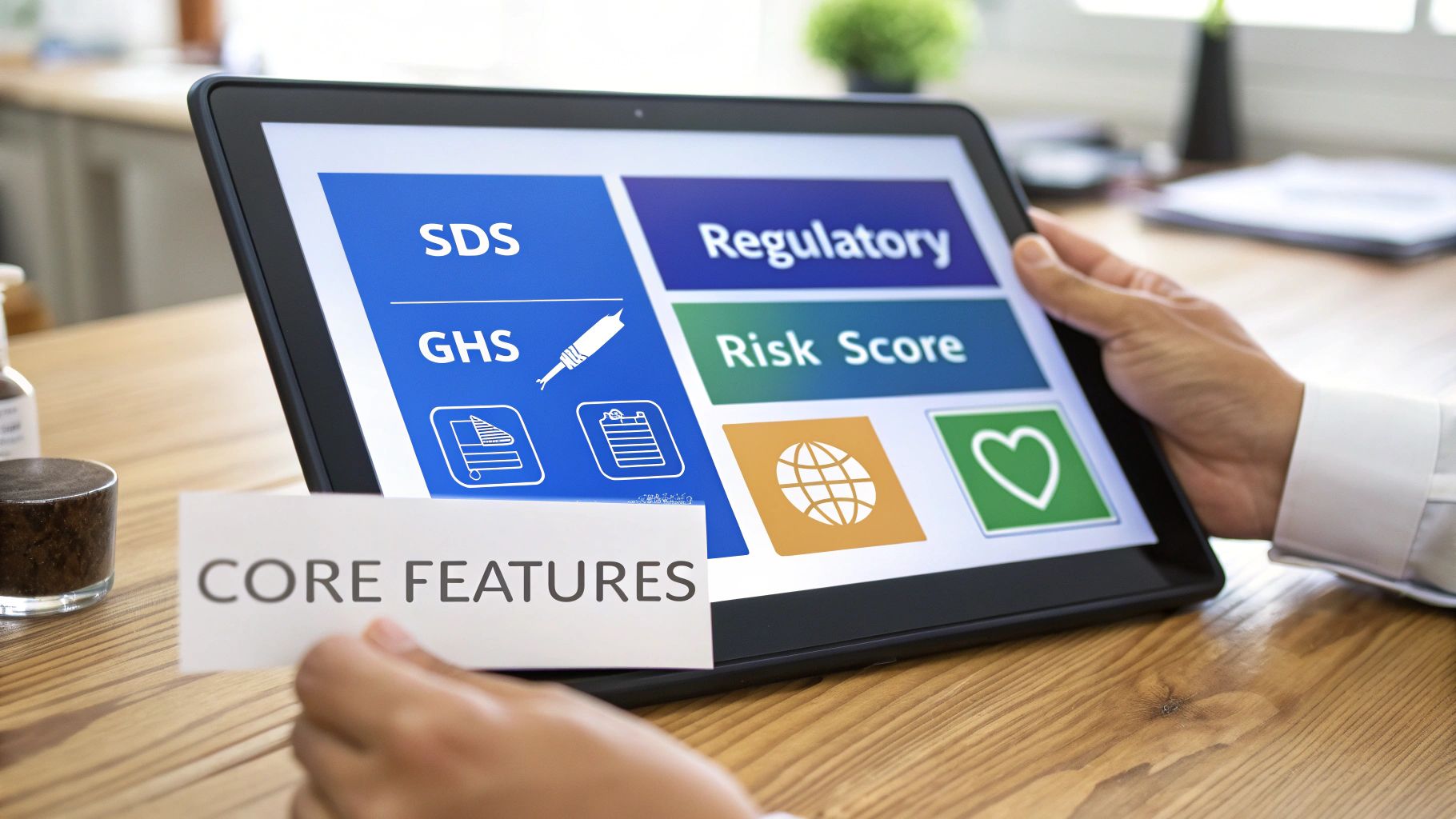
A modern chemical inventory management system is so much more than a digital spreadsheet. It’s really a connected ecosystem of smart tools built to automate safety, nail down compliance, and give you a crystal-clear view of your operations. These features don't work in isolation; they talk to each other, turning raw data into real-world intelligence that protects your people and your business.
Each tool tackles a specific, high-stakes challenge that EHS managers know all too well. Whether it’s decoding a complex Safety Data Sheet or stopping dangerous chemicals from being stored together, these features are the building blocks of a truly proactive safety culture.
Automated SDS Management
The Safety Data Sheet (SDS) is the foundation of any chemical safety program. But trying to manage hundreds—or even thousands—of them by hand is a recipe for mistakes and outdated information. This is where a top-notch chemical inventory management system completely changes the game.
Instead of tedious manual data entry, the best platforms use AI to instantly pull the most critical information right from the SDS. That means details like CAS numbers, hazard classifications, and first-aid instructions are automatically captured and organized, all but eliminating human error.
This automation is the bedrock of reliable chemical safety. For a deeper dive into how this technology works, check out our complete guide to SDS management software. It’s about making sure your team always has the most current and accurate safety info at their fingertips—which is absolutely non-negotiable.
Vigilant Regulatory Screening
Keeping up with the constantly shifting web of global regulations feels like a full-time job. A great chemical inventory system acts like a tireless compliance watchdog, continuously screening your entire inventory against a long list of regulatory databases.
This feature is essentially an instant background check for every chemical you own. The system automatically cross-references your inventory against key global and regional lists, flagging potential problems before they escalate.
- REACH (Registration, Evaluation, Authorisation and Restriction of Chemicals): Instantly spots any Substances of Very High Concern (SVHCs) on your shelves.
- OSHA Hazard Communication Standard: Verifies that your SDS library and practices meet U.S. federal requirements.
- TSCA (Toxic Substances Control Act): Flags chemicals that are subject to reporting and restrictions under EPA rules.
- WHMIS (Workplace Hazardous Materials Information System): Confirms you’re in line with Canadian regulations.
This kind of proactive screening alerts you to compliance risks before they turn into expensive violations, moving you from a reactive scramble to a managed, automated process.
On-Demand GHS Labeling
Proper labeling isn't just a good idea; it's a cornerstone of workplace safety, especially for all those secondary containers you create on-site. A robust system includes a feature for generating compliant Globally Harmonized System (GHS) labels whenever you need them.
This is more than just a glorified sticker printer. It’s a guarantee that every label contains the correct, system-verified information. The software pulls data directly from the corresponding SDS to populate the label with everything it needs:
- Product Identifier
- Signal Word ("Danger" or "Warning")
- Correct GHS Pictograms
- Hazard and Precautionary Statements
This tool is a lifesaver in labs and production areas where chemicals are constantly being moved from bulk containers to smaller, point-of-use bottles. It ensures that every single container, no matter how small, clearly and accurately communicates its hazards.
Storage Compatibility and Risk Scoring
One of the most dangerous—and easily overlooked—risks in chemical management is improper storage. Putting incompatible chemicals next to each other, like an oxidizer next to a flammable liquid, can lead to fires, explosions, or the release of toxic gases.
A modern system uses smart algorithms to guide proper storage. It cross-references chemical families and hazard classes to flag incompatible materials, providing clear instructions on which chemicals need to be segregated. This is a critical function for preventing catastrophic accidents in warehouses and stockrooms.
Taking this a step further, the system calculates an exposure-based risk score for each chemical. This isn't just a generic hazard rating; it factors in things like toxicity, the quantity you have on hand, and how it’s actually being used in your facility. This gives EHS managers a clear, data-driven snapshot of the biggest risks on-site, helping them prioritize safety measures where they're needed most.
Beyond just tracking what you have, these systems inform your broader safety strategy. Knowing the risk profile of your inventory helps you choose the right personal protective equipment (PPE) and environmental safeguards, like specialized gas monitoring solutions for areas with volatile substances. Together, these features transform a simple inventory list into a dynamic safety and compliance engine.
Staying on Top of Regulatory Compliance
A chemical inventory management system does more than just tell you what's on your shelves. It's your expert guide through the complicated, ever-changing maze of global regulations. It turns compliance from a headache into an automated process that protects your business from steep penalties and operational shutdowns.
Think of it as having a built-in legal advisor who never sleeps. Instead of you or your team manually digging through dense legal texts to check thousands of chemicals, the system does the heavy lifting. This kind of proactive monitoring is essential for any company that operates in different regions or handles a wide variety of hazardous substances.
The fallout from non-compliance can be serious, from massive fines to a damaged reputation. A recent analysis showed that regulatory penalties in the EHS world can easily hit tens of thousands of dollars per violation, per day. A solid system is your first and best defense.
Mastering Global and Regional Regulations
Different countries and regions have their own strict rules for chemical safety. A truly effective system is fluent in all of them, automatically applying the right standards based on where you do business. This global-to-local capability is what makes it such a powerful tool.
Here’s a look at how the software tackles some of the big ones:
- OSHA's Hazard Communication Standard (USA): The system ensures your entire SDS library is current and instantly available to all employees, which is a core OSHA requirement. It takes care of the tedious job of chasing down the latest SDS versions from suppliers, so your records are always ready for an audit.
- REACH and CLP (Europe): The system is an absolute must-have for dealing with Europe’s Registration, Evaluation, Authorisation and Restriction of Chemicals (REACH) regulation. It automatically screens your inventory for any Substances of Very High Concern (SVHC) and flags them for required reporting and risk management. For a closer look at these rules, check out our guide on the REACH directive and SVHC list.
- WHMIS (Canada): In Canada, the software makes sure you're compliant with the Workplace Hazardous Materials Information System. It verifies that all labels and safety data sheets meet specific Canadian standards, including bilingual requirements.
A centralized system gives you a single source of truth for compliance. It gets rid of the guesswork and inconsistency that plague manual methods, making sure every facility—whether it's in Ohio or Germany—is following the right laws.
From Reactive Scrambles to Proactive Strategy
The real magic of a chemical inventory management system is how it shifts your compliance efforts from reactive fire-fighting to proactive, forward-thinking strategy. This is especially clear when it comes to regulatory updates.
Agencies like the EPA and ECHA are constantly updating their lists of restricted or monitored substances. Keeping up with these changes manually is a nearly impossible task. The system, however, sends out automated alerts, notifying you the moment a chemical in your inventory is affected by a new rule. A robust system is also crucial for staying informed about shifting environmental policies, like the recent EU regulations on F-gases and sustainable alternatives.
A Real-World Compliance Scenario
Picture Sarah, an EHS manager at a plant with over 2,000 different chemicals. One morning, she gets an automated alert from her inventory system. A solvent used in a key production line was just added to a regulatory list and will be phased out over the next 18 months.
Without the system, Sarah might not have found out about this for weeks, maybe even months, possibly during a surprise audit. But with that early warning, she can act immediately and strategically.
- Instant Identification: The system tells her exactly where the solvent is stored, how much they have, and which processes depend on it.
- Strategic Planning: She can now work with procurement and R&D to find and test a compliant alternative long before the deadline, preventing any production delays.
- Seamless Reporting: When it’s time to report on the phase-out, she can generate all the necessary documents directly from the system in just a few clicks.
This scenario highlights the huge difference an automated system makes. It allows EHS professionals to get out in front of regulatory changes, turning potential crises into manageable projects. By handling the tedious work of monitoring and cross-referencing, it frees them up to focus on what really matters: protecting their people and the environment.
Implementing Your Chemical Inventory System Successfully
Making the switch to a new chemical inventory management system can feel like a huge undertaking. But if you break it down into a handful of deliberate steps, it’s not just manageable—it’s a game-changer. A solid implementation plan is what separates a smooth transition from a chaotic one, helping you finally ditch those clunky spreadsheets and get your team on board from day one.
Success here isn't just about the software itself. It’s about the strategy you wrap around it. This is more than just an IT project; you're building a new foundation for your company's safety and operational efficiency, one step at a time.
Securing Stakeholder Buy-In
Before you even think about migrating data, you need to get the right people in the room and on the same page. A successful rollout needs a united front. This isn't just an EHS initiative—it's an operational upgrade that benefits the whole company.
- EHS and Safety Teams: These are your champions. They're on the front lines, and their focus is on compliance, slashing risks, and preventing incidents before they happen.
- Procurement and Operations: For them, it’s about efficiency. This system gives them real-time visibility into chemical stock, helping them avoid costly production delays caused by running out of a critical material.
- IT Department: Their buy-in is essential. They’ll ensure the system plays nice with your existing tech stack and meets all the necessary data security standards.
Getting this support early on means you’ll have the resources, the momentum, and the foresight to tackle any roadblocks that pop up along the way.
Data Collection and Migration
Let's be honest: this is where the real work happens. It can be tedious, but it’s absolutely critical. You're essentially building the digital brain for your entire chemical management program, and the quality of the information you put in will dictate the quality of what you get out. The goal is to consolidate all those scattered, messy spreadsheets into one clean, central source of truth.
This phase means hunting down every Safety Data Sheet (SDS), inventory list, and purchasing record you have. It's also the perfect time to walk the floor and do a full physical inventory audit. You need to know that what's on the shelf actually matches what's in your records. So many companies underestimate the data cleanup, and it's a mistake that can hamstring the entire project.
Pro Tip: Don't just copy and paste old data—scrutinize it. Use this migration as an opportunity to purge chemicals you no longer use, archive ancient SDSs, and fix all the little errors that have crept in over the years. A clean start ensures your new system gives you trustworthy insights from the get-go.
System Configuration and Workflow Customization
A good system should bend to your process, not the other way around. In this stage, you’ll set up the software to mirror how your organization actually works—from its physical layout to its internal command chain.
This is where you'll configure things like:
- Locations and Hierarchies: Map out your sites, buildings, storage rooms, and even specific shelves. This allows for pinpoint-accurate tracking.
- User Roles and Permissions: Decide who gets to do what. By setting access levels, you can control who can view, add, or change inventory information, which keeps your data clean.
- Custom Fields and Alerts: Need to track project codes or internal part numbers? No problem. You can tailor the system to capture the data that matters to you and set up automatic alerts for things like low stock levels or expiring chemicals.
This is how a well-configured system helps you cut through the noise of global regulations.
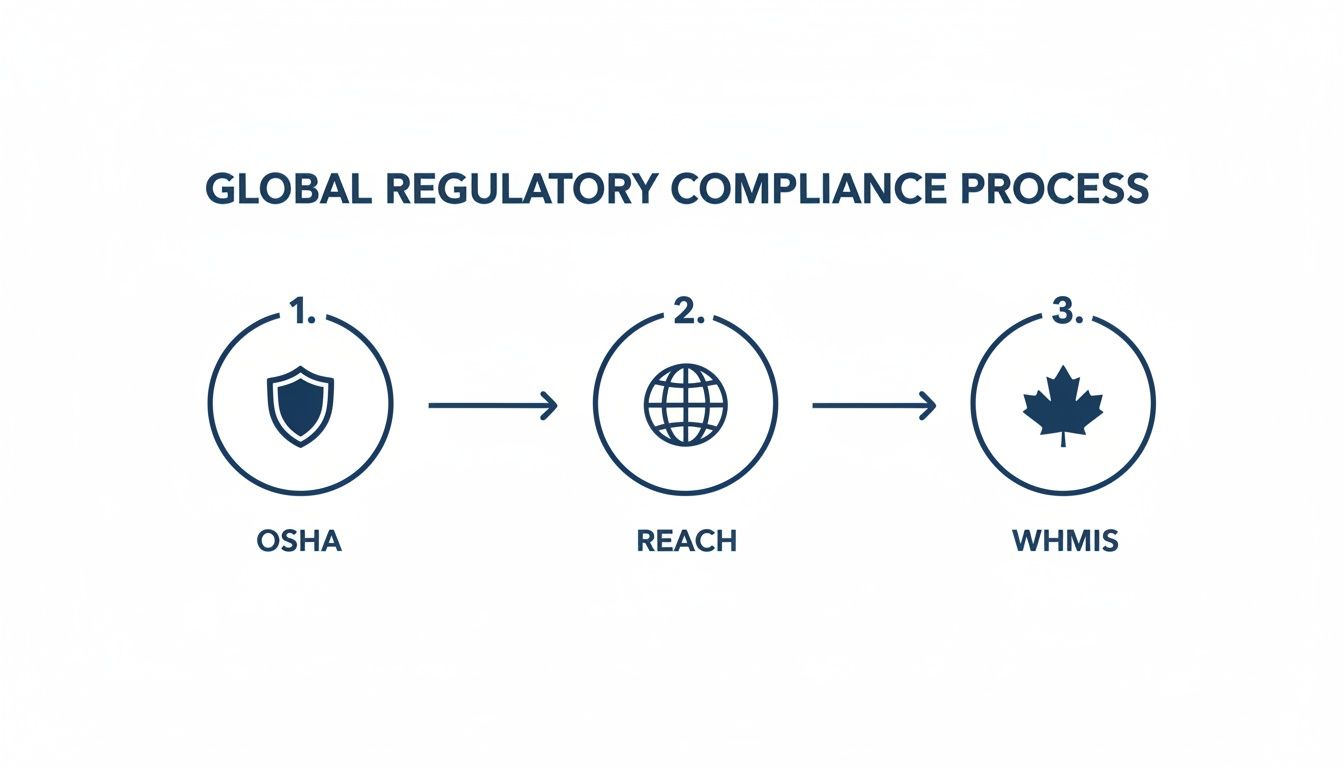
As you can see, the right setup doesn't just store data; it actively helps you stay on top of complex frameworks like OSHA, REACH, and WHMIS.
Team Training and Go-Live
The final piece of the puzzle is getting your people comfortable and confident using the new system. Great software is useless if no one knows how to use it. Solid, hands-on training is what drives adoption and embeds the platform into your company’s safety culture.
Consider a phased rollout. Start with a pilot group in one department to work out any kinks before launching it company-wide.
Make the training practical and role-specific. Show a lab technician how they can scan a QR code to get instant safety info. Show a manager how they can pull a compliance report in seconds. When people see how the system makes their job easier, they won't just use it—they'll embrace it.
Choosing the Right System with This Practical Checklist
Picking the right software is a huge decision. It’s not just a line item in the IT budget; it's a long-term investment in your company's safety, efficiency, and—most importantly—its compliance. But let's be honest, the market is crowded, and figuring out which system is the right fit can feel overwhelming.
This checklist is designed to cut through the noise. Think of it as your buyer's guide, helping you evaluate potential systems based on what actually matters in the real world. By working through these criteria, you can confidently compare your options and find a true operational partner, not just another piece of software.
Core Functionality and Must-Haves
First things first, let's talk about the absolute non-negotiables. If a system can't nail the fundamentals, it's going to create more headaches than it solves. These are the foundational features you should start with.
- Automated SDS Management: Does the system automatically find, update, and pull key data from your Safety Data Sheets? Manually chasing down SDSs is a full-time job and a major source of compliance gaps.
- Regulatory Screening: Can it check your inventory against critical lists like REACH, TSCA, and OSHA regulations in real-time? This feature is your first line of defense against costly violations.
- GHS Label Generation: Can you print compliant GHS labels for secondary containers on demand? This is a must-have for day-to-day safety on the floor.
- Storage Compatibility Rules: Does the software give clear, simple guidance on how to segregate chemicals to prevent dangerous reactions?
These features are the engine of any modern chemical management system. Without them, you're essentially just paying for a glorified spreadsheet.
Usability and Team Accessibility
A powerful system that nobody wants to use is a failed investment. I can't stress this enough: the user experience is everything. It determines whether the system gets adopted or ignored by your team, from the lab technician to the EHS manager.
Look for a clean, intuitive interface that people can figure out without hours of training. Can a new employee log in and immediately find an SDS or look up a chemical's location? Mobile access is also a game-changer. A system that lets someone scan a QR code on a container with their phone and instantly pull up safety information is one that people will actually use.
A system's true value is measured by how easily your team can access the right information at the right time. Clunky interfaces and limited access create barriers to safety, while a user-friendly platform fosters a culture of proactive engagement.
Integration and Future Scalability
Your chemical management software shouldn't be an island. It needs to talk to the other business systems you rely on, especially your Enterprise Resource Planning (ERP) software. When these systems are connected, procurement workflows become smoother, and you get a much clearer, holistic view of your operations.
You also have to think about the future. Will this platform grow with you? Consider what happens when you add new facilities, expand your chemical library, or onboard more users. A scalable solution means you won't have to go through this whole selection process again in a couple of years. This kind of forward-thinking is critical, especially as the entire inventory software market is projected to hit $4.8 billion by 2032—a clear sign that businesses everywhere are doubling down on better tracking. You can read more about these market trends and their impact.
Data Security and Vendor Support
Last but not least, don't forget about security and support. You're trusting this system with highly sensitive compliance and operational data, so you need to be sure it's protected. Ask potential vendors pointed questions about their data encryption, server security, and backup procedures.
And vendor support? It's just as crucial. When something goes wrong or you need help setting up a new report, you need a support team that is both responsive and knowledgeable. Before signing anything, check their reviews and ask for customer references. You’re not just buying a product; you’re entering into a long-term partnership.
To help you organize your evaluation process, we've put together a simple checklist. Use this table to compare different vendors side-by-side and ensure you're asking the right questions.
Evaluation Checklist for Chemical Inventory Software
| Evaluation Criteria | Key Questions to Ask | Importance (High/Medium/Low) |
|---|---|---|
| SDS Management | Does it automatically acquire, index, and update SDSs? Is the library comprehensive and current? | High |
| Regulatory Screening | Can it screen against federal, state, and international lists (e.g., REACH, TSCA, Prop 65)? Is the screening real-time? | High |
| User Interface (UI) | Is the platform intuitive and easy to navigate? Does it require extensive training for new users? | High |
| Mobile Accessibility | Is there a functional mobile app or mobile-responsive site? Can users scan barcodes/QR codes in the field? | High |
| GHS Labeling | Can it generate compliant GHS labels for secondary containers? Are the templates customizable? | High |
| Integration (API/ERP) | Does it offer a documented API? Can it integrate with our existing ERP or procurement software? | Medium |
| Scalability | Can the system support growth in users, facilities, and chemical volume without performance issues? | Medium |
| Storage & Compatibility | Does the software provide clear chemical segregation and storage compatibility guidance? | Medium |
| Reporting & Analytics | What types of compliance and inventory reports can be generated? Are they customizable? | Medium |
| Data Security | How is our data encrypted? Where are the servers located? What are the backup and disaster recovery plans? | High |
| Vendor Support | What are the support hours and channels (phone, email, chat)? What is the guaranteed response time? | High |
| Implementation & Training | What does the onboarding process look like? Is initial training and data migration included? | Medium |
Taking the time to walk through this checklist will give you a much clearer picture of what each system truly offers. It moves the conversation beyond slick sales pitches and helps you focus on the features and support that will make a real difference in your day-to-day operations.
Got Questions? We've Got Answers.
When you're looking into chemical inventory management systems, a lot of questions come up. It's a big decision. Here, we'll tackle some of the most common ones we hear from folks just like you, covering everything from time savings to making the switch from spreadsheets.
How Much Time Will This Actually Save My Team?
Honestly, a ton. A modern system takes over the administrative busywork that bogs down your EHS team. Think about all the time spent hunting down Safety Data Sheets, manually typing data into spreadsheets, or checking chemicals against ever-changing regulatory lists. This software automates nearly all of it, freeing up hundreds of hours a year.
Let's get specific. Using AI to pull key data from an SDS takes seconds. For a person to do that same task? You're looking at 15–20 minutes per sheet. Now multiply that by hundreds or thousands of chemicals. The system also automatically chases suppliers for updated SDSs, eliminating a huge administrative headache right there.
But it's not just about clawing back time. It’s about what you do with that time. When your safety experts aren't stuck behind a computer chasing paperwork, they can be on the floor doing what they do best: running risk assessments, improving safety protocols, and leading hands-on training.
Is This Kind of Software a Good Fit for a Smaller Business?
Absolutely. In fact, you could argue it's even more critical for a small or medium-sized business (SMB). Today's cloud-based systems (often called SaaS, or Software-as-a-Service) are built to be affordable and to grow with you.
You don't need a massive upfront investment in servers or hardware. You simply subscribe to a plan that fits your current needs, and you can easily scale up as your company expands.
Plus, the stakes are just as high—if not higher—for an SMB. A single serious workplace incident or a big non-compliance fine can be devastating for a smaller company. A good system isn't a cost; it's a critical tool that protects your business and helps it grow safely.
What’s the Biggest Hurdle When Ditching Spreadsheets?
The biggest challenge is usually a one-two punch: getting all your data moved over, and then getting your people to actually use the new system. You have to nail both for the transition to stick.
First, there's the data migration. It's no small task to round up every SDS you have and accurately log your entire physical inventory. It takes a focused effort, but it's the foundation for everything. The system is only as good as the data you put into it, so getting this right is non-negotiable.
The second part is the human element—change management. You have to break the old habit of just opening up that familiar (but flawed) spreadsheet. Success here comes down to a few key things:
- Show, Don't Just Tell: Make it real for them. Explain how scanning a QR code with their phone instantly pulls up vital safety info, right where they need it.
- Train for the Role: Not everyone needs to be a power user. Provide focused training so each person feels confident with the parts of the system they'll use every day.
- Get Leadership On Board: When the bosses are visibly using and promoting the new system, it signals to everyone that this is the new standard, not just a flavor of the month.
Tackle both the technical and the people side of the move, and you'll leave spreadsheets in the dust for good.
How Does This Help With Purchasing and the Supply Chain?
A chemical inventory system weaves safety and compliance right into your purchasing process, acting as a crucial checkpoint before a new chemical ever gets to your door.
Imagine your procurement team is about to order a new substance. Before they click "buy," they can run it through the system. In seconds, it screens the chemical against global regulatory lists, instantly flagging if it's restricted, banned, or requires special reporting in your area. This simple step prevents you from accidentally buying a non-compliant chemical, saving you from fines and the logistical mess of trying to return or dispose of it.
The system also helps you vet your suppliers by checking the SDSs they provide. It can spot if a sheet is incomplete or improperly formatted, ensuring you get accurate, compliant safety data from the get-go. This builds a stronger, more reliable supply chain and makes sure only pre-approved, safe chemicals make it into your facility.
Ready to trade in those clunky spreadsheets for a smarter, automated solution? NextSDS brings everything you need for chemical safety and compliance into one streamlined platform. Discover how NextSDS can transform your chemical management today.