

Trying to manage a chemical inventory with a spreadsheet is like navigating a busy highway system with a hand-drawn map. Sure, it might get you there for a simple trip, but for anything complex, you’re setting yourself up for disaster. This old-school method creates dangerous blind spots, leaving your organization wide open to compliance fines, safety incidents, and sheer operational chaos.
Why Spreadsheets Are Failing Your Chemical Safety Program
Let's be blunt: relying on static spreadsheets to track hazardous materials is no longer a defensible strategy. These files are completely disconnected from the real-world, dynamic nature of chemical management. They go out of date almost instantly, are riddled with human error, and simply can't deliver the live insights you need to keep your people and your business safe.
The Hidden Risks of Manual Tracking
The biggest point of failure? Manual data entry. A single typo in a CAS number, a misplaced decimal in a quantity, or a missed SDS update can spiral into a serious problem. Research shows that even with careful oversight, manual data entry can have error rates as high as 4%—a risk you can't afford when dealing with hazardous chemicals.
This outdated approach leaves you vulnerable in several key ways:
- No Real-Time Visibility: A spreadsheet can't give you an accurate, up-to-the-minute picture of what’s on-site, where it’s stored, or if it's sitting next to an incompatible substance.
- Massive Compliance Gaps: Trying to manually check your inventory against constantly updated regulatory lists from OSHA, REACH, or other agencies is a losing battle. You're bound to miss something.
- Clunky, Inefficient Workflows: When an emergency happens, the last thing you want is someone frantically digging through folders to find the right safety data. Every second wasted is critical. A better system is a cornerstone of true chemical safety in the workplace.
The fundamental issue is that spreadsheets are passive records, not active safety tools. They might tell you what you thought you had last month, but they can't alert you to a dangerous storage conflict happening right now.
Ultimately, spreadsheets saddle your team with low-value administrative work, pulling them away from the proactive safety tasks that actually matter. This reality makes the switch to a modern solution like chemical inventory tracking software less of a choice and more of a necessity. Think of it as upgrading from a paper map to a live GPS—an intelligent control tower for your entire safety program.
Manual vs Automated Chemical Tracking at a Glance
The difference between wrestling with spreadsheets and implementing dedicated software is night and day. This table breaks down the core distinctions.
| Capability | Spreadsheet-Based Tracking | Chemical Inventory Software |
|---|---|---|
| Data Accuracy | Highly prone to human error (up to 4%) | Automated data capture minimizes mistakes |
| SDS Management | Manual, disconnected document storage | Centralized, auto-updating SDS library |
| Real-Time Visibility | Static; outdated as soon as it's saved | Live, accurate view of inventory levels & locations |
| Regulatory Compliance | Manual, labor-intensive cross-checking | Automated screening against global watchlists |
| Emergency Response | Slow, difficult access to critical information | Instant access to SDSs and hazard data |
| Reporting | Time-consuming manual report generation | Automated, customizable reports in seconds |
As you can see, what was once a series of manual, disconnected tasks becomes a cohesive, automated system. This shift frees up your team to focus on what’s important: maintaining a safe and compliant workplace.
Understanding Chemical Inventory Tracking Software
At its core, chemical inventory tracking software is a command center for your entire chemical ecosystem, not just a digital list. Think of it as the central nervous system connecting every bottle, drum, and container to its location, safety data, and regulatory status in real-time. It finally gives you a single, reliable source of truth where you once had scattered information.
The main goal is to automate and watch over the entire lifecycle of every chemical you handle. This starts the second a substance is considered for purchase and follows it all the way through receiving, storage, daily use, and final disposal. It takes a messy, reactive process and turns it into a proactive strategy for safety.
Beyond the Digital Binder
It's easy to mistake this software for a digital version of that old three-ring binder full of Safety Data Sheets (SDS). But while SDS management is a key part of the puzzle, the real power comes from making that data actionable. The software doesn't just hold information; it actively uses it to protect your team and keep you compliant.
For instance, it can:
- Automatically flag if a new chemical you want to buy is restricted under regulations like REACH or TSCA.
- Warn you if someone tries to store incompatible chemicals next to each other in the warehouse.
- Give first responders instant access to hazard information on their phones during an emergency.
This kind of active intelligence is what separates a modern platform from a simple spreadsheet. You can get a much deeper look into how a full chemical inventory management system works to see these ideas in action.
Fueling Growth and Safety
The move toward these smarter systems isn't just a small trend—it's a major shift in the market. The need for this kind of digital overhaul has pushed the chemical software market to a value of USD 4.5 billion, and it's expected to reach USD 8.2 billion by 2033. This growth is a direct result of companies needing better tools to manage huge inventories under tight global rules.
The goal is to empower everyone, from the EHS manager in the office to the technician on the floor, with immediate and accurate information. This software bridges the gap between regulatory requirements and day-to-day operational reality, making safety an integrated part of the workflow, not an afterthought.
What Really Makes Chemical Inventory Software Work?
To get a real feel for what chemical inventory tracking software can do, you have to look under the hood. These platforms aren't just fancy spreadsheets or digital logbooks. They are active safety and compliance systems, packed with smart features designed to tackle the day-to-day chaos of chemical management. Each tool turns a reactive, headache-inducing chore into a proactive, manageable strategy.
Think of it as a central hub connecting everything: your data, your safety rules, and the entire lifecycle of every chemical that enters your facility.
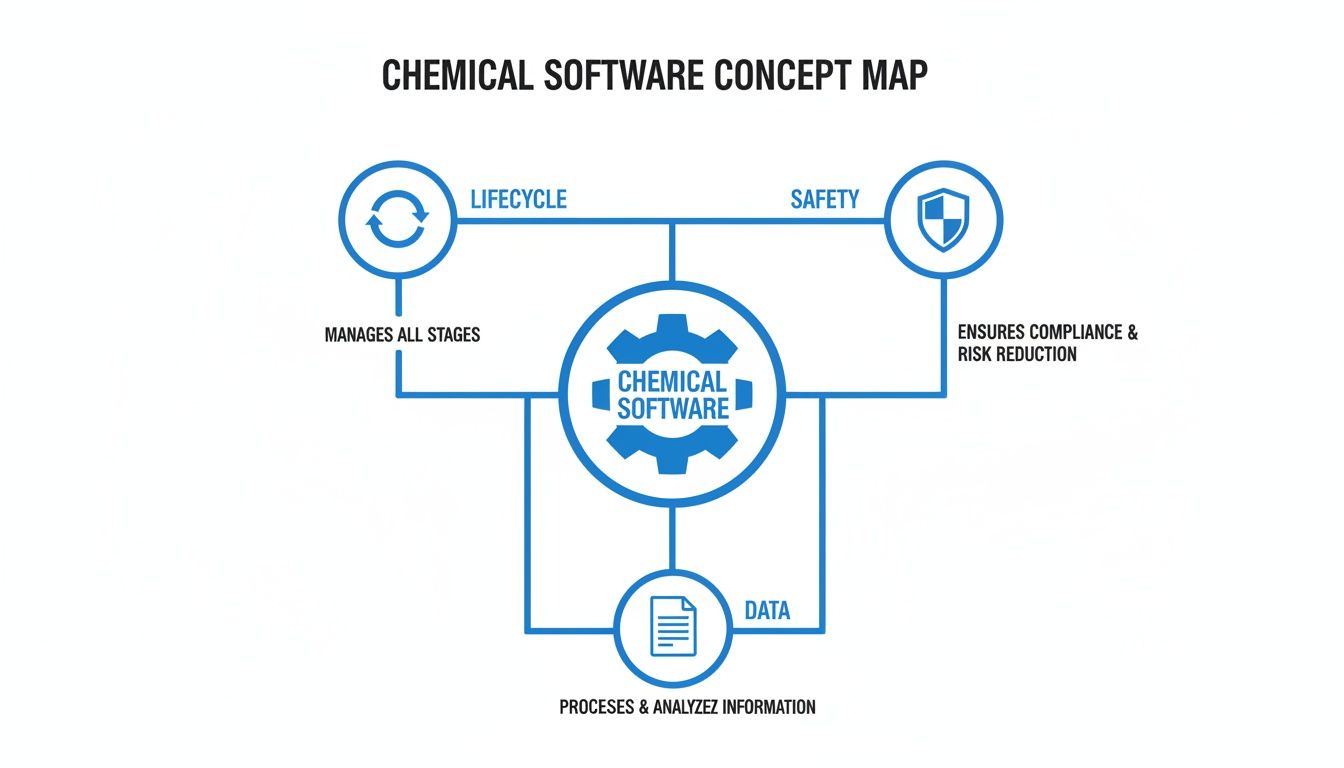
As you can see, it's not about one magic-bullet feature. It’s about how these pieces work together to give you a single, intelligent view of your chemical safety and compliance posture.
Automated SDS Management
Let's be honest: managing Safety Data Sheets by hand is a massive compliance risk and a huge time sink. Good software takes this off your plate completely. When a new SDS comes in, the system uses AI to instantly pull out the crucial details—CAS numbers, hazard classifications, PPE recommendations, you name it. This kills the risk of manual typos and builds a reliable, searchable library you can actually trust.
A big part of this magic is Optical Character Recognition (OCR) technology, which allows the software to literally "read" a PDF and extract the data automatically. It saves an unbelievable amount of administrative grunt work. You can see a full breakdown of how a dedicated SDS management software solution puts this into practice.
Real-Time Regulatory Screening
This is where the software really starts to feel like a superpower. It constantly checks your chemical inventory against a whole universe of global regulatory lists. Instead of your team spending hours trying to keep up with shifting rules from REACH, TSCA, or Prop 65, the software does the heavy lifting for you, 24/7.
Here’s how that plays out: Your procurement team is about to order a new cleaning agent. Before they even hit "approve," the software flags it. Why? Because an ingredient was just added to a restricted substance list last week. A non-compliant purchase is stopped before it ever sets foot in your facility.
This kind of proactive screening is a total game-changer for reducing risk. It's no wonder the broader inventory management software market, valued at USD 3.58 billion, is expected to more than double by 2033. This growth is fueled by companies demanding exactly this type of real-time visibility and control.
Smart Storage and GHS Labeling
Storing chemicals safely isn't optional, it's essential. This software goes way beyond just noting that a container is on "Shelf B." It runs smart compatibility checks using the hazard data right from the SDS. So, if someone tries to store flammable liquids next to powerful oxidizers, the system will immediately throw up a warning. It prevents dangerous situations before they can happen.
The system also generates GHS-compliant labels for your secondary containers on the fly. This ensures every spray bottle, jug, or beaker in your facility has clear, standardized hazard warnings. We’re talking about:
- Product identifiers
- Signal words
- Hazard pictograms
- Precautionary statements
This single feature closes one of the most common—and dangerous—compliance gaps. It ensures vital safety information follows the chemical wherever it goes. Even better, QR codes on those labels can give any employee with a smartphone instant access to safety cards, right there in the field. It’s safety information, delivered exactly when and where it's needed most.
How This Software Benefits Your Entire Organization
Think of strong chemical management as a ripple effect. It starts in one department but quickly spreads safety and efficiency across the entire company. A unified chemical inventory tracking software isn't just another tool for the EHS team; it's a central nervous system for your whole operation, breaking down the walls between departments and giving everyone the data they need.
This shared value is a big reason the market is taking off. Driven by ever-tightening regulations, the chemical software market is expected to surge by USD 561 million between 2024 and 2029. Why? Because the right tools can slash violation risks by over 50%, making the return on investment crystal clear.

Empowering EHS and Procurement Teams
For EHS Managers, this kind of software flips the script from reactive firefighting to proactive strategy. No more frantic searches for paperwork when an auditor shows up. Instead, they have a complete, audit-ready digital trail at their fingertips. Automated risk reports and constant regulatory screening let them spot trouble long before it becomes a real problem.
Procurement teams get an immediate boost, too. The system weaves safety right into the supply chain with pre-purchase compliance checks. Before anyone even thinks about placing an order, the team can see if a substance is restricted or needs special handling. This takes the guesswork and risk out of purchasing, stopping non-compliant materials at the door.
Enhancing Lab and Warehouse Operations
In a lab or R&D environment, getting the right information fast is non-negotiable. This software ensures every technician has the most current Safety Data Sheet (SDS) on their phone or tablet. It also keeps track of crucial details like occupational exposure limits (OELs), making sure anyone working with hazardous materials is properly protected.
A unified platform means a lab tech can instantly pull up PPE requirements for a new chemical, while a warehouse operator checks its storage compatibility on their phone, preventing a dangerous reaction. It’s safety built directly into the workflow.
The benefits are just as concrete for warehouse and operations staff. The software gives them clear, visual instructions on where to store chemicals, automatically flagging anything that shouldn't be near something else. It turns complex storage rules into a simple, straightforward process. It even helps with waste disposal by providing the correct procedures and documentation, ensuring compliance from cradle to grave. Everyone, in every corner of the business, is safer and more effective.
Choosing the Right Chemical Inventory Tracking Software
Picking the right chemical inventory tracking software is a huge decision, and frankly, it should be. This system is going to be the central nervous system of your entire safety program. The market is crowded, so you need a clear game plan to sort through the noise. It’s less about flashy demos and more about finding a solution that tackles your real-world problems and can grow with you down the road.
Think of it like hiring a key employee. You wouldn't just glance at their resume; you'd bring them in for a serious interview to test their skills, check their reliability, and see if they’re a good fit for your team. You need to do the same thing here. Knowing the right questions to ask is what separates a smart investment from a costly mistake.
Key Questions to Ask Every Vendor
Before you sign any contracts, it's time to get into the weeds. A slick sales presentation doesn't mean the software will hold up when things get busy. Use these questions to get past the marketing hype and really understand what each platform can do.
Your evaluation should hit on five critical points:
- Scalability and Future-Proofing: How does this system handle growth? If we add more users, open new facilities, or double our chemical library, will it keep up or slow to a crawl?
- Implementation and Support: What, exactly, does your onboarding process look like? Will you train our team? When we run into a problem six months from now, what kind of support can we actually expect to get?
- Data Security: Let's talk specifics. Where is our data hosted, and what measures are in place to keep it secure? We can't afford any risks with this kind of information.
- Automation and Intelligence: How smart is your automation? Does your software truly pull all the necessary data from an SDS and screen it against regulations on its own, or is there still a lot of manual cleanup required from my team?
- Mobile Accessibility: Is your platform genuinely mobile-friendly? Can my people in the warehouse or the lab easily scan a container, pull up an SDS, and update inventory levels from their phone or tablet?
The best chemical inventory tracking software isn't just a database to store information. It should be an active partner in your safety culture. It should make complicated tasks simple, give you instant answers, and empower your team to work safer and smarter every single day.
Getting straight answers to these questions will tell you everything you need to know. A vendor’s response on data security reveals how seriously they take protecting your company's information. A detailed implementation plan shows they’ve thought through the practical challenges of switching systems. Taking this thorough approach ensures you don't just pick a tool for today, but a long-term partner for the future.
Essential Requirements Checklist for Chemical Inventory Software
See how NextSDS delivers on the key features and considerations necessary for a modern chemical tracking solution.
| Requirement | How NextSDS Delivers |
|---|---|
| SDS Management & Indexing | Automated SDS acquisition and updates with a fully indexed, searchable library. |
| CAS/CID Data Extraction | AI-powered extraction of 100% of chemical ingredients, including CAS/CID numbers and percentages. |
| Regulatory Screening | Continuous screening against hundreds of federal, state, and international regulatory lists. |
| Inventory & Storage Compatibility | Real-time tracking with GHS and NFPA storage compatibility checks and segregation guidance. |
| GHS & Secondary Labeling | On-demand GHS-compliant label printing in multiple languages and sizes. |
| Mobile Access & Safety Cards | Full mobile functionality with barcode scanning and instant access to QR code safety cards. |
| Implementation & Support | Dedicated onboarding specialists and unlimited live customer support included. |
| Future-Proof Technology | A scalable, cloud-based platform built to evolve with regulatory changes and business growth. |
This checklist makes it clear that a comprehensive solution goes far beyond just storing documents. It’s about creating an active, intelligent system that protects your people and your business.
7. Measuring the True ROI of Your New System
When you're building the business case for new chemical inventory tracking software, it all boils down to one thing: return on investment (ROI). But figuring out the true value means looking far beyond the initial price tag. The real impact isn't just about saving money; it's about fundamentally reducing risk across your entire operation.
Think of it this way: you're not just buying a software license. You're investing in operational resilience. The most obvious returns are the "hard" savings—the concrete dollars you can track and report. These are the numbers that get leadership's attention.
Calculating the Hard Savings
Hard ROI is all about direct, measurable financial impact. It’s the money you save by sidestepping costly mistakes and replacing manual, time-consuming processes with something that actually works.
- Avoiding Non-Compliance Fines: A single fine for improper chemical storage or an outdated SDS can easily run into the thousands. The software essentially acts as an insurance policy, automatically flagging issues before they become expensive violations.
- Smarter Purchasing: Finally, a crystal-clear view of what you actually have on hand. This visibility stops duplicate orders in their tracks and helps you slash spending on chemicals that just sit on the shelf until they expire. That's a direct cut in material waste.
- Less Administrative Drudgery: Believe it or not, some studies show scientists can waste up to 25% of their time just managing inventory. Automating those tedious tasks frees up hundreds of hours for the innovative work they were actually hired to do.
Quantifying the Soft Returns
Beyond the balance sheet, there’s the "soft" ROI. This value is a bit harder to put a number on, but it's just as critical to your company's long-term health. These benefits are tied to mitigating hidden risks and making your entire team more effective.
The soft returns are huge. We're talking about reclaimed administrative hours that can be poured back into research and innovation, a safer work environment that boosts morale and productivity, and a stronger company reputation built on a real commitment to safety and compliance.
This perspective helps frame the software not as a simple line-item cost, but as a strategic asset that prevents financial loss while making your entire operation run better and safer.
Frequently Asked Questions
Even when the benefits are clear, it's natural to have a few practical questions before bringing in a new system. Let's tackle some of the most common ones we hear about adopting chemical inventory tracking software, so you can get a better sense of how it would actually work for your team.
How Long Does Implementation Take?
This isn't a months-long project like old-school enterprise software. Modern systems are built for speed. Thanks to features like automated data extraction from Safety Data Sheets (SDSs) and bulk uploads, you can build out your initial chemical library in just a few days.
The system does the heavy lifting, pulling all the critical data points automatically. This leaves your team free to focus on fine-tuning the setup and getting comfortable with the new tools. Most companies are up and running, fully operational, in a matter of weeks.
Can This Software Integrate With Our Existing Systems?
Absolutely. In fact, it's one of the most important features. The best platforms come with robust APIs or ready-made connectors for the systems you already use, like your ERP or procurement software.
Imagine your purchasing team being able to check a chemical's compliance status inside their usual workflow before they even click "buy." This kind of integration prevents non-compliant materials from ever making it to your door in the first place.
This integration is crucial. It transforms the software from a standalone safety tool into an embedded part of your operational and financial workflow, maximizing its value and preventing costly purchasing errors before they happen.
How Does the Software Stay Current With Regulations?
This is where the real magic happens. Top-tier systems handle the regulatory monitoring for you, so your team doesn't have to spend endless hours trying to keep up.
These platforms are constantly scanning hundreds of global regulatory lists—think REACH, SVHC, and Prop 65. When a rule changes or a chemical gets reclassified, the system automatically flags the affected products in your inventory and sends you an alert. It turns a massive, reactive chore into a simple, proactive background process. You’re always ahead of the curve, not scrambling to catch up.
Ready to ditch the outdated spreadsheets for a smarter, automated solution? NextSDS provides a complete platform for SDS management, real-time regulatory screening, and comprehensive inventory tracking. Get a demo today and see how to build a safer, more compliant workplace.