


When a chemical emergency happens, every second counts. Knowing who to call is just as important as knowing what to do, and for hazmat incidents, that call goes to CHEMTREC.
The main CHEMTREC emergency contact number for anyone in the U.S. and Canada is 1-800-424-9300. For incidents anywhere else in the world, the global number is +1 703-741-5970. Think of these numbers as the "911 for chemical emergencies"—a direct link to immediate, life-saving information.
Your Direct Line for Chemical Incident Support
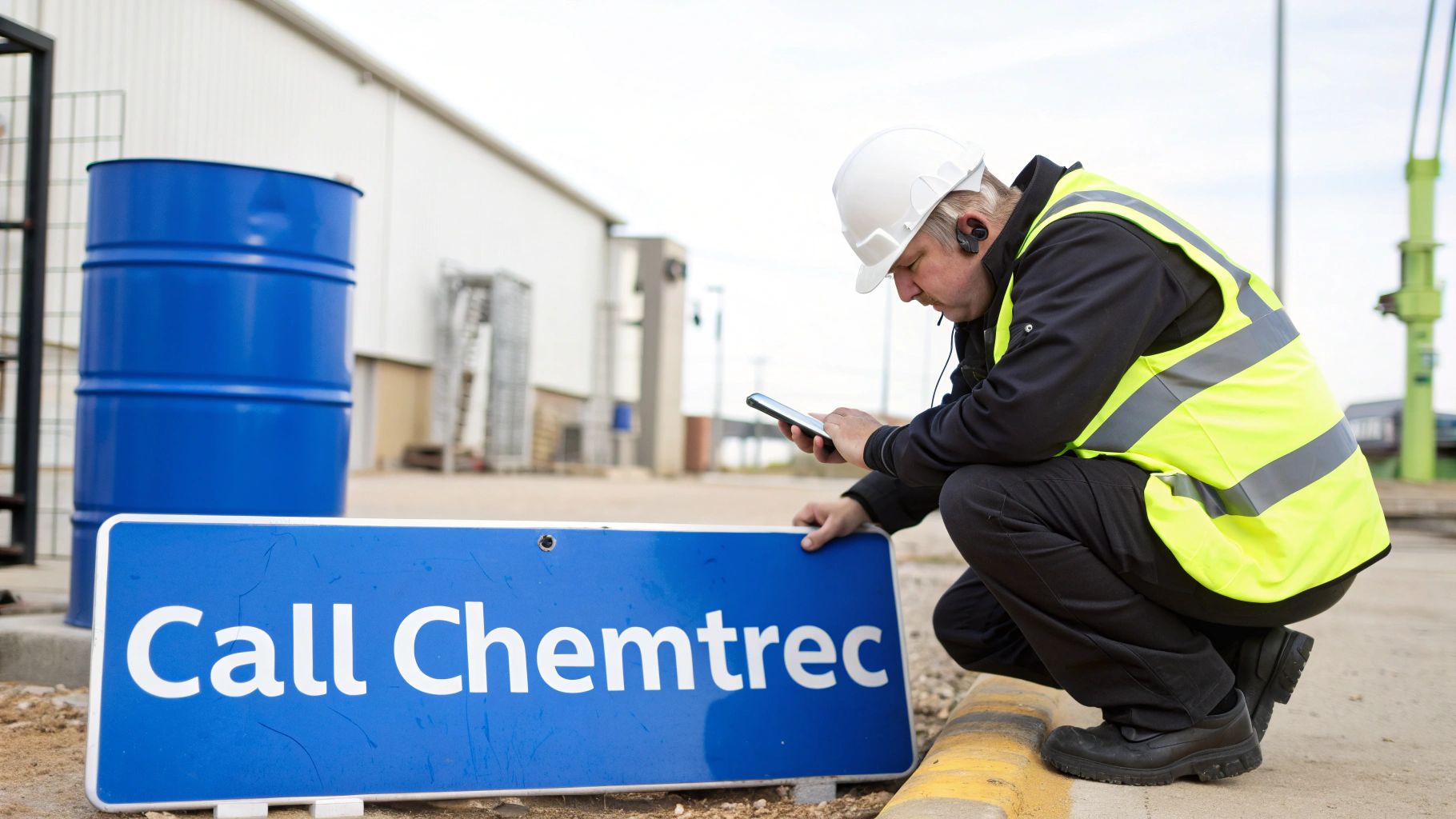
Whether it’s a spill, a leak, a fire, or an accidental exposure involving hazardous materials, that CHEMTREC number is your first call. It’s designed to connect anyone on the scene—from first responders to truck drivers—with a global network of specialists who can provide clear, actionable advice right away.
This isn't just a simple hotline; it’s a critical piece of the entire emergency response infrastructure. Since its inception as the Chemical Transportation Emergency Center back in 1971, the CHEMTREC service has become one of the world's most trusted resources for hazmat incidents.
That U.S. toll-free number is staffed 24/7/365 by trained specialists who are ready to walk you through the chaos of a chemical emergency, step by step.
CHEMTREC Emergency Contact Numbers and When to Call
In the heat of the moment, you don't want to be fumbling for the right number. Here’s a quick reference guide to make sure you’re calling the correct line.
| Region | Contact Number | When to Use This Number |
|---|---|---|
| U.S. & Canada | 1-800-424-9300 | For any hazmat emergency inside the United States, its territories, or Canada. This is the primary toll-free line. |
| International | +1 703-741-5970 | For any incident that occurs outside of the U.S. and Canada. Keep in mind that international calling charges might apply. |
| Non-Emergency | 1-800-262-8200 | For questions about registration, services, or general information. Do not use this number for an active emergency. |
Having these numbers posted, saved in a phone, or readily available on a safety data sheet can make all the difference when a crisis hits.
What Really Happens When You Call? A call to CHEMTREC does more than just get you a voice on the line. It taps you into a massive network of toxicologists, medical professionals, and even the chemical manufacturers themselves. These experts have the granular details on the specific substance involved, ensuring the guidance you get is accurate and tailored to the exact situation you're facing. This web of expertise is what makes CHEMTREC so indispensable for protecting people, property, and the environment.
How to Prepare for a Call to CHEMTREC

When you're in the middle of a chemical incident, the last thing you want to do is scramble for information. Clarity is your best tool. Taking just a few moments to gather key details before you dial the CHEMTREC emergency contact number can make a world of difference in how quickly and effectively they can help.
Think of it this way: you wouldn't call a doctor and just say "someone's sick." You'd give them specifics. The same principle applies here. Giving the CHEMTREC specialist precise information right from the start helps them cut through the noise and get you the exact support you need, fast.
Your Pre-Call Information Checklist
Before picking up the phone, try to get a handle on the following details. If you can't find everything, don't wait—call immediately. But the more you have, the better.
- Your Contact Info: Your name, your company's name, and a phone number where they can reach you back. Simple, but crucial if the call drops.
- The Incident's Location: Be as specific as possible. An address is good, but cross-streets, mile markers, or even the name of a specific building on a large site are even better.
- What's Involved: This is the most important piece. Try to find the product name, the UN/NA number, or the CAS number. You can usually find this on the container label, shipping papers, or the Safety Data Sheet (SDS).
- What Happened: Give a clear, concise description of the situation. Is it a spill? A fire? A leak from a valve? Also, try to estimate how much material is involved and, most importantly, mention if anyone is injured.
Having this information ready turns your call from a vague cry for help into a detailed incident report. It's the kind of solid information that kicks off a faster, more targeted response. A good grasp of chemical safety in the workplace is what gives your team the training to gather these details under pressure.
The Flow of a CHEMTREC Call
When you call, you'll speak with an Emergency Service Specialist who will calmly walk you through the process. Knowing what to expect can help keep you grounded. They’ll ask for the details from the checklist above and then immediately get to work.
The specialist acts as your connection point. They have access to a database with over six million SDSs, can contact the chemical's manufacturer directly, and can even patch you through to medical experts or specialized cleanup teams.
At the end of the day, how you prepare is a huge part of the emergency response itself. Thinking about these things ahead of time is one of the most effective strategies for preparing for unexpected disasters and emergencies. By having your information organized, you're not just a caller; you're an active part of the solution, helping to bring a dangerous situation to a safe and efficient conclusion.
The Critical Role CHEMTREC Plays in Real-World Incidents
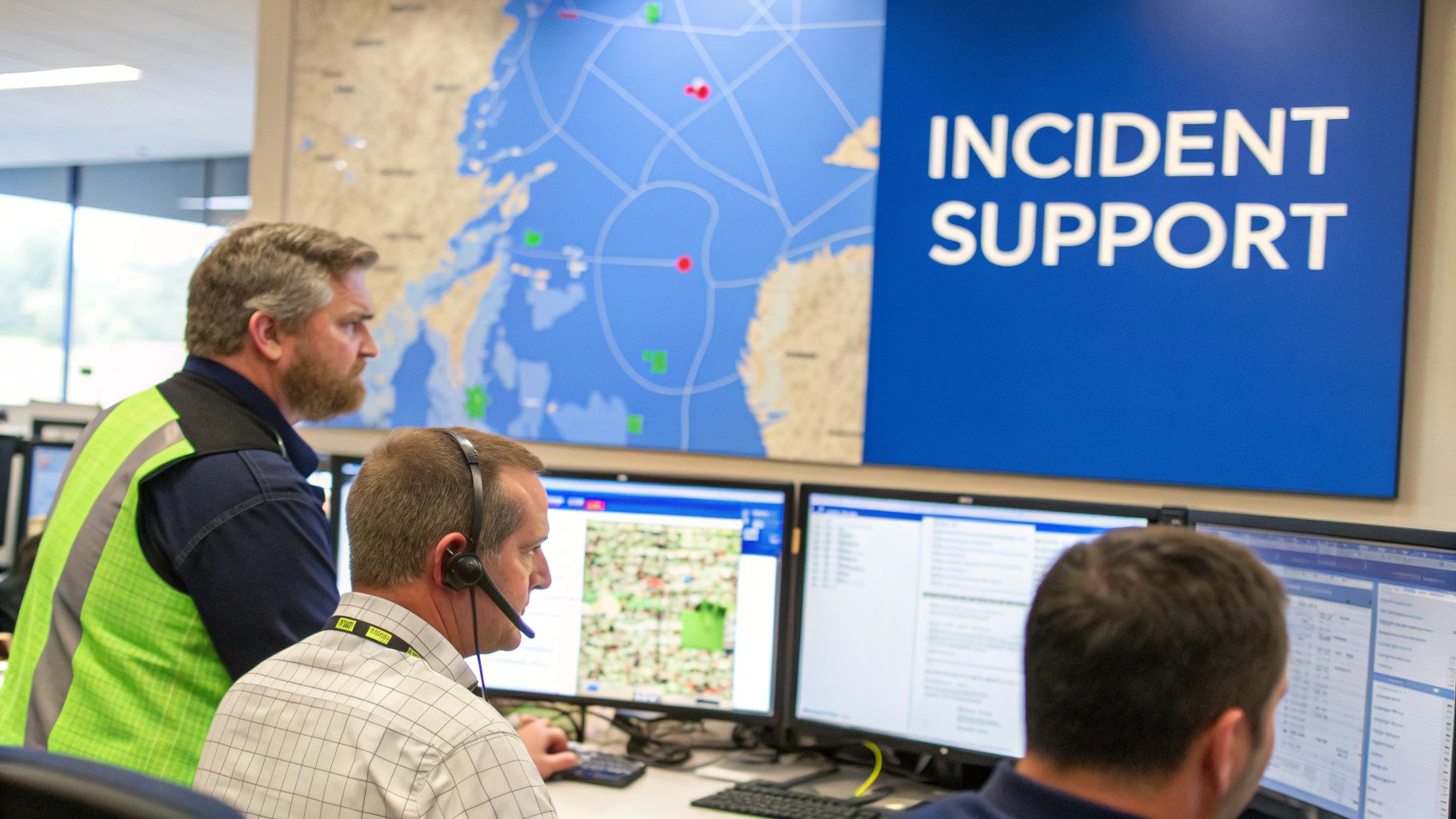
When you dial the CHEMTREC emergency contact number, you're not just calling for help—you're activating a global incident support network that's been battle-tested for over 50 years. Think of it less like a call center and more like the central nervous system for chemical emergency response. It’s the critical link between the chaos on the ground and the calm, expert guidance needed to manage it.
Imagine a first responder arriving at a chaotic scene—an overturned tanker on the highway or a leaking drum in a warehouse. They're often walking into a situation filled with unknowns. That one call to CHEMTREC is what turns that uncertainty into actionable intelligence.
Almost instantly, the specialist on the line gets to work, coordinating a response on multiple fronts. They dive into a massive database to identify the substance, pull up its specific hazards, and relay immediate, life-saving instructions for containment, first aid, and the right personal protective equipment (PPE).
Connecting the Dots in a Crisis
CHEMTREC’s real power is its ability to connect all the right people in real-time. The organization acts as a communications hub, closing the gap between the team at the scene and a worldwide network of specialists. This network is extensive and includes:
- Chemical Manufacturers: They can provide proprietary product information that you simply can't find anywhere else.
- Toxicologists and Medical Specialists: These experts offer critical advice on human exposure and the correct treatment protocols.
- Transportation Experts: They guide teams on how to safely manage incidents involving specific trucks, railcars, or containers.
- Specialized Cleanup Crews: CHEMTREC can help coordinate the deployment of qualified hazmat response teams.
This isn't just about giving generic advice. The whole system is designed to provide guidance tailored to the exact chemical and specific situation at hand. It brings order to disorder, protecting people and the environment from things getting worse. The sheer volume of incidents they handle says it all.
In a 2023 incident overview, CHEMTREC managed 32,184 leaks and spills and 2,443 human exposures in a single year. While over 90% of these events involved material releases, every single call requires immediate and accurate information to prevent a bad situation from escalating. You can dig deeper into these incident trends in the full report from the International Association of Fire Chiefs.
More Than Just Compliance
At the end of the day, putting the CHEMTREC emergency contact number on a shipping document is about more than just checking a regulatory box. It's about tapping into a proven, life-saving infrastructure that has been fine-tuned over decades of real-world emergencies.
From a minor leak during transport to a large-scale industrial event, CHEMTREC provides the essential support that helps turn a potential catastrophe into a controlled, manageable event. Every call activates a legacy of expertise focused on one single mission: safety.
Understanding Your CHEMTREC Registration and Compliance Obligations
A common question I hear is, "Does it cost anything to use the CHEMTREC number?" The answer gets to the heart of how this system works. Anyone can call the CHEMTREC emergency contact number for free during an actual incident. That’s a public service.
However, to legally put that number on your shipping documents, your company needs a paid registration. This isn't just a technicality—it's a critical legal requirement.
Think of it like car insurance. You pay for a policy hoping you’ll never have to use it, but you absolutely must have it to drive legally. Your CHEMTREC registration works the same way. It formalizes your relationship, giving them access to your company’s specific Safety Data Sheets (SDS) and product information. This ensures that if a call ever comes in about your product, the advice they give is precise, not just generic guesswork.
Why Registration Is a Non-Negotiable Requirement
The main reason you need to register is simple: regulations. In the U.S., the Department of Transportation (DOT) is very clear about this in 49 CFR § 172.604. The rule states that anyone shipping hazardous materials must provide a 24-hour emergency response phone number on their shipping papers.
But here’s the key detail: the person or agency answering that phone must have comprehensive, detailed knowledge of the material being shipped. Without a registration, CHEMTREC doesn't have your company's specific data, making it impossible for them to meet that legal standard. Just slapping the number on a label without a contract is a direct compliance violation.
Here’s a good way to think about it: Putting the CHEMTREC number on your documents without a registration is like giving out a doctor's number without ever having been their patient. In an emergency, that doctor won't have your medical records. They can give general advice, sure, but it falls way short of the specific, informed care—and the legal standard—that’s required.
The Consequences of Non-Compliance
Using the number without registering can lead to some serious headaches. We're not talking about minor slaps on the wrist; the penalties can genuinely impact your business operations and your bottom line. Proper Safety Data Sheet compliance is the foundation for staying out of hot water.
Here are the key risks you run by not complying:
- Significant Fines: Regulatory bodies like the DOT can and do issue hefty penalties for each violation.
- Shipment Delays: Your shipments can be stopped, held up, or flat-out rejected by carriers if they discover the emergency contact info isn't valid. This can wreak havoc on your supply chain.
- Increased Liability: If an incident occurs and you haven't provided adequate emergency response information, your company could face much greater legal liability.
To keep your operations safe and legal, it’s crucial to be proactive in managing hazmat shipping restrictions as part of your overall compliance strategy. Registering with a service like CHEMTREC is a cornerstone of this process. It's how you meet your regulatory duties and ensure the best possible support is available when it's needed most.
Tying Emergency Contacts Into Your Digital Safety System
Knowing the CHEMTREC emergency contact number is a great first step, but it's only half the battle. If that number is buried in a paper Safety Data Sheet (SDS) locked in a filing cabinet, it might as well be on another planet during a real crisis. The real key to safety is immediate access.
Modern safety management closes that dangerous gap between knowing the information and using it when seconds count. A static phone number on a printed page just can't keep up with the speed of a digital system built for emergency response. This is where a modern approach really shines.
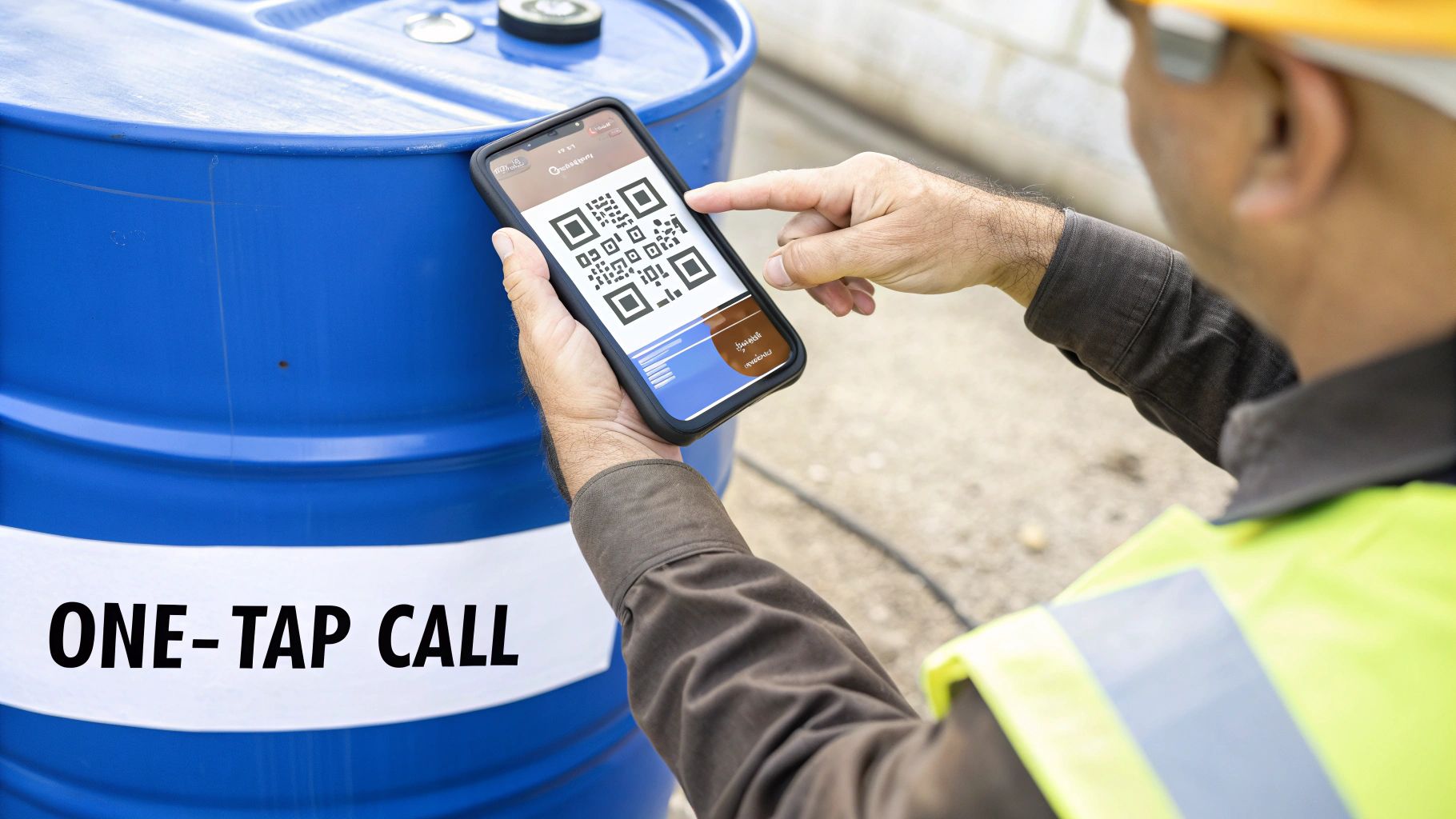
Think about it: an employee finds a leaking drum. Instead of scrambling for a binder or trying to remember a protocol, they just pull out their phone. They scan a QR code on the container and instantly get a button that says, "Call CHEMTREC." That one-tap access gets rid of the guesswork and shaves critical seconds off the response time.
From Static Data to Actionable Safety
Digital chemical management platforms take the CHEMTREC number from a passive line item on a safety sheet and turn it into an active, life-saving tool. By embedding this vital contact information right into mobile-friendly workflows, you're putting it in the pocket of every employee.
This strategy gets safety information out of the main office and into the hands of the people on the floor, right at the point of risk. It empowers every single team member to act with confidence, creating a much more resilient and proactive safety culture.
The Power of Instant Access: An effective safety program isn't about having information somewhere—it's about getting it to the right person in seconds, not minutes. Digital access cuts out the search, essentially turning every employee’s phone into a direct line to emergency support.
How Digital Systems Sharpen Your Emergency Response
Bringing emergency contacts into a digital platform like NextSDS gives you several huge advantages that paper-based systems just can't offer. This isn't just about convenience; it’s about building a stronger, more reliable safety net for your entire operation.
Here are a few features that make a massive difference:
- Mobile Safety Cards: Think of these as digital cheat sheets. They give a quick summary of a chemical's hazards, PPE, and first aid, with the CHEMTREC number displayed right at the top for one-tap calling.
- QR Code Accessibility: Slapping a QR code on a barrel or storage rack means anyone with a phone can get the correct SDS and emergency contacts for that specific chemical on the spot.
- Automated Information Delivery: As soon as an incident is logged in the system, it can automatically send alerts with emergency contact details and procedures to supervisors and first responders.
By stepping away from outdated methods, you ensure the information your team relies on is always correct, current, and available when they need it most. To get a better feel for how these platforms work, you can check out our complete guide to SDS management software and see how it transforms workplace safety.
Common Questions About Using the CHEMTREC Number
Even after you get the basics down, some practical questions always pop up. Let's tackle some of the most common ones that EHS managers and logistics coordinators ask about using the CHEMTREC emergency number.
Can We Use the CHEMTREC Number If We Aren't Registered?
This is a big one, and the answer is a firm "no"—at least if you're a chemical shipper. While anyone can call the number in a true emergency, you absolutely cannot list the CHEMTREC emergency contact number on your shipping papers, labels, or Safety Data Sheets (SDS) without being properly registered.
It’s not just a suggestion; it’s the law. The U.S. Department of Transportation has a rule for this (49 CFR § 172.604), and international regulations agree. You have to have an established relationship with the emergency provider you list. Registration gives CHEMTREC your specific product info, which is how they provide accurate, life-saving advice during a spill or exposure involving your materials. Trying to use the number without a registration can get you hit with heavy fines and stop your shipments in their tracks.
What's the Difference Between CHEMTREC and Poison Control?
Think of it this way: CHEMTREC handles the mess, while Poison Control handles the person.
CHEMTREC is all about incidents involving hazardous materials, especially when they're on the move or in a workplace. Their team gives guidance on controlling spills, leaks, and fires. The top priority is containment and keeping first responders safe.
Poison Control, on the other hand, is a medical hotline. They deal exclusively with human exposure to substances—whether it's a hazardous chemical or something like a household cleaner or a plant. If someone is exposed during a chemical incident, CHEMTREC can provide the initial first aid steps from the SDS and will often coordinate with or hand the caller off to Poison Control for specialized medical advice.
How Do We Get the Right Emergency Number to All Our Employees?
The old way of using paper binders and wallet cards just doesn't cut it anymore. In a real crisis, nobody has time to hunt for a document. The best approach is to build this critical information directly into the digital tools your team uses every day.
Modern chemical management platforms let you put the CHEMTREC number right onto digital safety cards that anyone can pull up on their phone. You can even link them to QR codes on your chemical containers. This gives everyone, from the forklift operator in the warehouse to the driver on the road, immediate access to the right emergency number right where they need it. It’s a simple change that makes sure your information is always current and instantly available.
Empower your team with instant access to critical safety information. NextSDS embeds emergency contacts directly into mobile workflows, putting one-tap access to CHEMTREC in every employee's pocket. Learn more about how it works.