

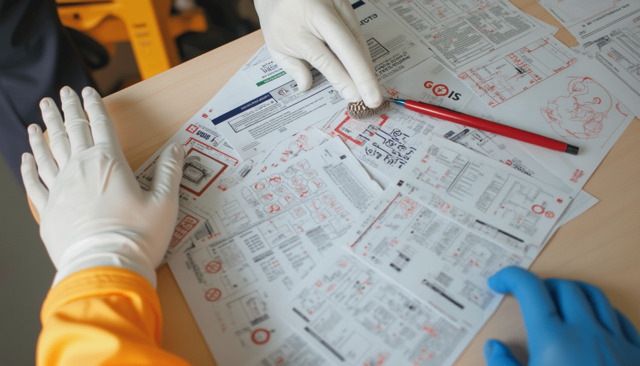
GHS (Globally Harmonized System) standardizes hazard communication for chemical safety worldwide. This guide covers essential requirements for compliant Safety Data Sheets (SDS).
SDS Section Requirements
Section 1-4: Basic Information
- Product identification and manufacturer details
- Hazard identification using standardized classifications
- Composition/ingredients with concentration ranges
- First-aid measures for various exposure routes
Section 5-8: Emergency Response
- Firefighting measures and suitable extinguishing media
- Accidental release procedures
- Handling and storage requirements
- Exposure controls and PPE specifications
Section 9-11: Properties and Effects
- Physical/chemical properties
- Stability and reactivity data
- Toxicological information with exposure effects
Section 12-16: Additional Information
- Ecological impact data
- Disposal considerations
- Transport regulations
- Regulatory information and revision history
GHS Hazard Classification
- Physical hazards (flammability, reactivity)
- Health hazards (acute toxicity, carcinogenicity)
- Environmental hazards (aquatic toxicity)
Pictogram Requirements
GHS mandates standardized pictograms for hazard communication:
- Red diamond borders
- Black symbols on white background
- Specific pictograms for hazard classes
Implementation Best Practices
- Regular SDS updates (minimum every 5 years)
- Electronic SDS management systems
- Staff training on GHS interpretation
- Multi-language compliance where required
Common Compliance Challenges
- Maintaining current chemical inventories
- Tracking regulatory changes
- Ensuring consistent hazard classification
- Managing multiple language requirements
*[GHS]: Globally Harmonized System of Classification and Labelling of Chemicals *[PPE]: Personal Protective Equipment *[SDS]: Safety Data Sheet