

When you're dealing with hazardous chemicals, the Safety Data Sheet (SDS) is the single most important document you have. It might seem a bit overwhelming at first, but its 16-section format is actually designed to make your life easier. This global standard replaces the old, inconsistent formats and creates a universal language for chemical safety.
Your Essential Roadmap to Chemical Safety
It helps to think of an SDS less like a boring compliance form and more like a detailed instruction manual for a hazardous substance. Each of its 16 sections provides a different piece of the puzzle, guiding everyone from emergency responders who need first-aid advice in a hurry to safety managers checking off their regulatory boxes.
This clear, predictable structure is the result of the Globally Harmonized System of Classification and Labelling of Chemicals (GHS). Before GHS came along, the old Material Safety Data Sheets (MSDS) were a bit of a free-for-all. Formats varied wildly, making it a nightmare to find crucial information quickly, especially when things went wrong. Moving to a strict 16-section format was a massive leap forward for workplace safety worldwide. If you're new to this, it's worth getting a handle on what a Safety Data Sheet is and the role it plays in keeping people safe.
From MSDS to the Modern SDS
The switch from the old MSDS to the current 16-section SDS was more than just a name change; it was a fundamental shift in how we communicate chemical hazards. The whole point was to create one clear, consistent system that cuts through the confusion and better protects workers, no matter where they are or what industry they're in.
This diagram shows that evolution perfectly, from the jumbled mess of old formats to the streamlined, GHS-compliant SDS we use today.
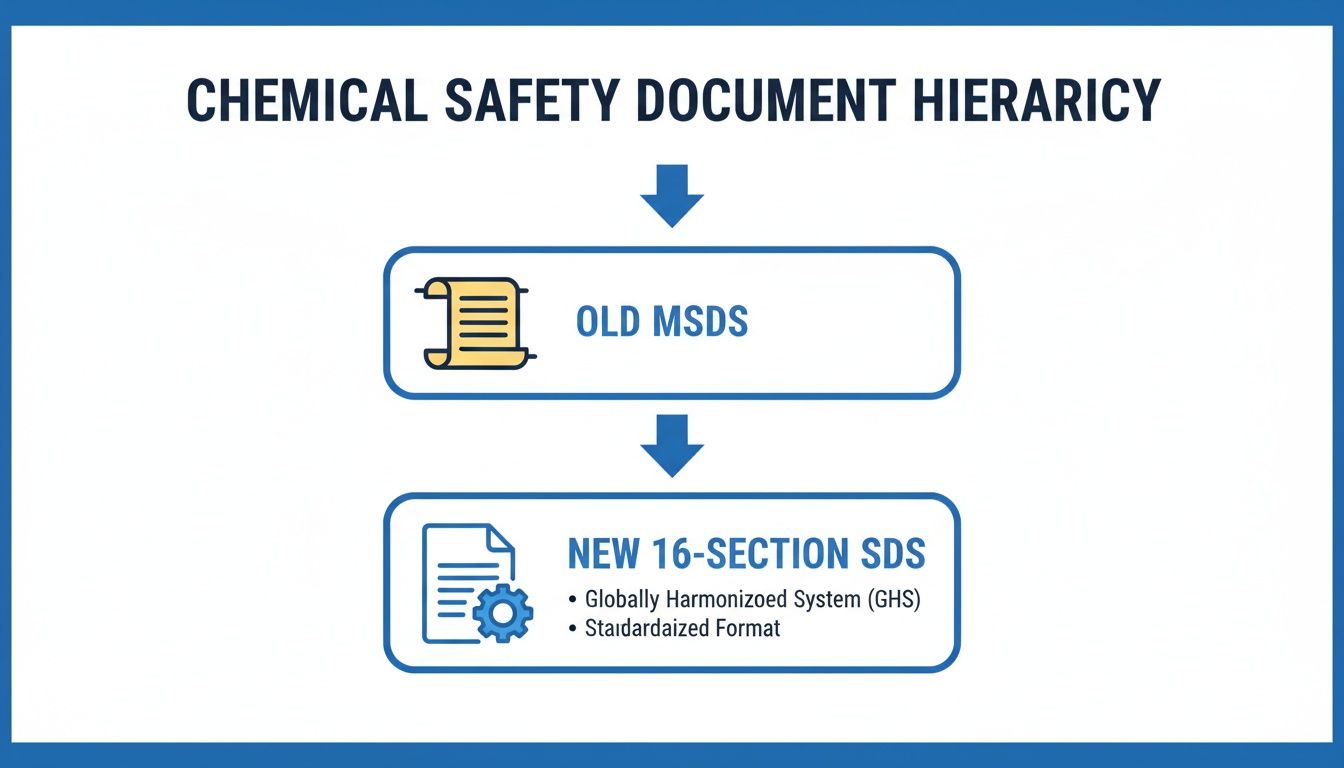
The big takeaway here is standardisation. By forcing every SDS to follow the exact same layout, GHS ensures that safety information is always where you expect it to be, making it far easier for a global workforce to find and understand.
The Purpose of a Standardised Format
So, why does a consistent structure matter so much? Simple: it guarantees that critical data is always in the same place. An emergency responder in Brussels knows to look at Section 4 for first-aid measures, just as a warehouse manager in Birmingham knows to check Section 7 for handling and storage instructions. There's no guesswork involved.
To help you get your bearings, let's start with a quick overview of all 16 sections.
Quick Overview of the 16 SDS Sections and Their Purpose
This table gives you a bird's-eye view of each section's role. Think of it as your quick-reference guide before we dive into the specifics of each one.
| Section Number | Section Title | Core Purpose |
|---|---|---|
| 1 | Identification | Identifies the chemical, its intended use, and the supplier's contact info. |
| 2 | Hazard(s) Identification | Details all hazards of the chemical and the required label elements. |
| 3 | Composition/Information on Ingredients | Lists the chemical ingredients, including impurities and stabilisers. |
| 4 | First-Aid Measures | Provides immediate medical care instructions for exposure. |
| 5 | Fire-Fighting Measures | Recommends how to extinguish a fire involving the chemical. |
| 6 | Accidental Release Measures | Gives instructions for responding to spills, leaks, or releases. |
| 7 | Handling and Storage | Outlines safe handling practices and storage conditions. |
| 8 | Exposure Controls/Personal Protection | Lists exposure limits and specifies required personal protective equipment. |
| 9 | Physical and Chemical Properties | Describes the substance's physical and chemical characteristics. |
| 10 | Stability and Reactivity | Details the chemical's stability and potential hazardous reactions. |
| 11 | Toxicological Information | Explains the potential health effects from exposure. |
| 12 | Ecological Information | Describes the environmental impact of the chemical. |
| 13 | Disposal Considerations | Provides guidance on safe disposal of the chemical. |
| 14 | Transport Information | Gives shipping and transport classification information. |
| 15 | Regulatory Information | Lists safety, health, and environmental regulations for the substance. |
| 16 | Other Information | Includes the date of preparation or last revision. |
With this map in hand, we can now explore each section in detail, breaking down this vital information into practical safety actions for your team.
Decoding a Chemical's Identity and Hazards
Think of the first three sections of any Safety Data Sheet as the chemical’s passport. They give you the most critical, top-level information you need to quickly identify what you’re dealing with, understand its immediate dangers, and know what’s inside. Getting this right is the bedrock of your entire chemical safety programme.
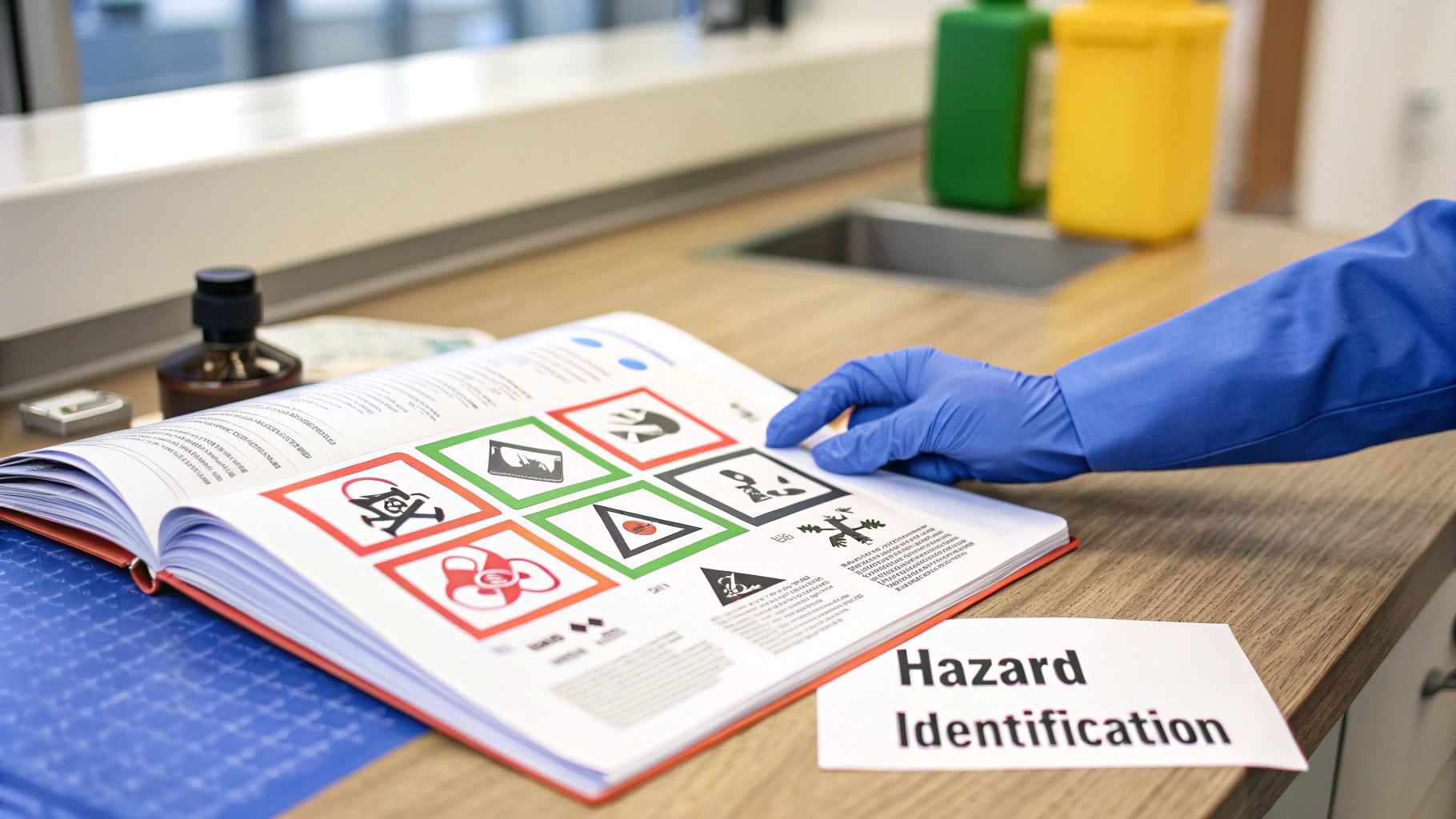
These opening sections are far more than just administrative details. They are your first line of defence, providing a snapshot that informs everything from procurement decisions right through to emergency response.
Section 1: Identification – The Starting Point
Section 1 is the 'who' and 'what' of the chemical. It confirms the product's identity, its intended use, and who supplied it. Consider this your first checkpoint to make sure you have the right substance for the job.
Key details you’ll always find here include:
- Product Identifier: The official name that appears on the label.
- Recommended Use: What the chemical is designed for.
- Uses Advised Against: Specific applications the manufacturer expressly warns against.
- Supplier Details: The name, address, and emergency phone number of the responsible company.
Having accurate supplier information is non-negotiable. If an incident occurs, that emergency number is your direct line to expert advice. Unfortunately, compliance gaps often appear right here. While the 16-section SDS format is mandatory in the EU under REACH and CLP regulations, a 2013 study of SDSs from suppliers in Belgium found some alarming issues. The study revealed 20% of SDSs lacked information on recommended uses, and an astonishing 66% omitted 'uses advised against', creating a massive blind spot for safety managers. You can delve into these chemical safety compliance findings to better understand the scale of the problem.
Section 2: Hazard Identification – A Visual Warning System
If Section 1 gives the chemical a name, Section 2 is its warning label. This is arguably the most visually crucial part of the entire document, engineered for quick, unambiguous interpretation in any situation. It uses standardised elements to communicate risk at a glance.
This section translates complex toxicology into simple, universal symbols and phrases. It’s where you’ll find the GHS pictograms, signal words, and hazard statements that form the core of modern chemical safety communication.
Here’s what you should expect to see:
- Hazard Classification: For example, "Flammable Liquid, Category 2".
- Signal Word: Either "Danger" for severe hazards or "Warning" for less severe ones.
- Hazard Pictograms: The familiar red-bordered diamonds that symbolise risks like corrosion, flammability, or acute toxicity.
- Hazard Statements (H-statements): Standardised phrases that describe the nature of the hazard (e.g., "H225: Highly flammable liquid and vapour").
- Precautionary Statements (P-statements): Practical instructions on how to prevent or minimise adverse effects from exposure.
Section 3: Composition – The Chemical Recipe
Finally, Section 3 breaks down the chemical’s formula. It lists the ingredients and their unique identifiers, making it an indispensable resource for medical professionals treating an exposure or for chemists assessing potential reactions.
This section reveals the specific components and their concentrations, which is vital for both transparency and risk assessment. The most important piece of data here is the CAS (Chemical Abstracts Service) number. This is a unique numerical identifier assigned to every single chemical substance. Think of it as a universal fingerprint, cutting through any confusion from different chemical names or synonyms and allowing for precise cross-referencing against global restricted substance lists.
Mastering Emergency Response Procedures
When something goes wrong, the first few minutes are everything. What you do in that initial window can mean the difference between a minor incident and a full-blown catastrophe. This is precisely why Sections 4, 5, and 6 of the Safety Data Sheet are your emergency playbook—clear, direct instructions for when you need them most.
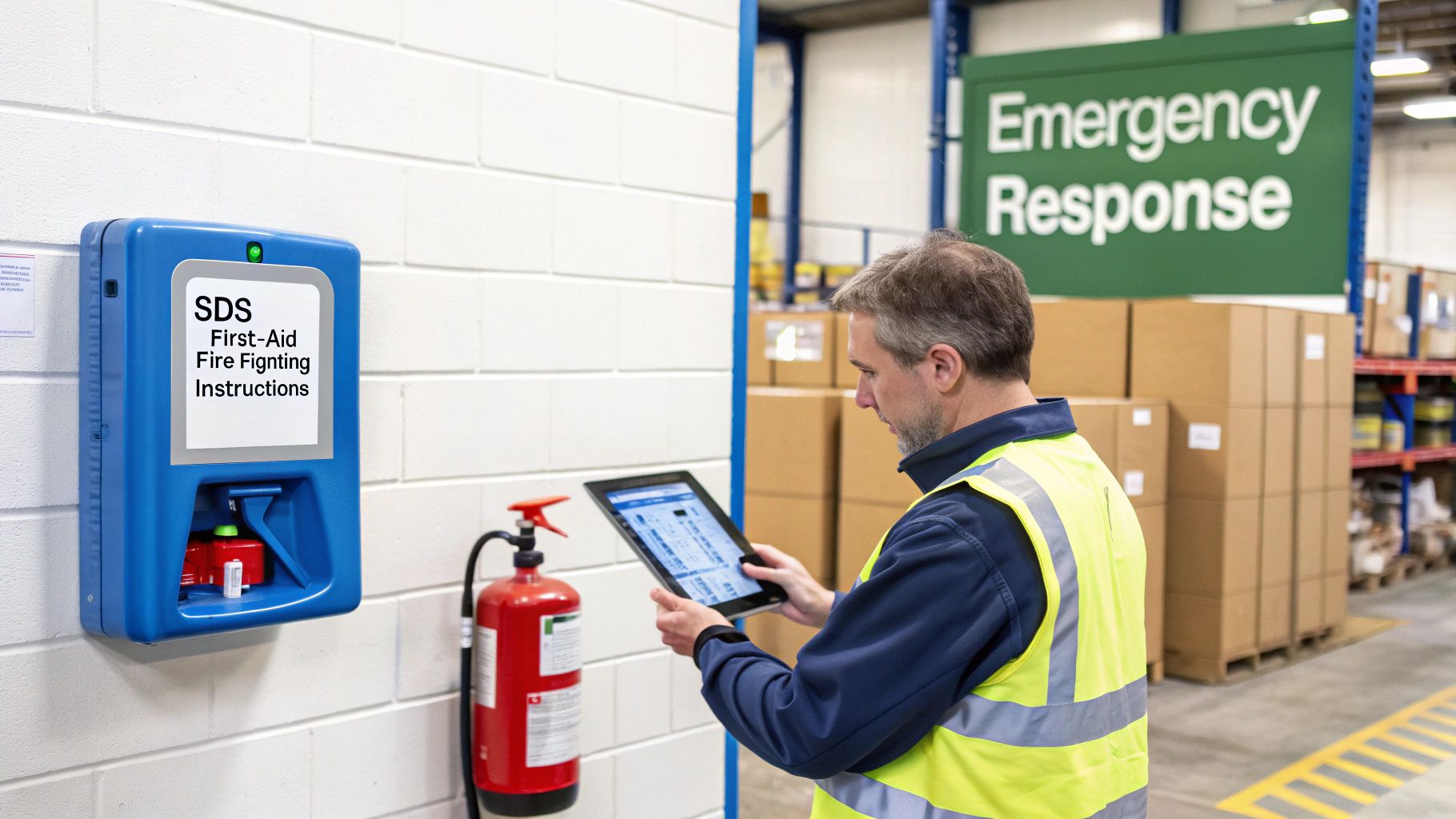
These three sections of the material safety data sheet 16 sections format are built for fast action. They give your team the critical information needed to act decisively and safely when the pressure is on.
Section 4: First-Aid Measures
This section is all about immediate, life-saving instructions for different kinds of exposure. It’s written in straightforward language so that anyone, even without medical training, can provide initial care while waiting for the professionals. Think of it as a direct line to the manufacturer's own medical advice.
The guidance is broken down by the specific way someone was exposed:
- Inhalation: What to do if someone has breathed in vapours or fumes.
- Skin Contact: The right steps for decontaminating after direct contact.
- Eye Contact: Precise instructions for flushing eyes safely.
- Ingestion: Critical advice if the substance has been swallowed.
This is exactly the information you need to relay to first responders, giving them a vital head-start on the correct treatment. It also details the key symptoms to watch for—both immediate and delayed—and clearly states when professional medical attention is essential.
Section 5: Fire-Fighting Measures
Not all fires are created equal. Using the wrong extinguisher can have disastrous results; for example, throwing water on certain chemical fires could spread contamination or even trigger an explosion. Section 5 takes the guesswork out of the equation, telling you exactly how to tackle a blaze involving that specific substance.
This section is your fire safety blueprint. It details not only what to use to extinguish a fire but also what hazardous byproducts might be created during combustion, protecting both your staff and the fire brigade.
It outlines the suitable extinguishing agents, like foam, dry chemical, or carbon dioxide, and just as importantly, lists any that are unsuitable. It also flags the specific hazards that can arise when the chemical burns, such as the release of toxic gases.
To truly be prepared, it’s not enough to just read the SDS; you also need a solid understanding of using fire extinguishers effectively in any situation.
Section 6: Accidental Release Measures
Spills and leaks are some of the most common incidents in the workplace. Section 6 provides a step-by-step guide for containment and clean-up, designed to protect your people, prevent environmental contamination, and get the area secure. It’s the practical manual for turning chaos back into control.
This section covers the critical operational details:
- Personal Precautions: Specifies the exact Personal Protective Equipment (PPE) the clean-up crew needs.
- Emergency Procedures: Outlines how to evacuate the area and remove any potential sources of ignition.
- Environmental Precautions: Details the measures needed to stop a spill from getting into drains or waterways.
- Containment and Clean-up: Describes the right methods and materials for absorbing and containing the spill.
By following these instructions, a safety manager can direct their team with confidence. They'll know the spill is being handled efficiently, with minimal risk to everyone involved and the surrounding environment.
Implementing Safe Handling and Exposure Controls
After getting a handle on emergency response, the focus of the 16 sections of a material safety data sheet naturally shifts to something far better: prevention. Sections 7 and 8 are where we move from reacting to incidents to proactively building a safe work environment. This is the blueprint for handling chemicals correctly and, most importantly, protecting your team from exposure day in and day out.
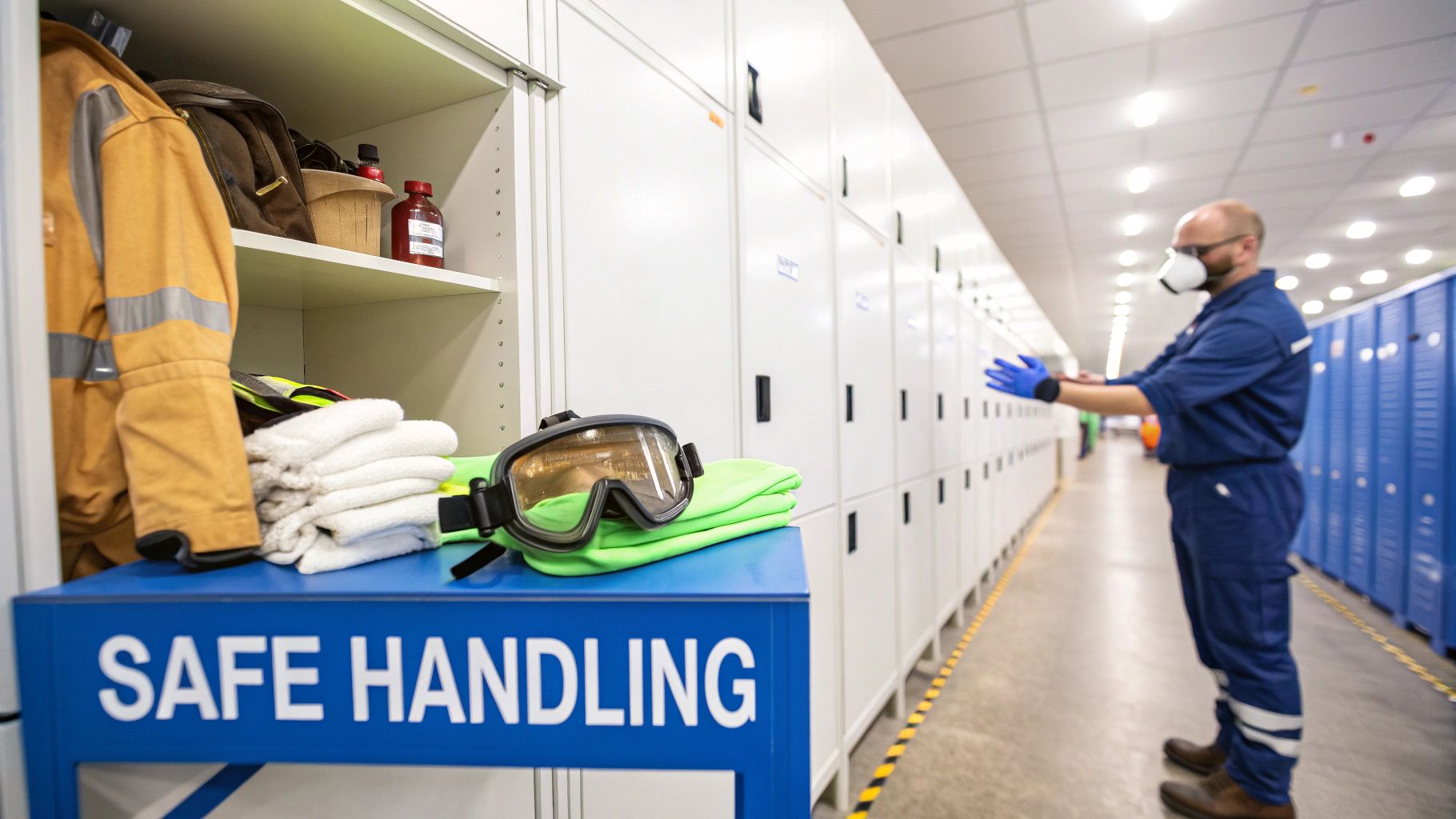
Think of these two sections as the daily rulebook for your facility. They take all the hazard information from earlier sections and translate it into practical, actionable steps. They're the core of your daily safety protocols, designed to stop accidents before they ever get a chance to happen.
Section 7: Handling and Storage
This section gives you the essential do's and don'ts for day-to-day operations. It's less about theory and more about concrete advice on safe work practices, hygiene, and the right conditions for storing the chemical. Proper storage is crucial for maintaining a substance's stability and preventing dangerous situations. A key part of this is the guidance on chemical incompatibilities.
Imagine trying to store two feuding families in the same small room—it’s a recipe for disaster. Section 7 acts as the mediator, telling you which substances must be kept separate to avoid a "chemical feud" that could result in fires, explosions, or the release of toxic gases.
It details specific requirements such as:
- Safe Handling Practices: Guidance on things like preventing aerosol generation, using chemicals only in well-ventilated areas, and avoiding direct contact with skin and eyes.
- Storage Conditions: Clear instructions on temperature, ventilation, and whether you need specific storage containers or dedicated rooms.
- Incompatible Materials: A list of other chemicals or materials that must be kept apart to prevent dangerous reactions.
This is indispensable information for warehouse managers and logistics teams designing safe, compliant storage layouts. It directly informs your site's risk assessments and helps you meet occupational health and safety standards like ISO 45001.
Section 8: Exposure Controls and Personal Protection
While Section 7 focuses on the chemical and its environment, Section 8 zeroes in on protecting the individual worker. This is where the SDS gets really specific about the gear and controls needed to keep your team safe. It provides the technical data required to ensure exposure levels stay well below harmful thresholds.
Section 8 is the cornerstone of personal safety. It defines the maximum acceptable airborne concentration of a substance—the Occupational Exposure Limit (OEL)—and specifies the exact Personal Protective Equipment (PPE) required to work safely below that limit.
This is where you find the precise details on what your team needs to wear. It’s not just a vague suggestion like "wear gloves"; it specifies the exact material (e.g., nitrile vs. latex), the required thickness, and even the breakthrough time. If someone needs respiratory protection, it will specify the type of respirator and the correct filter cartridge. To learn more about selecting the right gear, check out our detailed guide on personal protective equipment for chemicals.
Key elements you'll find in Section 8 include:
- Occupational Exposure Limits (OELs): These are legally defined limits like Time-Weighted Averages (TWA) and Short-Term Exposure Limits (STEL).
- Engineering Controls: Recommendations for workplace design, such as local exhaust ventilation or fume hoods, which minimise exposure at the source.
- Personal Protective Equipment (PPE): Detailed specifications for eye/face protection, skin protection (gloves, aprons), and respiratory protection.
Together, Sections 7 and 8 provide a complete framework for proactive safety. They empower you to design safe workflows, configure storage areas correctly, and equip your employees with the protection they actually need, turning compliance into a genuine culture of safety.
Getting into the Technical Details: Chemical Properties, Stability, and Health Effects
So far, we’ve covered the immediate dangers and what to do in an emergency. Now, we’re getting into the technical heart of the chemical with Sections 9, 10, and 11. This is where you’ll find its inherent characteristics, how it behaves in different situations, and what it could do to your body over time.
Think of these sections as the substance's technical manual. They're absolutely essential for understanding a chemical's performance limits and, more importantly, for handling it safely every single day. The data here is the bedrock for proper risk assessments, designing engineering controls, and setting up long-term health monitoring for your team. It turns complex chemistry into practical knowledge.
Section 9: Physical and Chemical Properties
This section gives you a detailed profile of what the substance is actually like. It’s not just a list of dry facts; every single point has a real-world safety implication. For example, the flash point tells you the lowest temperature where its vapours can catch fire. That’s critical information for deciding where to store it, keeping it well away from any potential sparks or heat sources.
You'll also find other key properties, such as:
- Appearance: This tells you what the chemical looks like—is it a colourless liquid or a white crystalline solid? It’s a simple but vital first check to make sure you’ve got the right product in front of you.
- pH: Is the substance acidic, basic, or neutral? This directly impacts what kind of PPE you need and helps you prepare for potential corrosion hazards.
- Vapour Density: This one is huge. It tells you if the vapour is heavier or lighter than air. A heavy vapour can sink and collect in low-lying areas like pits or basements, creating an invisible risk of suffocation or even an explosion.
- Solubility: How well does it dissolve in water? This is crucial for planning your spill clean-up strategy and preventing environmental contamination.
Section 10: Stability and Reactivity
Section 10 is your chemical warning system. It spells out exactly what conditions and materials you need to keep away from the substance to prevent a dangerous reaction. It’s all about identifying the triggers that could lead to a fire, an explosion, or the release of a toxic gas.
Getting this section right is fundamental to preventing incidents. It clearly lists:
- Reactivity: What are the specific hazards if this substance reacts?
- Chemical Stability: Is the chemical stable under normal conditions, or is it likely to break down?
- Conditions to Avoid: This is a list of triggers like static discharge, high temperatures, or even direct sunlight that could set it off.
- Incompatible Materials: It will name specific chemicals, like strong acids or oxidising agents, that must be kept separate to stop them from reacting violently.
Section 11: Toxicological Information
Finally, we get to the human element. Section 11 details the health effects a substance can have after it enters the body. This information is gold for health and safety managers, occupational hygienists, and medics. It goes much deeper than the simple first-aid advice in Section 4, giving you a comprehensive look at the potential health problems from exposure.
This section draws a clear line between immediate (acute) effects and long-term (chronic) health risks. This data is what you use to establish proper exposure limits and health surveillance programmes for your employees.
It breaks down the likely routes of exposure—inhalation, ingestion, or contact with skin and eyes—and describes the symptoms for each. You’ll also find critical toxicity data here, like whether the chemical is a known carcinogen (causes cancer), a mutagen (causes genetic mutations), or is toxic to reproduction. This is the scientific backbone for the PPE requirements back in Section 8 and is absolutely vital for protecting your team’s health in the long run.
Staying on the Right Side of Environmental and Transport Rules
A chemical's story doesn't end once it's been used. The final sections of the 16-section Safety Data Sheet format are all about managing the product’s complete lifecycle responsibly, from its impact on the environment to how it's transported and thrown away.
Getting these last parts right is what keeps your organisation compliant and prevents long-term environmental headaches. It’s a core part of effective chemical management and a key element of overall safety and compliance best practices for facility managers. This is where you find the data needed to dodge fines, protect local ecosystems, and keep your supply chain running smoothly.
What Happens to It in the Wild? And How Do I Get Rid of It?
Sections 12 and 13 deal with a product's environmental footprint and its eventual disposal. While Section 12 (Ecological Information) isn't mandatory under OSHA's rules in the US, it's required under GHS. It gives you the lowdown on how a substance could harm the environment, such as its toxicity to fish and other aquatic life.
Then you have Section 13 (Disposal Considerations). Think of this as your instruction manual for getting rid of chemical waste legally and safely.
Following the guidance in Section 13 is non-negotiable. Improper disposal can lead to severe environmental contamination and significant financial penalties from regulatory bodies.
This section provides clear, direct instructions. It helps you avoid common but dangerous mistakes, like pouring certain chemicals down the drain or mixing waste that shouldn't be mixed. It's all about making sure your end-of-life procedures are just as safe as your day-to-day handling.
Moving It and Dotting the I's
Shipping chemicals means navigating a maze of strict regulations. Section 14 (Transport Information) is your map, providing all the classifications needed to move a product by road, rail, air, or sea.
It includes critical details like:
- UN Number: A four-digit code that acts like a universal ID for the hazardous substance.
- Proper Shipping Name: The official, standardised name that must be used on all transport documents.
- Transport Hazard Class: Categorises the type of danger (e.g., flammable, corrosive).
- Packing Group: Shows the level of danger the substance presents.
Section 15 (Regulatory Information) is your final compliance check. It lists the specific national and international regulations that apply to the product, from health and safety rules to environmental inventories like REACH or TSCA. For a closer look at these global standards, our guide on GHS and SDS compliance goes into much more detail.
Finally, we arrive at Section 16 (Other Information). This often-overlooked section contains details like the date of the last revision. This tiny piece of information is hugely important. An outdated SDS means you could be operating with incorrect safety data, creating a massive compliance gap. Checking this date should be a regular part of your chemical safety programme.
Frequently Asked Questions About SDS Sections
Even with a detailed guide, a few common questions always pop up when you start working with the 16 sections of a safety data sheet in the real world. Let’s clear up some of the most frequent points of confusion so you can use this knowledge with confidence.
What’s the Difference Between an MSDS and an SDS?
The simple answer is standardisation. The old Material Safety Data Sheets (MSDS) were a bit of a free-for-all; there was no set format, so a document from one supplier could look wildly different from another. This made finding critical information in a hurry a real nightmare.
The modern Safety Data Sheet (SDS) fixes that. By following the GHS, every SDS has the same 16-section layout. This means no matter who made the chemical or where it came from, you know exactly where to look for vital safety info, which is a massive improvement for everyone.
Which Sections Are Most Important for Emergency Responders?
While every section has its purpose, first responders need to find life-saving information in seconds. For them, the absolute must-reads are:
- Section 2: Hazard Identification to get an immediate grasp of the dangers.
- Section 4: First-Aid Measures for instant medical advice.
- Section 5: Fire-Fighting Measures to understand how to fight a potential fire.
- Section 6: Accidental Release Measures for instructions on containing a spill.
These sections give them the essential data to get a situation under control and protect lives during the first critical moments of an emergency.
How Often Should a Safety Data Sheet Be Updated?
Legally, a supplier has three months to update an SDS after they become aware of any significant new hazard information or changes to protective measures. This keeps the information aligned with the latest scientific findings.
As a best practice, it’s a good idea to review your entire SDS library at least once a year. This helps you confirm you have the most recent versions from all your suppliers, which is fundamental for compliance and keeping your team safe.
Where Can I Find PPE Requirements in an SDS?
You'll find all the specific details on Personal Protective Equipment (PPE) in Section 8: Exposure Controls/Personal Protection. This isn't just vague advice; it gets right down to the nitty-gritty.
For example, it will specify the exact type of gloves needed (like nitrile or neoprene), the kind of eye protection required, and the appropriate respirator for handling the chemical safely. This advice is grounded in established Occupational Exposure Limits (OELs) and is the bedrock of any solid risk assessment.
Trying to manage a whole library of Safety Data Sheets, keep track of revision dates, and stay compliant across all 16 sections can feel like a full-time job. NextSDS is designed to handle this for you, using AI to pull out key data, check it against global regulations, and flag any important updates. Discover how NextSDS can simplify your chemical safety management.