
A mutagenic substance is a chemical or physical agent that permanently changes a cell's genetic material—its DNA. Think of it as an invisible saboteur, one that corrupts the very blueprint of life, potentially leading to devastating health problems like cancer or hereditary diseases.
Getting to Grips with Genetic Risk
Imagine your DNA is an incredibly detailed architectural plan, holding the precise instructions for every single cell in your body. A mutagenic substance is like a rogue editor, sneaking in and scribbling over that plan. These changes, called mutations, aren't temporary; they're permanent and get copied into every new cell that divides.
This isn't just a science-class concept; it has profound, real-world consequences. If a mutation happens in a normal body cell, it can set off a chain reaction of uncontrolled growth, which is how cancer begins. If the damage occurs in a reproductive cell, like sperm or an egg, that genetic flaw can be passed down to the next generation, resulting in inherited diseases.
The Different Faces of Mutagenic Hazards
The danger from mutagenic substances isn't limited to one specific industry or material. These agents show up in many different forms and workplaces.
- Chemical Mutagens: These are the most common type you'll find on the job. Examples include benzene (a component of petrol), ethylene oxide (used in sterilisation), and certain industrial dyes.
- Physical Mutagens: This group includes forms of energy powerful enough to damage DNA. Think of ultraviolet (UV) radiation from sunlight or the X-rays used in medical equipment.
- Biological Mutagens: Some viruses and bacteria can actually insert their own genetic code into our DNA, triggering mutations.
Recognising these different categories helps to grasp just how widespread the risk is. Mutagens are often discussed alongside carcinogens and reproductive toxins; together, they're known as CMR substances. For a closer look at this group, you can learn more about how CMR substances are categorised and regulated.
A core concept in toxicology is that while not all mutagens cause cancer, many carcinogens are, in fact, mutagens. The ability to damage DNA is one of the main ways cancer-causing agents do their dirty work.
Take, for example, the industrial regions of Belgium. Workers in chemical manufacturing and polyester resin production are known to have higher exposure risks. Studies conducted between 2013-2014 detected measurable mutagenic activity in air pollution samples across Flanders, showing how these invisible threats are a real problem in both our workplaces and the wider environment. This highlights just how crucial it is for HSE professionals to implement strong safety and monitoring programmes.
How Mutagens Cause Genetic Damage
To really get a handle on the risks of mutagenic substances, you first need to understand what they’re doing on a microscopic level. Think of your DNA as a long, perfectly crafted zipper. Each tooth is a chemical base, and they have to pair up in a precise way to keep your genetic code stable and working correctly.
A mutagen is essentially a microscopic saboteur that attacks this delicate structure. It can damage the zipper in a few different ways, creating permanent flaws in the biological blueprint that guides every cell in your body. This isn't just a temporary problem; it results in a lasting mutation that gets copied every single time a cell divides.
The following diagram breaks down the basic path from exposure to a substance to the resulting DNA damage.
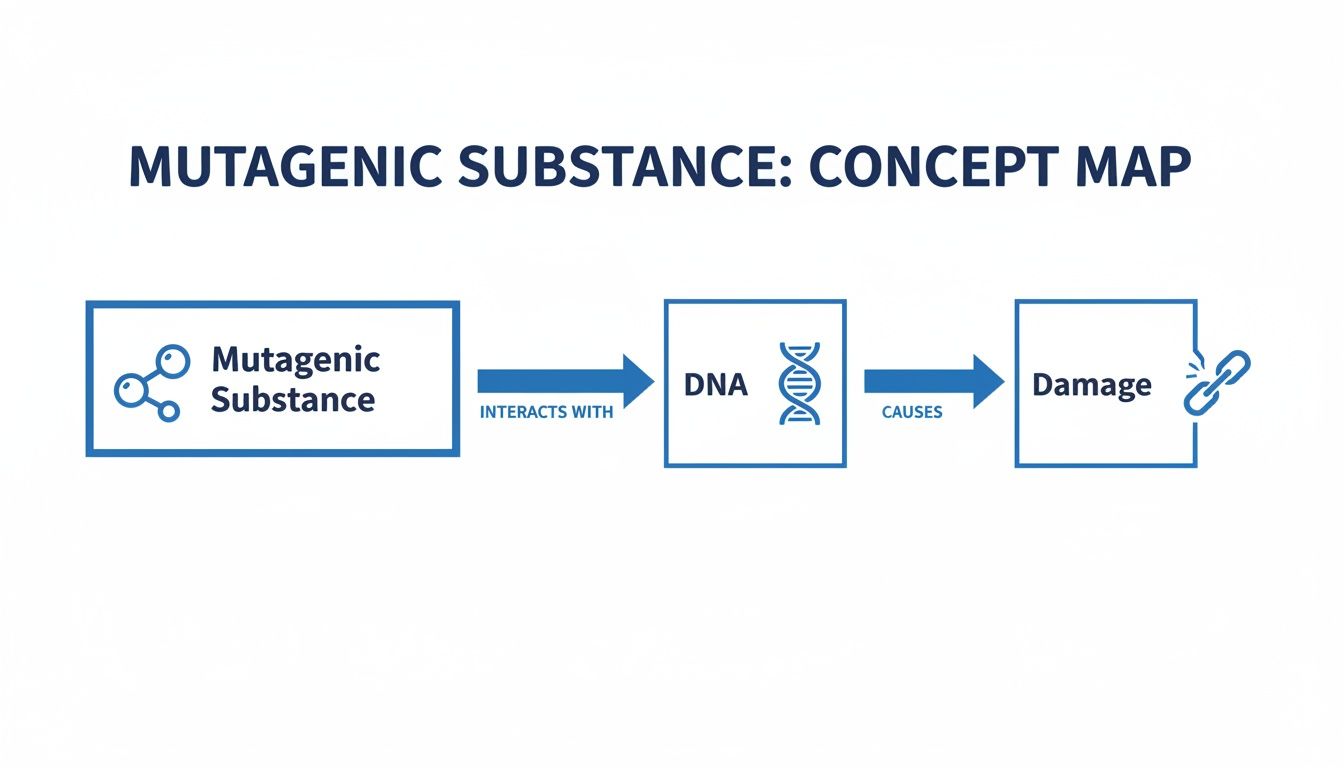
As you can see, it’s a clear cause-and-effect relationship. An external agent finds its way in and directly compromises our most fundamental genetic material.
Mechanisms of Mutagenesis
Not all mutagens work the same way. Their methods of attack fall into a few key categories, and each one has a different kind of impact on the DNA structure. Knowing these differences helps clarify why some chemicals are so much more dangerous than others.
We can group them into three main classes, each with its own way of causing genetic changes:
- Chemical Mutagens: These are substances that directly interact with DNA's chemistry. They are, by far, the most common type of mutagen you'll encounter in industrial and laboratory settings.
- Physical Mutagens: These are high-energy agents, like radiation, that can physically shatter the DNA molecule.
- Biological Mutagens: These are living organisms—think certain viruses or bacteria—that disrupt DNA by inserting their own genetic code into the host's genome.
Each of these categories contains agents that use different tactics to inflict damage.
How Chemical Mutagens Alter DNA
Chemical mutagens are especially important from a workplace safety perspective because they’re found in so many industrial products. Their action can be incredibly subtle, causing damage that might not show up for years.
A common method is called base substitution. Some chemicals have a structure so similar to our normal DNA bases that they can fool the cell into slotting them into the DNA strand during replication. Once these "impostors" are in place, they don't pair up correctly, leading to a permanent mistake in the genetic sequence. It’s like swapping a single letter in a sentence, which can change the entire meaning.
Another tactic involves base modifiers. These are chemicals that don’t replace the bases but instead alter them chemically. For instance, a substance might tack on a bulky chemical group to a base, which physically prevents it from pairing correctly and distorts the shape of the DNA helix. This is like bending a zipper tooth just enough that it can no longer connect with its partner.
The most severe chemical damage often comes from intercalating agents. These are flat molecules that are perfectly shaped to slide in between the DNA bases, literally pushing them apart. This shoves the entire genetic reading frame out of alignment, creating what’s known as a frameshift mutation, which can completely disable an entire gene.
The Impact of Physical and Biological Agents
Physical mutagens, on the other hand, inflict damage through sheer force. Ionising radiation, such as X-rays and gamma rays, carries so much energy that it can knock electrons right out of molecules. This creates highly reactive ions that can sever one or both strands of the DNA backbone, leading to large-scale structural damage known as chromosomal breaks.
Ultraviolet (UV) radiation from the sun is another very common physical mutagen. It’s less powerful than X-rays, but it has enough energy to cause adjacent DNA bases to fuse together. This creates a kink in the strand that messes up both replication and transcription.
Biological mutagens have a completely different strategy: they hijack the cell's own machinery. Certain viruses integrate their genetic material directly into our DNA. This can disrupt normal gene function and, in some cases, activate genes that lead to uncontrolled cell growth.
Understanding these different mechanisms makes it clear why a one-size-fits-all approach to safety just won't work. The risk from a radioactive source is fundamentally different from the risk posed by a chemical solvent, even though both are classified as mutagenic. It's also important to note that these substances are distinct from those that specifically harm reproductive health. To learn more about those differences, read our guide on what makes a reprotoxic substance hazardous. A proper risk assessment has to consider the specific nature of the mutagenic substance in question.
Decoding Hazard Labels Under GHS and CLP
All the complex science behind mutagenic substances is one thing, but being able to spot the danger in a busy workplace is another entirely. That’s where global hazard communication standards come in. These systems are designed to translate complex toxicological data into clear, simple symbols and phrases, allowing anyone, anywhere, to quickly understand the risks a chemical poses.
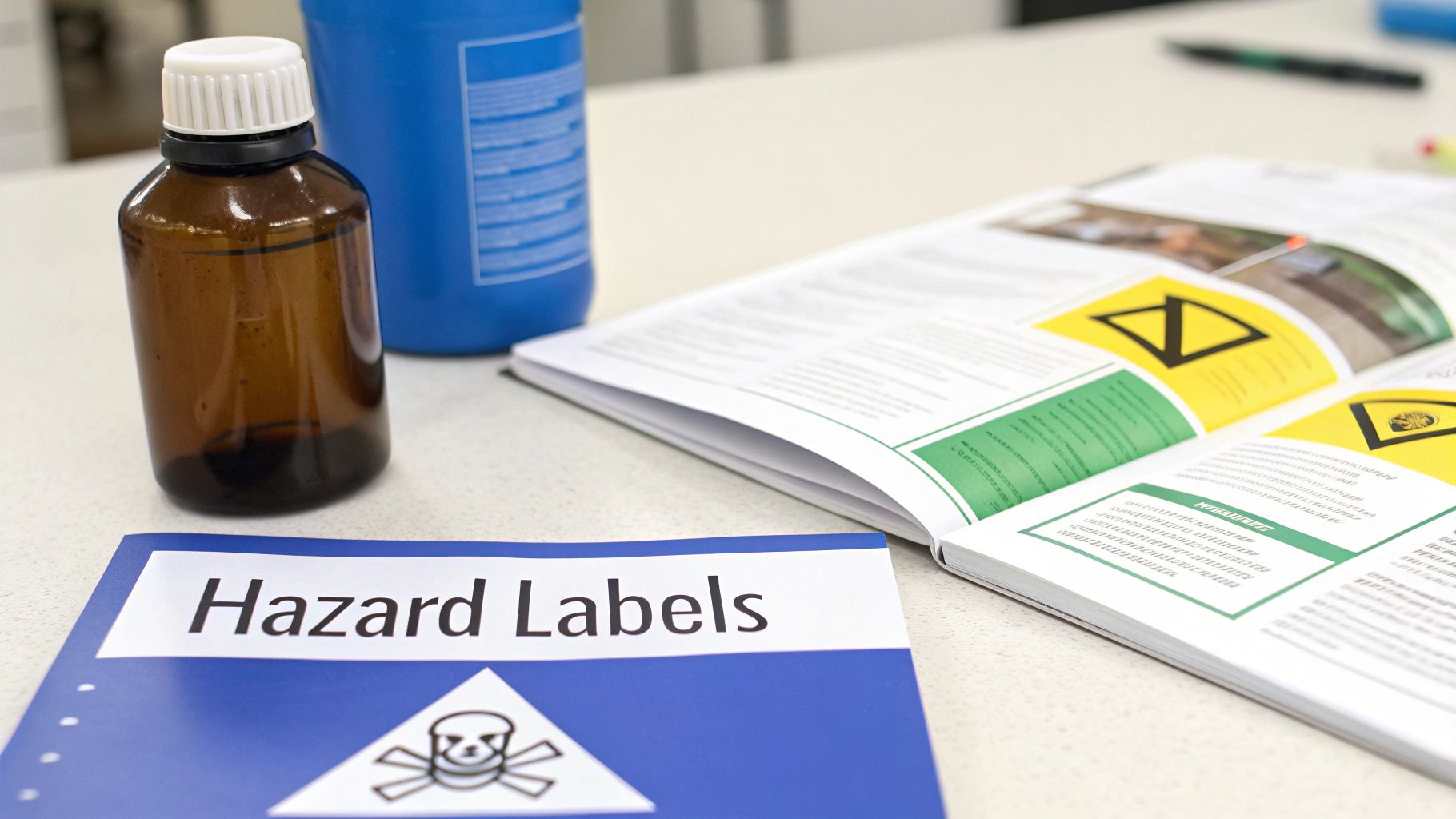
For anyone working in health and safety, especially across Europe, the two most important frameworks are the Globally Harmonised System of Classification and Labelling of Chemicals (GHS) and its European counterpart, the Classification, Labelling and Packaging (CLP) Regulation. Think of these as the universal language of chemical safety.
The Health Hazard Pictogram
When you're looking at a chemical container, your first clue to its potential as a mutagen is the GHS pictogram. For mutagenicity, carcinogenicity, and reproductive toxicity, the symbol you need to look out for is the Health Hazard pictogram.
This instantly recognisable image—a silhouette of a person exploding from within—is a serious warning sign for long-term health risks. It tells you at a glance that the substance can cause, or is suspected of causing, significant harm. This includes the kind of permanent genetic damage that defines a mutagen.
Understanding the Categories of Mutagenicity
Beyond just a symbol, GHS and CLP get more specific. They classify mutagens into different categories based on how strong the scientific evidence is. This classification is vital for proper risk assessment because it tells you not just if a substance is a hazard, but how certain scientists are about its ability to cause heritable genetic damage in humans.
To make this clear, here’s a breakdown of the classification categories and what they mean in practice.
GHS and CLP Categories for Germ Cell Mutagenicity
| Category | Criteria for Classification | GHS Hazard Statement | Meaning for Workplace Safety |
|---|---|---|---|
| Category 1A | Known human mutagen, based on strong human evidence (epidemiological studies). | H340: May cause genetic defects | Highest alert level. The substance is proven to cause heritable genetic damage in people. Requires the most stringent control measures. |
| Category 1B | Presumed human mutagen, based on strong animal evidence or other relevant data. | H340: May cause genetic defects | High alert level. The evidence strongly suggests it is likely to cause heritable mutations in humans. Treat with the same caution as a Category 1A substance. |
| Category 2 | Suspected human mutagen, based on limited or suggestive evidence from human or animal studies. | H341: Suspected of causing genetic defects | Caution required. The data raises concern but isn't conclusive. Protective measures are still essential, but the risk is considered less certain than in Category 1. |
This tiered system helps you apply a more nuanced approach to risk management. A substance in Category 1A demands immediate and rigorous controls, while a Category 2 substance still requires careful handling and protective measures to minimise any potential risk.
Translating Hazard and Precautionary Statements
Along with the pictograms and categories, chemical labels must include specific phrases. Hazard Statements (H-Statements) tell you the nature of the danger, while Precautionary Statements (P-Statements) give you advice on how to handle the chemical safely.
For a mutagen, the key H-statements to watch for are:
- H340 (May cause genetic defects): This is assigned to Category 1A and Category 1B mutagens. It's a definitive warning.
- H341 (Suspected of causing genetic defects): This is assigned to Category 2 mutagens, signalling a suspected risk.
These simple phrases are your direct line to understanding the level of danger. When you see H340 on a Safety Data Sheet (SDS), you know you're dealing with a proven or presumed human mutagen, which should be a non-negotiable trigger for implementing the strictest exposure controls.
A common point of confusion is the overlap between mutagenicity and carcinogenicity. While a substance that damages DNA can certainly lead to cancer, they are classified separately. Always check the SDS for both H340/H341 (mutagenicity) and H350/H351 (carcinogenicity) to get the full picture of the health risks involved.
This is especially relevant in industrial settings like those across Belgium, where chemical production contributes to environmental contamination. For instance, in the Benelux region, polyester resin production is a significant industry that uses styrene—a substance classified as Muta. 2 (H341) and Carc. 1B (H350). You can read the full report to learn more about chemical substance use in the Benelux region.
This real-world example shows how a single chemical can carry multiple serious health warnings that must be managed at the same time. Reading and understanding these labels isn't just a box-ticking exercise; it’s the bedrock of a safe workplace.
Implementing Practical Risk and Exposure Controls
Knowing a substance in your workplace is mutagenic is a critical first step, but it’s just that—a first step. True protection for your team means moving from identification to decisive action. Simply flagging a chemical as dangerous isn’t enough; you need a robust, multi-layered strategy to minimise, or better yet, eliminate exposure. This is exactly where the time-tested hierarchy of controls provides a powerful and practical framework.
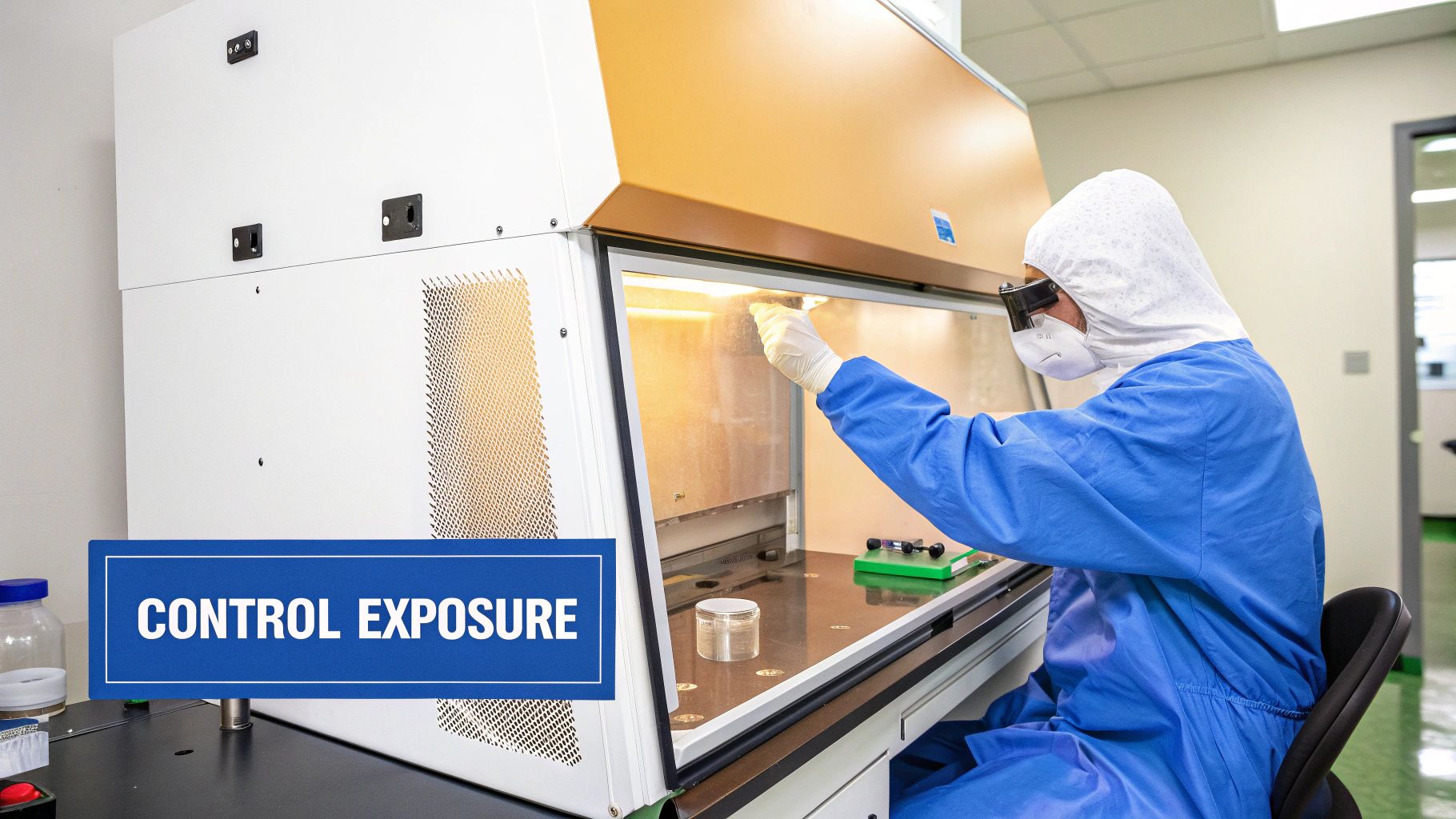
This hierarchy isn’t just a list of suggestions. It’s a strategic approach that forces you to prioritise the most effective and reliable safety measures first. The goal is to design safety right into the process itself, rather than depending on people to follow rules perfectly every single time.
Starting at the Top: The Hierarchy of Controls
Think of the hierarchy as an inverted pyramid. The most effective solutions are at the wide top, and the least effective (but still necessary) options are at the narrow bottom. You should always start at the highest level possible before working your way down.
- Elimination: The gold standard. Can you completely remove the hazardous process or substance? If you don't use it, it can't cause harm. It’s the most effective control, period.
- Substitution: If elimination isn't on the table, the next best thing is to replace the hazardous chemical with a safer alternative. Is there a non-mutagenic solvent that can do the same job?
- Engineering Controls: This is about making physical changes to the workplace to isolate people from the hazard. It’s a highly reliable method because it doesn't rely on human behaviour to work.
- Administrative Controls: These are all about changing the way people work. Think new procedures, specific training, or job rotations.
- Personal Protective Equipment (PPE): This is your absolute last line of defence. PPE protects individual workers, but it does absolutely nothing to remove the hazard itself.
By tackling this list in order, you build a resilient safety programme that doesn't rely on a single point of failure.
Putting Controls into Practice
Let's ground this theory in reality. Imagine your facility uses a volatile mutagenic solvent. Applying the hierarchy means following a clear, logical thought process.
First, you’d ask if the entire process is even necessary (Elimination). If it is, the next question becomes: can we swap out this chemical for a less harmful one (Substitution)? This could mean replacing benzene with toluene or another, less toxic solvent.
If substitution is off the cards, you move to Engineering Controls. This is where you invest in your infrastructure. Practical examples include:
- Installing a fume hood or a ventilated enclosure to capture emissions right at the source.
- Implementing a closed-transfer system to move the chemical from one container to another without it ever being exposed to the open air.
- Using general dilution ventilation to lower the overall concentration of the substance in the work area.
The core idea behind engineering controls is to contain the mutagenic substance so it never reaches an employee's breathing zone. This physical barrier is far more dependable than simply telling someone to be careful.
Next up, Administrative Controls add another protective layer. These are the rules and procedures that dictate how people perform their tasks. This could mean establishing restricted "red zones" where only authorised, trained personnel are allowed, or implementing job rotation to limit how long any single person is exposed.
Finally, you specify the correct Personal Protective Equipment (PPE). This might include chemical-resistant gloves, specialised respirators fitted with the right cartridges, and splash-proof goggles. While absolutely essential, PPE is the final resort because it can fail, be worn incorrectly, or simply not be used.
The table below gives some practical examples of how to apply this hierarchy specifically to mutagenic substances.
| Control Level | Description | Practical Example for Mutagens |
|---|---|---|
| Elimination | Physically remove the hazard | Discontinue a manufacturing process that requires a known mutagen like formaldehyde. |
| Substitution | Replace the hazard | Swap a mutagenic solvent like benzene for a safer alternative like heptane in a cleaning process. |
| Engineering | Isolate people from the hazard | Install a ventilated enclosure or a glove box for handling powdered mutagenic dyes. |
| Administrative | Change the way people work | Implement strict work procedures and limit access to areas where ethylene oxide is used for sterilisation. |
| PPE | Protect the worker with gear | Require workers to wear nitrile gloves, lab coats, and respirators when handling cytotoxic drugs. |
Ultimately, relying on a combination of these controls creates a much safer environment than depending on just one.
Building a Complete Chemical Safety Programme
A cornerstone of any effective control strategy for mutagens is a detailed and up-to-date hazardous substance register. This document acts as a comprehensive inventory of all hazardous materials on-site, forming the foundation of your entire programme.
Beyond just an inventory, a robust programme must include:
- Regular Risk Assessments: Systematically identify where exposures could happen and constantly evaluate how well your current controls are working.
- Health Surveillance: For employees who may be exposed, a health monitoring programme can help detect early signs of any adverse health effects.
- Clear Communication: Ensure every worker understands the risks, knows the controls in place, and is trained on the procedures they must follow. Your primary tool here is the Safety Data Sheet (SDS), especially the toxicological data it contains. For a deeper look, you can explore the details of SDS Section 11 toxicological information in our related guide: https://nextsds.com/blog/section11-toxicological-information/
- Emergency Preparedness: Have clear, well-rehearsed procedures for handling spills, leaks, or any accidental exposures.
By integrating all these elements, you create a dynamic and proactive safety culture. It's about moving beyond simple compliance to actively protecting your team from the silent threat of mutagenic substances.
Keeping Pace with Global Mutagenic Chemical Regulations
If you handle chemicals, you know that keeping up with the tangled web of global regulations is a massive headache. A substance flagged as mutagenic in one country might have completely different rules in another, which turns procurement and safety into a tightrope walk for your teams. This jumble of regulations means a centralised, always-on approach to chemical management isn't just a good idea—it's essential.
The European Union's REACH (Registration, Evaluation, Authorisation and Restriction of Chemicals) framework is one of the most comprehensive and influential systems out there. It’s the rulebook for how chemicals are made, imported, and used across the EU market.
Why the REACH SVHC List Matters So Much
At the core of REACH is the Substance of Very High Concern (SVHC) list. Think of it as a watchlist for chemicals that pose serious threats to our health or the environment, which absolutely includes mutagens classified as Category 1A or 1B. When a substance lands on this list, it sets off a chain reaction of legal duties for any company supplying it.
Getting a substance onto this list is a big deal. A member state or the European Chemicals Agency (ECHA) puts forward a proposal, which is then opened up for public feedback. If it passes muster, it’s officially added to the Candidate List.
This is the point of no return. The moment a chemical hits the Candidate List, the clock starts ticking on new responsibilities. Suppliers must immediately provide customers with a safety data sheet and notify ECHA if their products contain an SVHC above a concentration of 0.1% by weight.
The business impact is immediate. Your procurement team needs to know now if a new chemical contains an SVHC, and your compliance team has to get its reporting done right away. Dropping the ball here can lead to some hefty fines.
A Look at Other International Rules
While REACH is a giant in the regulatory world, it’s not the only game in town. Other major economies have their own systems, each with its own set of rules.
OSHA (United States): The Occupational Safety and Health Administration’s Hazard Communication Standard is built on GHS principles. It mandates that employers keep a list of hazardous chemicals, label everything correctly, and train their staff. However, its processes for authorising and restricting chemicals are different from REACH.
TSCA (United States): Run by the EPA, the Toxic Substances Control Act governs new and existing chemicals. It involves deep-dive risk evaluations that can result in substances being restricted or banned outright if they're deemed too risky.
Global Variations: Other countries have their own versions, like UK REACH, K-REACH in South Korea, and different standards across Canada and Australia. Each has its own list of substances that are either restricted or require reporting.
The problem is plain to see: a chemical that's fine under one set of rules could be heavily restricted under another. It’s not just about hazard labels; understanding the broader legal frameworks for chemical substances is crucial for staying out of trouble. Trying to track these lists by hand is more than just slow—it's a near-impossible task for any company with a decent-sized supply chain.
Exposure to mutagens at work is still a major worry across Europe. An estimated 31 million tonnes of carcinogenic, mutagenic, and reprotoxic chemicals are produced in Europe every year, highlighting the sheer scale of the problem. While regulations aim to establish firm exposure limits, it's a constant battle for safety managers to monitor and enforce them effectively. You can discover more about European workplace exposure data581397_EN.pdf) from research by the European Parliament.
This regulatory maze makes a powerful case for an automated system. A modern compliance platform can check every single chemical in your inventory against these global lists in real-time. This gives you instant alerts and makes sure your business stays compliant, no matter where you operate.
Keeping Up with Chemical Compliance Without the Headache
Staying on top of global chemical regulations can feel like trying to hit a moving target. What’s perfectly acceptable in one country could be heavily restricted in another, creating a massive compliance headache for anyone in procurement or safety. Trying to track all these rules manually with spreadsheets and binders isn't just slow—it's an open invitation for something to slip through the cracks. It's this constant pressure that’s pushing so many organisations to ditch the reactive manual checks for a more proactive, automated approach to chemical management.
Think of it like having a digital safety officer on duty 24/7, tirelessly scanning every single chemical in your inventory. That's essentially what modern compliance platforms do. Instead of someone spending hours cross-referencing a new solvent against the REACH SVHC list, the system flags it instantly the moment the Safety Data Sheet (SDS) arrives. This simple shift turns chemical management from a periodic, time-consuming chore into a continuous, automated safety net that just works in the background.
This is where old-school compliance and modern risk prevention really part ways. A smart system doesn't just act as a digital filing cabinet for your SDSs; it actually reads and understands them. It pulls out the critical data—like CAS numbers and hazard statements—and uses that intelligence to actively protect your business and your people.
From Manual Drudgery to Instant Insight
The real magic of automation is its ability to connect the dots in a way no human ever could. A sophisticated platform can screen every ingredient in every product against dozens of international watchlists at the same time. This means you get an immediate heads-up the second a regulator updates a rule or adds a mutagenic substance to a list of concern.
For example, a platform like NextSDS gives you a clear dashboard view of your entire chemical landscape, highlighting potential compliance gaps at a glance.
This visual-first approach makes it immediately obvious which products carry the highest risks, such as those containing a Category 1B mutagen. It allows you to focus your safety efforts where they’re needed most, turning a mountain of dense data into a simple, actionable overview.
The system can even stop risks from ever entering your facility. By integrating directly into your procurement process, it can flag a problematic chemical for review before an order is even placed. This prevents a restricted mutagenic substance from ever making it to your loading dock, building safety right into the foundation of your supply chain.
Turning Data into Actionable Safety on the Floor
An automated system isn't just a tool for managers sitting in an office; it delivers practical, life-saving tools for the team on the front line. Here’s how it helps:
- Automated Flagging: Instantly identifies and tags any product containing a known or suspected mutagen based on its GHS classification (H340/H341). No more manual searching.
- Regulatory Alerts: Sends real-time notifications if a chemical you use is suddenly added to a critical list, like the REACH SVHC Candidate List.
- Mobile Safety Cards: Generates easy-to-read, one-page safety summaries accessible via a QR code. This gives workers instant access to crucial PPE requirements and emergency procedures right on their phones.
This kind of automation is especially critical in regions with complex industrial footprints. For instance, a recent analysis of wastewater across Europe pointed to Belgium as an area of significant concern for chemical exposure. The study discovered high concentrations of drug residues, some with potential mutagenic properties, in almost every city tested. You can learn more about these environmental findings in Belgium to get a clearer picture of regional risks. This context really drives home the need for robust, automated systems to manage chemical inventories and ensure you’re meeting every single regulation.
Frequently Asked Questions
Got questions about mutagens? You're not alone. Here are straightforward answers to the questions we hear most often from safety and procurement managers on the front line.
What's the Difference Between a Mutagen and a Carcinogen?
Think of it like this: a mutagen changes the blueprint, while a carcinogen can cause the building to collapse. A mutagen directly damages a cell's DNA, creating a permanent, heritable change—a mutation. A carcinogen is any substance that can lead to cancer.
The two are often linked because DNA damage is a common starting point for cancer. So, many mutagens are also carcinogens. However, not all carcinogens work by damaging DNA; some promote cancer in other ways. That's why they're classified separately. Always check Sections 2 and 11 of the SDS for their specific hazard statements: H340/H341 for mutagens and H350/H351 for carcinogens.
How Can I Quickly Identify a Mutagenic Substance on Site?
Your best friend here is the Safety Data Sheet (SDS). Don't get lost in the details—go straight to Section 2 (Hazard Identification).
You're looking for the GHS health hazard pictogram (the 'exploding person' symbol). More importantly, look for the specific hazard statements: H340 ('May cause genetic defects') or H341 ('Suspected of causing genetic defects'). If you want the science behind that classification, Section 11 (Toxicological Information) will have the supporting data. Of course, modern chemical management systems can do this for you, scanning your entire inventory and flagging these substances automatically.
Which Industries Are Most at Risk from Mutagen Exposure?
While any workplace handling chemicals needs to be vigilant, some sectors face a much higher risk just by the nature of their work. This includes chemical manufacturing, pharmaceuticals, research laboratories, and the production of plastics, rubber, and textiles (particularly those using certain dyes).
Basically, if your operations involve heavy manufacturing, metalworking, or processing raw chemical ingredients, you need to be on high alert. These environments demand much more robust engineering controls, PPE protocols, and monitoring for any substance that even hints at being mutagenic.
From automated flagging and regulatory alerts to mobile-first safety cards, NextSDS gives you complete control over your chemical inventory. Discover how to automate your chemical safety and compliance programme.