

At its core, an online SDS management system is your digital command centre for chemical safety. It takes the place of those old, dusty binders and complex spreadsheets, giving you a single, reliable hub for storing, accessing, and keeping track of all your Safety Data Sheets. Think of it as the definitive source of truth for every chemical on your site, making sure your team has the critical data they need, right when they need it.
Moving Beyond Binders and Spreadsheets
For a long time, managing chemical safety felt like being a librarian in a pre-digital age. We relied on thick binders stuffed with Safety Data Sheets (SDSs) and tried our best to keep track of everything with sprawling spreadsheets. But let’s be honest—this manual system isn't just clunky; it's a massive operational risk.
Imagine the panic of trying to find the right SDS during an emergency, frantically flipping through hundreds of pages. Or the constant, draining effort of chasing suppliers to make sure every single sheet is the most current version. This old way of doing things leaves businesses wide open to compliance failures, accidents, and hefty fines.
Today’s workplace, with its intricate global supply chains and strict rules like GHS, simply demands a better way. The sheer volume of chemicals arriving at facilities every day has made trying to track them by hand a losing battle.
An online SDS management system swaps that chaos for control. It becomes the smart librarian for your chemical inventory—expertly organising, updating, and sharing safety information to keep your people safe and your business compliant.
To really see the difference, let's compare the old way with the new.
**Manual SDS Management vs Online SDS System**
| Feature | Manual Method (Spreadsheets/Binders) | Online SDS Management System |
|---|---|---|
| SDS Access | Slow, physical search required. Often located in a single office. | Instant, searchable access from any device, anywhere. |
| Updating | A manual, time-consuming process of chasing suppliers and replacing pages. | Automated updates and version control from a central supplier database. |
| Compliance | High risk of outdated information, leading to GHS/OSHA violations. | Proactive alerts for regulatory changes and missing or outdated SDSs. |
| Inventory | Disconnected from real-time inventory; often inaccurate. | Integrated with chemical inventory, providing a live, accurate view. |
| Risk Assessment | Difficult and subjective, based on fragmented information. | Built-in tools to assess chemical hazards and risks systematically. |
| Emergency Response | Finding critical first-aid or spill information is slow and stressful. | Immediate access to emergency protocols and safety cards on mobile devices. |
The table makes it clear: sticking with manual methods is like navigating a modern city with a paper map from the 1980s. It’s possible, but it’s slow, stressful, and you’re bound to get lost. An online system is your GPS—live, accurate, and always pointing you in the right direction.
The Shift to Intelligent Chemical Safety
This move toward digital systems isn't just about convenience; it’s driven by real-world pressures. Take the booming textile industry in Bangladesh, where a staggering 80% of necessary chemicals are imported. This floods worksites with new substances and mountains of paperwork. Trying to manage thousands of incoming SDSs manually is a recipe for disaster, creating huge compliance gaps with global standards like GHS and CLP. You can read more about the textile chemical market in Bangladesh to see how digital tools are becoming essential.
An online SDS management system gives you the structure to manage this complexity. It's not just a digital filing cabinet. It's a tool for building a proactive safety culture where information is easy to find, always correct, and leads to direct action. It turns a reactive chore into a smart, efficient process that helps Health, Safety, and Environment (HSE) and procurement teams make better decisions—often before a new chemical even arrives. This change is fundamental to protecting your people and confidently meeting today's regulatory demands.
How Modern Chemical Safety Systems Work
To really get what an online SDS management system brings to the table, you have to look past the idea of just digital storage. Think of it less like a filing cabinet and more like an intelligent partner in your chemical safety programme. These platforms are designed to do the heavy lifting, untangling the complexity so you can focus on what matters.
At its core, a modern system can read and understand a Safety Data Sheet almost instantly. Gone are the days of an HSE manager painstakingly combing through a 16-section document to pull out critical details. The software does it for you.
This diagram perfectly captures the journey: from chaotic, dusty binders to a streamlined, digital command centre for your chemical safety data.
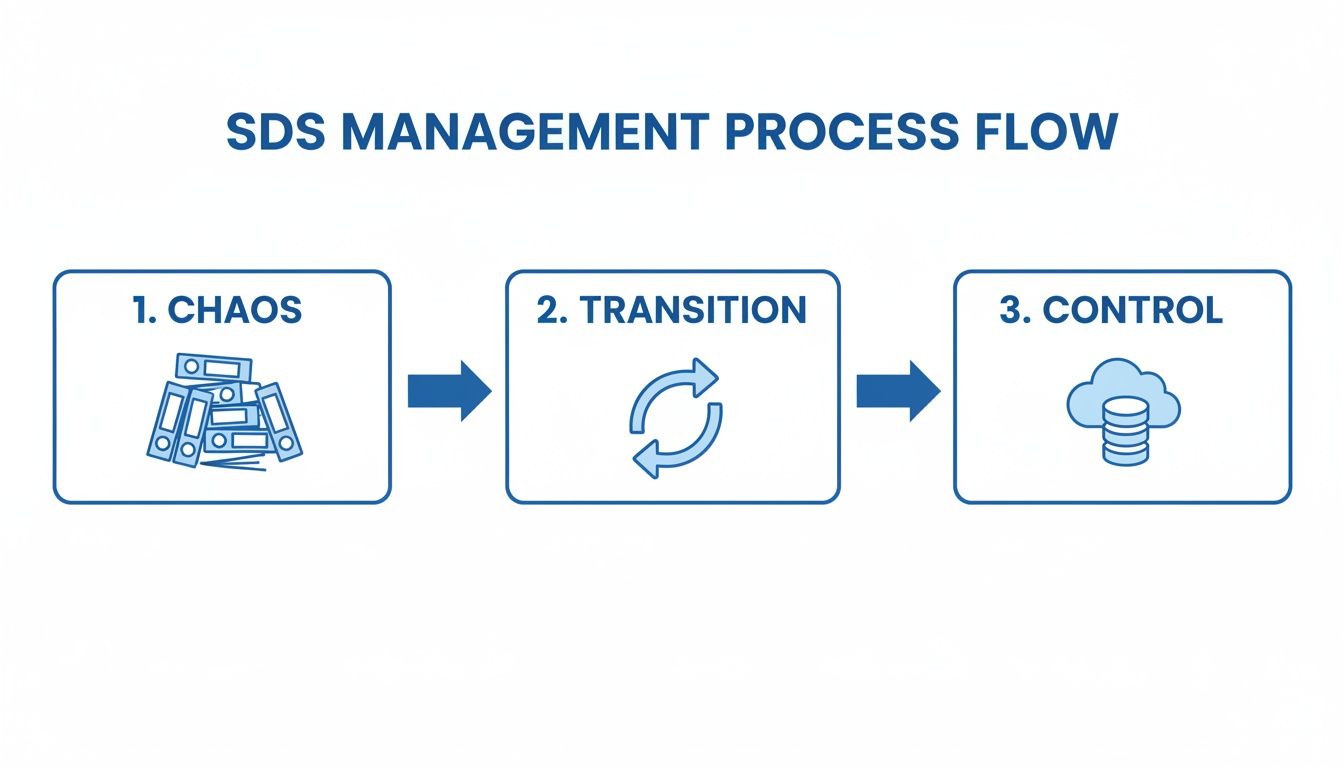
It’s clear that these online systems aren't just a simple upgrade; they are the bridge from paperwork chaos to organised, accessible control.
Intelligent Data Extraction and Indexing
The moment you upload an SDS, artificial intelligence (AI) kicks in. It scans the entire document and automatically pulls out the crucial information, transforming a flat PDF into a dynamic, searchable database.
Here’s a snapshot of what the system grabs:
- Product Identifiers: Things like product names, synonyms, and CAS (Chemical Abstracts Service) numbers.
- Hazard Information: All the GHS classifications, hazard statements, and pictograms.
- Supplier Details: Manufacturer information and, critically, revision dates to track how current the document is.
- Protective Measures: Required Personal Protective Equipment (PPE) and essential first-aid instructions.
This automated extraction is a massive time-saver. Within seconds, anyone on your team can search the entire chemical library not just by a product name, but by its CAS number, a specific hazard, or even the type of gloves required to handle it. What used to be a painful manual task becomes an instant, powerful search.
Proactive Compliance and Supplier Management
An online sds management system also serves as your round-the-clock compliance watchdog. It constantly screens your chemical inventory against a vast web of global and regional regulations, automatically cross-referencing substances against regulatory lists like REACH, CLP, and OSHA’s HazCom standard.
This proactive screening is a genuine game-changer for procurement and safety teams. The system can flag a restricted or hazardous chemical before it's even purchased, giving you the power to make safer, more compliant decisions right from the start.
It also tackles the thankless task of keeping your SDS library up to date. Instead of your team chasing suppliers for new versions, a smart system can be set to send automated follow-up requests when an SDS is approaching its review date. This ensures your library is always current with minimal effort and creates a solid audit trail—a core function of any good safety data sheet management system.
Empowering Your Workforce with Actionable Tools
Beyond just managing data, these systems deliver practical tools that empower your team on the ground. One of the most valuable features is on-demand, GHS-compliant label printing.
Imagine a container's label gets damaged, or a chemical is transferred into a secondary bottle. An employee can simply walk up to a terminal, find the product, and print a perfectly compliant label in seconds, complete with the correct pictograms and warnings.
It’s this blend of AI-driven data extraction, automated compliance screening, and practical, on-demand tools that makes these systems so effective. They provide direct support for everyone, from the HSE manager in the office to the technician on the factory floor, making the entire workplace safer and more efficient.
Keeping Your Chemical Compliance on Autopilot
Staying on top of chemical safety regulations can feel like a full-time job in itself. The rules are always shifting, substance lists get updated, and what was perfectly fine yesterday could suddenly become a compliance headache tomorrow. This is where an online SDS management system really proves its worth, shifting your compliance efforts from a constant, reactive scramble to a proactive, automated workflow.
Think of it as having an expert compliance officer on duty 24/7, one who speaks the specific language of every regulatory body around the world. It translates the dense, complex web of global and regional rules into clear, simple actions for your business.
Making Sense of the Regulatory Maze
At its core, the system is designed to make sure you’re ticking all the right boxes for major international and national standards. Instead of your team manually cross-referencing every chemical against ever-growing lists, the software handles the heavy lifting automatically.
- GHS (Globally Harmonized System): It confirms your SDSs and labels use the standardised format, with the correct hazard pictograms and statements that are recognised worldwide.
- OSHA's HazCom Standard (USA): The platform ensures every bit of information required by the Occupational Safety and Health Administration is present and accessible, fulfilling the crucial "right-to-know" principle for your employees.
- REACH and CLP (Europe): It constantly scans your inventory against lists of restricted substances and Substances of Very High Concern (SVHCs), flagging any chemicals that need special authorisation or have strict usage limits.
Building a strong chemical safety culture means being diligent with regulations. A robust system is fundamental to achieving seamless COSHH compliance. It’s your digital safety net, catching potential problems long before they can escalate.
Turning Regulatory Data into Real-World Action
The real magic happens when the system connects these automated checks to your day-to-day work. It doesn't just throw a regulation at you; it helps you act on it.
For example, when a new SDS comes in from a supplier, the system can instantly verify that it’s complete and properly formatted for your region. If a chemical you hold is suddenly added to a restricted list, you get an alert right away, giving you the heads-up you need to take action.
This automation is making a huge difference in industries all over the world. Take Bangladesh's chemical sector, a key part of its economy that has struggled with the slow, manual process of validating SDSs for imported materials. Digital platforms are now dramatically cutting incident risks in these kinds of emerging markets—a game-changer for teams who’ve been stuck managing everything with outdated spreadsheets.
This automated vigilance frees your safety team from the grind of administrative work. Instead of drowning in paperwork, they can focus on what really matters: making tangible safety improvements on the factory floor, knowing the system has their back on the complex regulatory monitoring.
Unlocking Proactive Risk and Inventory Management
A top-tier online SDS management system does far more than just store documents; it becomes the central hub for your entire risk mitigation strategy. It’s not just about having the information on file. It’s about actively using that data to stop incidents before they ever get a chance to happen, shifting your safety culture from reactive to genuinely proactive.

These platforms tap into the wealth of data extracted from every SDS to drive sophisticated workplace risk assessments. They give you a systematic way to identify hazards, evaluate the real-world risks, and put effective control measures in place—all based on concrete chemical properties, not guesswork. It’s about making data-driven decisions that protect your people.
From Data Points to Protective Actions
One of the most powerful features is the ability to track Occupational Exposure Limits (OELs). The software can automatically flag substances with specific airborne concentration limits, like Time-Weighted Averages (TWA) or Short-Term Exposure Limits (STEL). This immediately helps safety managers pinpoint high-risk tasks or areas that might need better ventilation or stricter PPE protocols.
This constant monitoring helps you make much smarter decisions about personal protective equipment. The system analyses the hazards listed in Section 2 of an SDS and cross-references them with the control measures in Section 8 to recommend the right PPE for the job.
This intelligent guidance ensures your team isn't just equipped, but correctly equipped for the specific hazards they face. This directly reduces the likelihood of exposure-related injuries and long-term health problems.
With this level of detail, you can build a safer environment where protective actions are tailored to the precise risks present in your workplace.
Building Smarter Chemical Inventories
Good risk management is also about how and where you store your chemicals. An intelligent system brings a new level of control to your inventory, acting as a vigilant guard against dangerous storage combinations.
The platform uses the chemical properties and incompatibilities detailed in the SDS to prevent hazardous situations from developing. For example, it can automatically flag if you’re planning to store strong oxidisers too close to flammable liquids—a classic recipe for serious industrial fires. You can learn more about optimising your storage strategy in our detailed guide to a chemical inventory management system.
This smart inventory oversight also helps streamline waste management. The system helps you create compliant disposal plans by:
- Categorising waste streams based on their hazardous properties.
- Providing clear guidance on how to segregate and label chemicals for disposal.
- Generating the necessary documentation for transport and regulatory reporting.
Ultimately, a modern online SDS management system turns your chemical inventory from a static list into a dynamic, interactive safety tool. It ensures that from the moment a chemical enters your facility to the moment its waste is properly disposed of, every single step is guided by data, safety, and compliance.
How to Choose the Right SDS Management System
Picking the right online SDS management system is one of those big decisions that ripples through your entire organisation, touching everything from shop floor safety to boardroom compliance. This isn't just about buying software; it's about choosing a partner. You need to look past the glossy brochures and find a solution that genuinely fits your world—your specific regulatory headaches, your technical setup, and your team's needs.
The best place to start? By asking the right questions. Think of it as a deep-dive audit of any potential vendor, designed to reveal how their platform will stand up to your real-world challenges.
Core Questions for Your Vendor Shortlist
Before you even think about signing a contract, you need straight answers about the technology and the support holding it all together. These questions will quickly separate a simple digital filing cabinet from a truly intelligent chemical safety platform.
- Data Extraction: Does the system use AI to pull out crucial data like CAS numbers and hazard codes automatically? Let's be honest, manual data entry is a complete non-starter in this day and age.
- Regulatory Screening: Can it check our chemical inventory against the specific regulations that matter to us—like REACH, CLP, or TSCA?
- Supplier Updates: How does the platform keep our SDS library from becoming outdated? Is there an automated way to get the latest versions from our suppliers?
- Data Hosting and Security: Where will our data live? What security measures, like encryption and access controls, are in place to protect our sensitive information?
A system worth its salt does more than just store documents. It should be an active partner—managing your data, automating compliance checks, and locking down your information. The platform should work for you, not create more work.
Getting clear on these points is non-negotiable. For a deeper look, check out our guide on the must-have features of leading SDS management software.
A well-structured checklist can be your best friend during the evaluation process. It helps you compare vendors apples-to-apples and ensures no critical feature gets overlooked.
Essential Features for Your SDS Management System
| Feature Category | Key Questions to Ask | Why It Matters |
|---|---|---|
| SDS Ingestion & AI | How are new SDSs added? Is data extraction (e.g., CAS numbers, GHS pictograms) automated? | Automation saves hundreds of hours of manual work and dramatically reduces human error. It's the engine of the entire system. |
| Regulatory Screening | Can the system flag chemicals on specific watchlists (e.g., REACH SVHC, Prop 65)? Is this customisable? | This is proactive compliance. It alerts you to risks before they become costly violations, protecting both your workers and your bottom line. |
| Chemical Inventory | Does it link SDSs to specific locations, containers, and quantities? Can it track usage and volumes? | An accurate inventory is fundamental to risk assessment and emergency response. It gives you a real-time view of what's on-site and where. |
| Labeling & Safety Cards | Can we generate GHS-compliant labels and simplified safety cards directly from the SDS data? | This bridges the gap between complex documents and practical, on-the-floor safety. Clear, accessible information prevents accidents. |
| Security & Hosting | Where is the data hosted? What are the protocols for data backup, recovery, and user access controls? | Your chemical data is sensitive intellectual property. Robust security isn't a "nice-to-have"; it's a fundamental requirement. |
| Support & Training | What does the onboarding process look like? Is ongoing technical and regulatory support included? | A great system with poor support is a failed investment. You need a partner who will help you get the most out of the platform. |
By using this table as a guide, you can cut through the marketing noise and focus on the capabilities that will truly make a difference to your organisation's safety and compliance.
A Simple Implementation Roadmap
Moving to a new system can feel like a mammoth task, but any good provider will walk you through a structured, supportive process. It’s a journey that should follow a clear and logical path.
- Data Migration: First things first, you need to get your existing SDS library into the new system. Your vendor should have a clear process for this, usually involving a bulk upload where their AI gets to work processing and indexing everything.
- System Configuration: This is where you make the platform your own. It involves setting up user permissions for different roles, telling the system which regional regulations to alert you about, and connecting it to other software you use, like procurement or inventory tools.
- Team Training: A system is only as good as the people using it. The provider must offer solid training for your HSE administrators and your employees on the ground, ensuring everyone knows how to find what they need, when they need it.
- Phased Rollout: Don't try to boil the ocean. A gradual launch, starting with a pilot site or a single department, is the smart way to go. It lets you collect feedback and iron out any kinks before rolling it out across the entire organisation.
Following a structured plan like this makes the transition smoother, reduces disruption, and helps get everyone on board from day one.
Common Questions About SDS Management Systems
Switching to any new system, especially one so critical to safety, naturally brings up some important questions. When you're dealing with chemical compliance, you need total clarity and confidence. Let's tackle some of the most common queries and worries that safety and procurement teams raise when they're thinking about moving to an online SDS management platform.
The idea here is to pull back the curtain on how these systems work in the real world. We'll show you the practical benefits and how a modern platform solves the day-to-day headaches you're probably all too familiar with.
How Hard Is It to Move Our Existing SDS Library?
This is usually the first question and the biggest perceived obstacle. But the truth is, the best systems are built specifically to make this process as smooth as possible. You can forget the old nightmare of manually keying in data for hundreds, or even thousands, of chemicals.
Your new provider will almost certainly have a dedicated team ready to help. They'll manage a bulk upload of your current SDSs, whether you have them in spreadsheets, scattered across network folders, or in another digital format. Once they're in, the system’s AI takes over, automatically pulling out the crucial data, indexing it, and getting everything organised.
The secret sauce is this intelligent automation. It drastically cuts down the manual grunt work for your team, freeing them up from mind-numbing data entry and ensuring a clean, efficient switch from your old methods.
Can These Systems Handle SDSs in Multiple Languages?
Absolutely. For any business with a global reach or a diverse workforce, this isn't just a nice-to-have feature; it's a fundamental requirement. A good online SDS management system is designed from the ground up to manage the complexities of international operations.
These platforms can source and manage Safety Data Sheets in a huge range of languages. This means your teams, wherever they are in the world, get instant access to safety information they can actually understand. More often than not, this is a legal necessity to meet local compliance rules, not just good practice.
What Happens When a Manufacturer Updates an SDS?
This is where an online system truly shines and one of the main reasons companies make the move. Trying to keep up with supplier updates via random emails is a high-risk game that almost guarantees you'll have outdated information in your binders. An automated platform changes everything.
The system is always on the lookout, actively monitoring for and sourcing updated SDS versions from your suppliers. When a new one is found, it automatically flags the old document in your library. You’ll get a notification to review and approve the new version, which also creates a perfect, defensible audit trail. This proactive monitoring ensures your library is always current with next to no effort on your part.
Is an Online SDS System Accessible to All Employees?
Yes, and this is a game-changer for building a stronger safety culture. Modern systems are cloud-based and designed for everyone in the company, not just the HSE team sitting in an office.
This accessibility plays out in a few really practical ways:
- Mobile Access: Most platforms come with dedicated mobile apps or work perfectly on a phone's web browser, putting critical safety data right into every employee's pocket.
- QR Code Integration: You can stick QR codes on chemical containers, in storage areas, or at workstations. A quick scan with a phone or tablet instantly brings up the right SDS and safety summary.
- Simple Search: An intuitive, powerful search function means anyone—from a lab technician to a warehouse operator—can find the information they need in seconds, no special training required.
Giving everyone on-site this immediate access empowers them to make safer choices right when and where they’re handling hazardous materials. It turns the SDS from a document buried in a filing cabinet into a living, breathing safety tool for the whole team.
Ready to replace outdated binders and spreadsheets with a smart, automated solution? NextSDS provides an all-in-one chemical safety platform that simplifies compliance and empowers your team with instant access to critical safety information. Discover how NextSDS can transform your chemical management.