

A reprotoxic substance is a chemical that can harm sexual function and fertility in adults. Just as damagingly, it can cause developmental problems in an unborn child or affect infants through breast milk. These substances are a hidden, long-term danger in many workplaces, with effects that often don't show up for years.
Uncovering the Hidden Risks of Reproductive Toxicity
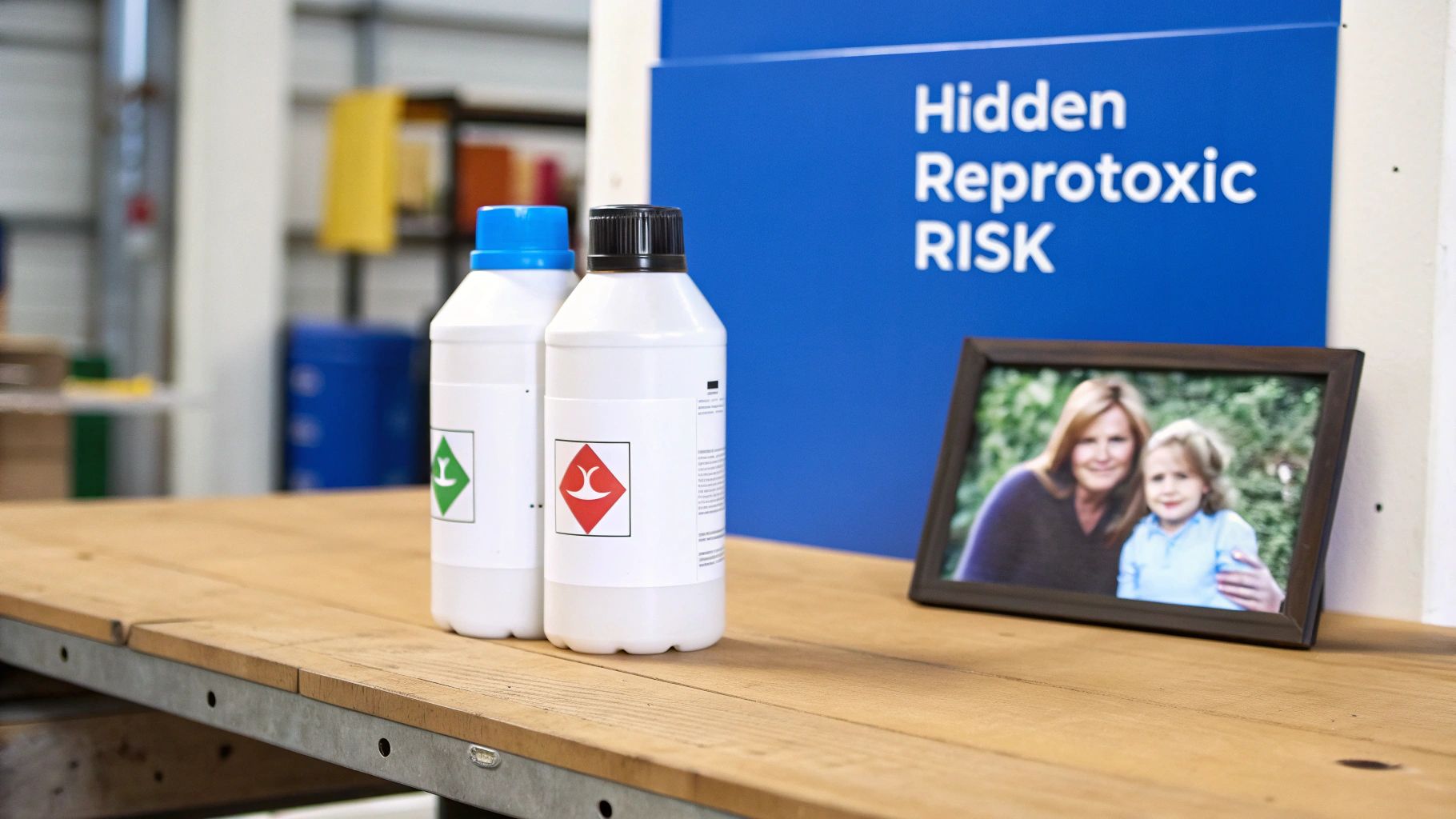
Unlike a cut from a sharp tool or a fall from a ladder, the damage from a reprotoxic substance is often invisible and completely silent. Think of it like a faulty wire hidden inside a wall—you don't see the danger until it sparks a fire. Exposure to these chemicals works in much the same way, quietly disrupting the delicate biological systems needed for healthy reproduction.
The threat is twofold. For working adults, these substances can interfere with hormone levels, damage reproductive organs, and ultimately reduce fertility. For a developing foetus, the consequences can be even more devastating, leading to birth defects, developmental delays, or miscarriage. This risk doesn't end at birth; some chemicals can be passed to an infant through the mother's breast milk.
Why This Matters for Your Business
For Health, Safety, and Environment (HSE) managers and procurement teams, getting to grips with reproductive toxicity isn't just about ticking a compliance box. It's a fundamental ethical duty. A single failure to control exposure can have life-altering consequences for an employee and their family, creating serious legal and reputational problems for the business.
You'll find examples of a reprotoxic substance across a surprising number of industries. Common culprits include:
- Heavy Metals: Lead and mercury are classic examples, well-known for their harmful effects on both the nervous and reproductive systems.
- Certain Solvents: Chemicals like toluene and some glycol ethers, found in paints, adhesives, and industrial cleaning agents, can pose significant risks.
- Pesticides: Many agricultural chemicals are designed to disrupt the life cycles of pests, and unfortunately, they can have similar unwanted effects on human reproduction.
- Pharmaceuticals: Some drugs, especially those used in chemotherapy, are powerful reproductive toxicants by their very nature.
A reprotoxic substance is one of three types of CMRs—Carcinogenic, Mutagenic, and Reprotoxic. These are chemicals recognised as having the most severe long-term health impacts, and they are subject to the strictest workplace safety regulations in Belgium and across the EU.
Building a Foundation for Safety
Simply ignoring the risks associated with a reprotoxic substance is not an option anymore. Regulations like the EU's REACH and CLP frameworks require businesses to be proactive in identifying, assessing, and controlling these hazards. It all starts with building a solid understanding of what these substances are and where they might be lurking in your chemical inventory.
This knowledge is the key to shifting from a reactive safety posture to a proactive one, protecting your employees and your organisation from profound, lasting harm. This guide will walk you through the practical steps needed to make that happen.
How Reprotoxic Substances Are Classified
Before you can manage a risk, you need to know exactly what you’re dealing with. In the world of chemical safety, that means learning to read the language of classification. Seemingly abstract codes on a document are, in fact, direct instructions on how to protect your people. For any substance that could be reprotoxic, this system is your roadmap for understanding the danger and putting the right controls in place.
In Europe, the cornerstone of this system is the CLP Regulation (EC) No 1272/2008, which covers Classification, Labelling and Packaging. Think of CLP as a universal translator for chemical hazards. It uses a standard set of symbols and statements to make sure a chemical's risks are understood loud and clear, whether it’s sitting in a warehouse in Brussels or a lab in Antwerp.
When it comes to reproductive toxicity, the CLP regulation groups substances into clear categories based on one simple thing: the strength of the scientific evidence.
Understanding the Hazard Categories
The point of this system isn't to label chemicals as "good" or "bad." It's about being honest about our level of certainty—how sure are we that this substance can cause harm? Each category comes with its own set of legal and safety obligations for your business.
The main categories you'll see are:
- Category 1A (Known): This is the highest alert level. A substance in this category is a known human reproductive toxicant. We know this because of solid, undeniable evidence from human studies.
- Category 1B (Presumed): We might not have the direct human data, but the evidence from animal studies is so strong that we must presume it’s also a human reproductive toxicant. For all practical safety purposes, it’s treated with the same seriousness as a Category 1A substance.
- Category 2 (Suspected): Here, the evidence is less conclusive. Data points towards a potential link, making the substance suspected of damaging fertility or the unborn child. The risk might seem lower, but it absolutely still demands careful management.
This categorisation is crucial. Reprotoxic substances are part of a wider group of high-risk chemicals known as CMRs. You can get the full picture by reading our guide to Carcinogenic, Mutagenic, and Reprotoxic (CMR) substances and what they mean for your compliance duties.
The image below, from the European Chemicals Agency (ECHA), shows the health hazard pictogram you'll see for these serious, long-term health risks.
When this symbol pops up on a label or Safety Data Sheet, it’s an immediate red flag. It tells you the product contains something that could be carcinogenic, mutagenic, or toxic for reproduction.
From Codes to Concrete Actions
Every classification is tied to a specific hazard statement, or "H-statement," which describes the risk in plain language. For the most serious categories, you'll see H360 ('May damage fertility or the unborn child'). Another critical one is H362, which warns that a substance 'May cause harm to breast-fed children'.
These aren't just labels; they're legal triggers. The moment these codes appear on a Safety Data Sheet (SDS), a whole chain of obligations kicks in under Belgian and EU law. This means mandatory risk assessments, specific worker training, and often, a legal duty to find safer alternatives.
And the thresholds for these triggers are surprisingly low. Under the CLP Regulation, a mixture containing as little as 0.3% of a Category 1A or 1B reprotoxic substance must be classified as hazardous. This tiny percentage has a huge impact on teams screening incoming materials, especially when you consider that 42-44 million tonnes of CMR substances are produced in the EU each year.
These rules, further cemented by updates to Belgium's Code of Well-being at Work, now require annual risk analyses to treat reprotoxics with the same rigour as carcinogens and mutagens. This brings national law in line with recent EU safety directives. You can find more detail on the CMR substance regulations on the OSHA Europa website.
Getting to grips with this classification system is empowering. It means you can pick up an SDS, decode the hazard statements, and instantly understand what you need to do—legally, ethically, and practically. It transforms a complex regulatory chore into a powerful tool for protecting your team.
Navigating Key Chemical Safety Regulations
It's one thing to understand chemical classifications, but it's the laws enforcing them that truly shape your safety programme. A whole raft of regulations governs how every reprotoxic substance is handled, from the moment it enters the market to its final disposal. These aren't just suggestions; they're legally binding rules with serious consequences for getting it wrong.
For any business in Belgium and across Europe, two key pieces of legislation really set the standard: the REACH Regulation and the local Code of Well-being at Work. Think of them as a powerful system of checks and balances, built to shield workers and the environment from the worst chemical offenders.
The Role of REACH and the SVHC List
The EU's REACH (Registration, Evaluation, Authorisation and Restriction of Chemicals) regulation is one of the most comprehensive chemical safety laws anywhere in the world. You can think of it as a strict gatekeeper for the entire European market. At its core, REACH is about making sure companies take full responsibility for managing the risks from the chemicals they make and use.
A crucial part of REACH is the Substance of Very High Concern (SVHC) list. This is essentially the EU’s watchlist for the most dangerous chemicals out there, which absolutely includes those classified as Category 1A or 1B reprotoxicants. Landing on this list is the first major step towards tighter controls and, in many cases, being phased out completely.
Once a substance gets identified as an SVHC, companies have immediate legal duties. They must notify the European Chemicals Agency (ECHA) if the substance is present in their products above a tiny concentration of 0.1% by weight. This transparency is vital for everyone in the supply chain, from the original manufacturer right down to the end-user.
The ultimate aim here is substitution. The SVHC list sends a clear signal to the market: these chemicals are on their way out. This pushes companies to invest in R&D to find safer, viable alternatives. For any HSE manager, this list is a vital tool for future-proofing their chemical inventory and staying a step ahead of regulatory clampdowns.
Belgium's Code of Well-being at Work
While REACH sets the broad EU framework, it's the national laws that translate those principles into specific duties on the ground. Here in Belgium, the Code of Well-being at Work is the main legal tool for protecting employees from chemical hazards, and it has become much tougher on reprotoxic substances.
After EU Directive 2022/431 was brought in, Belgium updated its Code to manage reprotoxic agents with the same strict rules already in place for carcinogens and mutagens. That single change significantly raised the bar for what’s expected of employers.
In Belgium, reprotoxic substances are now very tightly controlled under the Code of Well-being at Work, which directly lists these hazards and demands rigorous oversight. Employers have to carry out a full risk analysis at least once a year, or any time conditions change. For pregnant workers, extra protections kick in the moment they declare their pregnancy: they might be reassigned to a safer role, given enhanced PPE, or even put on temporary leave. Getting this wrong can lead to fines upwards of €100,000+ under Belgian labour law, not to mention civil liabilities for fertility-related claims. You can find more details about these updated European regulations on iuslaboris.com.
These rules cover everything from the initial risk assessment to the proper handling and disposal of chemicals. For a wider view on how different industries approach these challenges, especially the safe and compliant practices for managing hazardous waste materials, an article by 360 Hazardous Cleanup offers some useful context.
Staying on top of these regulations demands a proactive, systematic approach. It means looking at legal compliance not as a tick-box exercise, but as a living process of constant improvement. This is all driven by a genuine commitment to protecting your team from the silent, long-term risks posed by every single reprotoxic substance. This legal pressure is the real force behind substitution, transparent reporting, and the growing need for modern chemical management systems.
How to Identify Reprotoxic Substances in Your Inventory
Right, let's move from the regulations to the real world. The most important question you can ask is a simple one: do I have any reprotoxic substances hiding in my chemical inventory? Figuring this out is the bedrock of any solid safety programme. It’s not about guesswork; it’s about a methodical process of screening what you’ve got on-site.
Your single most powerful tool for this job is the Safety Data Sheet (SDS). Don't just see it as a compliance document to be filed away. Think of it as a chemical's passport—a live, detailed record that holds the clues you need to uncover reproductive hazards.
Decoding the Safety Data Sheet
When you’re hunting for potential reprotoxins, there are two specific places on the SDS that demand your attention. This is where you'll find the official hazard classifications and the science that backs them up.
Your first port of call should always be these sections:
Section 2: Hazards Identification: This is your starting line. Look for the GHS health hazard pictogram (the one that looks like an exploding chest). More importantly, check for specific hazard statements like H360 (May damage fertility or the unborn child), H361 (Suspected of damaging fertility or the unborn child), and H362 (May cause harm to breast-fed children). If you see any of those, you have a confirmed reproductive hazard on your hands.
Section 11: Toxicological Information: Think of this section as the evidence locker. It contains the detailed scientific data underpinning the hazard warnings in Section 2. It gives you a much deeper understanding of the specific effects seen in studies, painting a fuller picture of the risks involved.
The diagram below shows how different regulatory frameworks connect, ultimately shaping the information you find on an SDS.
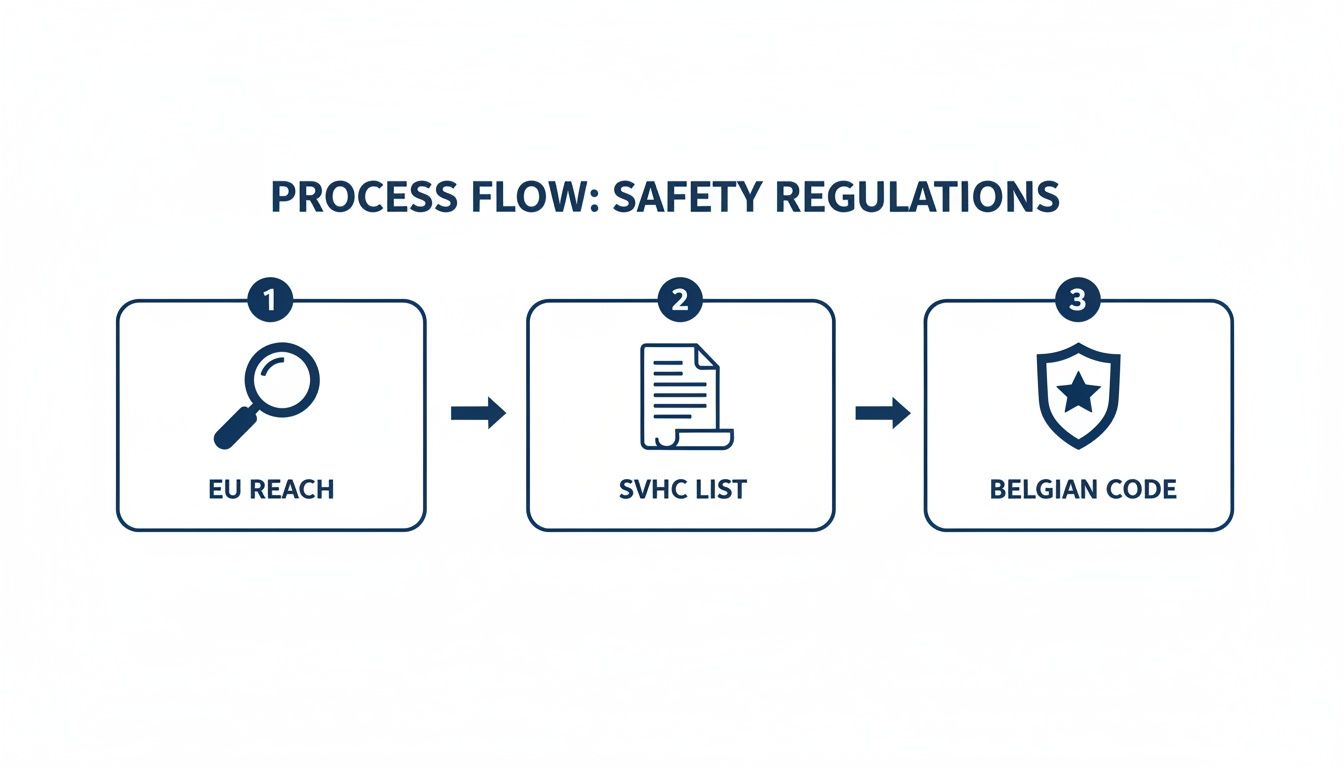
You can see how a broad regulation like EU REACH leads to the creation of specific watchlists like the SVHC list, which then dictates compliance duties under national laws like Belgium's Code of Well-being at Work.
Beyond the SDS: Cross-Referencing CAS Numbers
While the SDS is your primary guide, it's not infallible. Supplier documents can sometimes be out of date, and the hazards within complex mixtures aren't always immediately obvious. To be truly diligent, you need to verify the information against official regulatory lists.
Every pure chemical substance is assigned a unique identifier called a CAS (Chemical Abstracts Service) number, which you can find in Section 3 of the SDS. This number is like a universal fingerprint for the chemical, allowing you to check its status on critical databases without any confusion.
By taking the CAS numbers from your inventory and checking them against the REACH SVHC list, you can independently confirm whether any of your materials are considered Substances of Very High Concern due to their reprotoxic properties. This step is essential for identifying risks that might have been missed or have changed since the SDS was last updated.
Moving from Manual Checks to a Proactive System
Let’s be honest: manually checking every single SDS and cross-referencing dozens, or even hundreds, of CAS numbers is a huge drain on time and energy. It's also wide open to human error, especially if you manage a large inventory. This reactive approach often means you only find a hazard after it’s already in your facility.
The real goal is to get ahead of the problem. You need to shift from this manual slog to a proactive, automated system that flags dangers before they even cross your threshold. A modern chemical inventory management system can do exactly that.
Instead of you doing the legwork, such a system can automatically scan incoming SDSs, pull out the CAS numbers, and constantly check them against global regulatory lists. It turns a burdensome manual task into a reliable, seamless safety net, giving you confidence that you’ll always know if a reprotoxic substance enters your inventory.
Implementing Effective Workplace Risk Controls
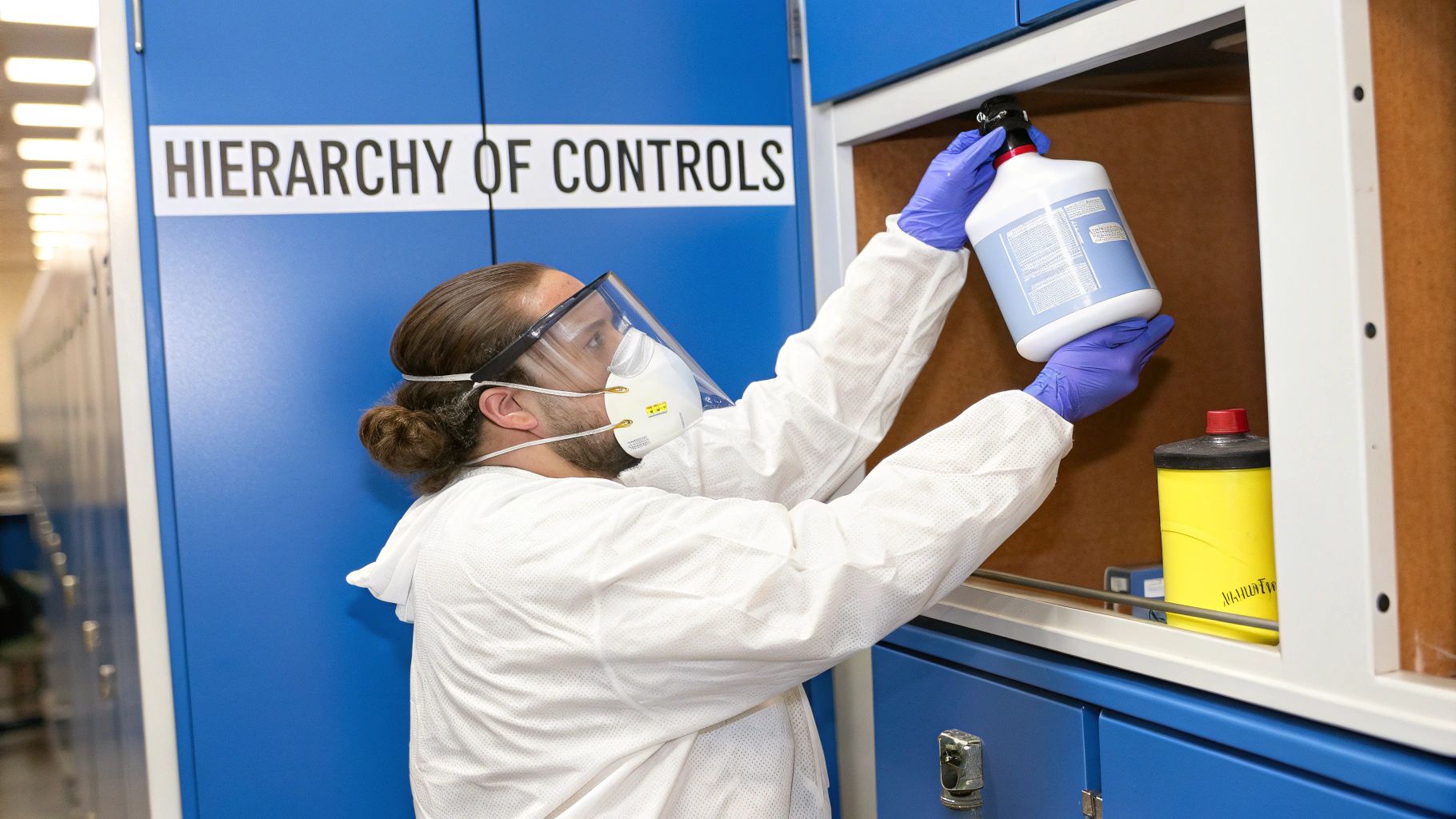
So, you've identified a reprotoxic substance in your workplace. What now? The next step is all about controlling the risk, and this isn't a job for guesswork. It demands a structured, layered approach to protect your people. The gold standard for this is the hierarchy of controls, a prioritised framework that guides you from the most effective safety measures down to the least.
Think of it like building a fortress. You wouldn't rely on just a single wall, would you? You'd build layers of defence, starting with the strongest ones first. When it comes to a reprotoxin, this means your first thought should always be how to get rid of the hazard completely, long before you start handing out protective gear.
This systematic approach is the bedrock of a truly safe working environment. For a deeper dive into building that culture, our guide on chemical safety in the workplace offers some great practical advice.
Start With Substitution: The Most Powerful Control
Honestly, the best way to manage the risk from a hazardous chemical is to remove it from the picture entirely. Substitution is exactly that: replacing a known reprotoxic substance with a safer, non-reprotoxic alternative that still gets the job done. It’s priority number one because it eliminates the hazard at the source.
Before a new chemical even gets through the door, your procurement and HSE teams need to be asking a critical question: is there a better, less hazardous way to do this? This simple, proactive check can stop a risk from ever entering your facility.
Imagine a cleaning process uses a solvent containing a Category 1B reprotoxin. The first move should be to research alternatives. Can you switch to a water-based cleaner? Is there a different, less toxic solvent that performs just as well without putting your team's reproductive health on the line?
Engineering and Administrative Controls
When substitution just isn't an option, you move down to the next layers of defence. Engineering controls are physical changes you make to the workplace that isolate people from the hazard. Crucially, they’re designed to work without relying on someone remembering to do something.
Common engineering controls include:
- Ventilation Systems: A well-placed local exhaust ventilation (LEV) hood over an area where a reprotoxic solvent is used can suck up harmful vapours before anyone has a chance to breathe them in.
- Enclosure and Isolation: If you can put the entire process inside a contained system, like a glove box, you’ve created a physical barrier between the employee and the substance.
Next up are administrative controls, which are all about changing the way people work. These are the procedures and policies you put in place to limit exposure.
A fantastic example of an administrative control is simply restricting access. Areas where reprotoxic substances are handled should be off-limits to anyone not trained and authorised to be there. Clear signs warning of the specific reproductive hazards are a must.
Other examples include smart work scheduling to reduce how long any single employee is potentially exposed, and having rock-solid safe-work procedures for every step—from handling and mixing to dispensing the substance.
Personal Protective Equipment: The Final Layer
The very last line of defence is Personal Protective Equipment (PPE). We're talking about chemical-resistant gloves, specialised respirators, and protective clothing. While PPE is absolutely essential, it should never be your primary strategy.
Why? Because it relies entirely on the employee selecting the right gear, wearing it correctly, and using it every single time. It’s the layer most prone to human error. PPE is there to protect people when all the higher-level controls can't eliminate the risk completely.
The Hierarchy of Controls for Reprotoxic Substances
A robust safety plan rarely relies on a single control. The real strength comes from combining them. This table lays out the hierarchy, helping you prioritise your actions from the most effective to the least.
| Control Level | Description | Example Application |
|---|---|---|
| Elimination/Substitution | Remove the hazardous substance completely or replace it with a non-reprotoxic alternative. | Switching from a solvent containing toluene to a safer, bio-based cleaning agent. |
| Engineering Controls | Isolate people from the hazard through physical changes to the workplace. | Installing a fume hood or enclosing a mixing process within a glove box. |
| Administrative Controls | Change the way people work through procedures, training, and scheduling. | Restricting access to high-risk areas and reducing shift lengths for exposed workers. |
| Personal Protective Equipment (PPE) | Provide workers with equipment to protect them from exposure. | Mandating the use of specific chemical-resistant gloves and air-purifying respirators. |
Ultimately, a multi-layered approach provides the most robust protection. For instance, handling a reprotoxic solvent might involve an LEV system (engineering), restricted access (administrative), and mandatory gloves and respirators (PPE). Together, these layers create a comprehensive safety net, ensuring every reprotoxic substance is managed with the seriousness it deserves.
Automating Chemical Safety and Compliance
Let's be honest: trying to manually track every reprotoxic substance across a large inventory with spreadsheets is a recipe for disaster. It's not just inefficient; it’s a genuine risk. With regulations constantly changing, the chance of missing a critical update or a new hazard classification is far too high.
This old-school, reactive approach simply can’t keep up. It’s time-consuming and leaves your organisation wide open to serious compliance headaches and, more importantly, safety failures. A modern Environmental, Health, and Safety (EHS) platform turns this entire process on its head, moving chemical management from a manual slog to an automated workflow that actively keeps your workplace safe.
From Reactive to Proactive Management
Imagine a new chemical arriving at your facility. With a smart platform, the process starts right there. The system automatically takes in the new Safety Data Sheet (SDS) and uses AI to read and understand it, pulling out the crucial details.
This is what it does for you, instantly:
- Data Extraction: The platform identifies and logs everything from product names and CAS numbers to specific hazard classifications like H360.
- Regulatory Screening: It constantly checks every single chemical in your inventory against live global and regional watchlists, including REACH, SVHC, and specific Belgian regulations.
- Real-Time Alerts: If a substance you use is suddenly added to a restricted list or its classification changes, you get an alert. No more guesswork, just immediate information so you can act fast.
This changes the game completely. Instead of finding out about a reprotoxic substance during a manual audit months after it’s been in use, the system flags it the moment it's identified. It gives you the power to manage risks before they become incidents.
Building a Digital Safety Net
This level of automation isn't just for the chemicals you already have; it’s a powerful tool for procurement too. By connecting the platform to your purchasing system, it can act as a gatekeeper. When someone tries to order a new product, the system automatically screens it for any restricted chemicals, including any known reprotoxic substance.
This simple check stops hazards from even making it through your door, making substitution—the best control measure—a practical reality. It transforms compliance from a boring administrative chore into a core part of how you operate. To further streamline processes and ensure you're always on top of safety standards, you can explore tools that offer AI-powered compliance support.
Ultimately, automation is about much more than just saving time. It’s about building a smarter, safer, and more resilient workplace.
Frequently Asked Questions
It's completely normal to have questions when dealing with something as serious as reprotoxic substances. Let's walk through some of the most common ones that come up for safety professionals on the ground.
What’s the First Step if I Suspect a Reprotoxic Substance Is in Use?
Your first move should always be to get your hands on the Safety Data Sheet (SDS) for the product. Don't delay. Head straight to Section 2, where you'll find the hazard pictograms (look for the exploding chest symbol) and hazard statements. Key codes to watch for are H360, H361, or H362.
If the SDS confirms it's a reprotoxin, you need to kick off a formal risk assessment immediately to figure out who might be exposed. From there, the goal is to work through the hierarchy of controls, which always starts with one crucial question: can we replace this with something safer?
How Do I Manage Risks for Pregnant or Breastfeeding Employees?
The moment an employee lets you know they are pregnant or breastfeeding, the clock starts ticking. You have a legal and moral obligation to protect them, and that means conducting a specific risk assessment for their role right away.
If their job involves even a slight risk of exposure to a reprotoxic chemical, you must reassign them to a role where there is zero exposure. If that’s simply not possible, a temporary, protected leave of absence may be the only option.
It's worth remembering that the challenge of reprotoxins isn't just about the chemicals you buy and use directly. In Belgium, for instance, we see issues with reprotoxic pesticides like Mancozeb and Thiacloprid. Although they're banned in the EU, they can still show up on imported foods, which creates a risk for workers in warehouses or e-commerce who handle these goods. This is a powerful reminder to check what's coming from your suppliers, as residues can easily slip through on imports. To learn more about this specific issue, read the latest findings from PAN Europe.
Is a Supplier's Compliance Statement Good Enough?
Honestly, no. A supplier's declaration is a good starting point, but it's not the end of your responsibility. Regulations are constantly being updated, and at the end of the day, your company is the one on the hook for keeping its people safe.
The best approach is to independently verify every chemical ingredient yourself. This means taking the CAS numbers from your SDSs and cross-referencing them against official watchlists, like the REACH SVHC candidate list. Using an automated system to do this heavy lifting gives you a reliable safety net, ensuring no nasty surprises slip through the cracks.
Stop chasing outdated SDSs and manually screening for hazards. NextSDS automates your entire chemical safety workflow, from ingestion and analysis to real-time regulatory monitoring. Ensure compliance and protect your team by visiting https://nextsds.com to see how it works.