

Trying to manage chemical safety with a stack of spreadsheets is a bit like using a paper map to navigate a busy shipping lane. It's not just inefficient and outdated; it's a recipe for costly mistakes. Modern risk safety solutions are the essential upgrade, acting as a central hub that automates compliance, slashes human error, and gives you a real-time command center for your entire chemical inventory. This changes safety from a reactive chore into a proactive, strategic advantage.
Moving Beyond Spreadsheets to Smart Safety
For years, spreadsheets and three-ring binders were the go-to tools for tracking Safety Data Sheets (SDS) and chemical inventories. But let's be honest, that manual approach is buckling under the pressure of today's complex regulations. A single misplaced SDS, an old hazard warning, or a missed regulatory update can lead to failed audits, eye-watering fines, and—most importantly—serious safety incidents. The administrative weight alone is crushing, with teams burning countless hours on manual data entry and cross-checking.

This constant scramble to stay compliant creates a huge amount of friction in day-to-day operations. Picture the panic when an auditor walks in and you can't pull up the right SDS for a chemical within minutes. Or think about the real danger when an employee handles a substance without the latest protocols because the binder on the shelf is a year out of date. These aren't just hypotheticals; they are the everyday headaches of manual management.
The Problem with Manual Systems
Sticking with outdated methods invites predictable and preventable failures. The core issues that plague manual chemical safety management are always the same:
- Prone to Human Error: Manual data entry is a guaranteed way to introduce typos, forgotten details, and outdated information, which undermines your entire safety program.
- Lack of Real-Time Visibility: A spreadsheet is just a static snapshot in time. It can't give you instant answers about where a chemical is, how much you have, or if it's stored next to something it shouldn't be.
- Inefficient Compliance Monitoring: Manually keeping up with regulations like GHS, REACH, or Prop 65 is a full-time job in itself. Missing a single update can put your whole operation in jeopardy.
- Difficult to Access: Critical safety info locked in a filing cabinet or on one person's laptop is completely useless during an emergency or even a routine spot-check on the facility floor.
The greatest weakness of manual chemical management is its inability to connect the dots. A modern risk safety solution acts as the central nervous system, linking inventory data, regulatory updates, and your team into one cohesive, intelligent safety program.
This is exactly where a dedicated platform like NextSDS becomes essential. Instead of navigating blind, these systems work like a GPS and sonar for your chemical inventory. They don't just hold documents; they pull out actionable intelligence, automate the tedious work, and give your team the information they need, right when they need it. This guide will walk you through what these solutions are, how they function, and why they've shifted from a "nice-to-have" to a must-have for any safe, compliant, and efficient operation.
Understanding What Risk Safety Solutions Actually Do
Let's cut through the jargon. Think of a risk safety solution as the central nervous system for your entire chemical safety program. It’s a world away from being just a digital filing cabinet for Safety Data Sheets (SDS). Instead of passively storing documents, these platforms actively manage your chemicals from the moment they arrive to the day they're used.
Imagine a new chemical shipment arrives with its SDS. The old way? Someone spends hours reading that dense document, pulling out key information, and typing it all into a spreadsheet, hoping they didn't make a mistake. A modern platform does this in seconds. It pulls in the file and immediately extracts the critical data—CAS numbers, hazard classifications, first-aid instructions—without any manual entry.
This isn't just about storage; it's about turning that data into a living, searchable library that works for you.
From Static Binders to Actionable Intelligence
The real magic is this leap from static information to actionable intelligence. A dusty binder in a cabinet can't warn you that one of your chemicals was just added to a state regulatory list. A smart platform can. It constantly scans your inventory against global watchlists, so you’re not just reacting to compliance issues—you’re staying ahead of them.
This is the foundation for creating real chemical safety in the workplace. Every data point becomes a building block for making smarter, safer decisions right on the shop floor.
Your team stops hunting for information and starts using it. The system does the heavy lifting by connecting the dots between your inventory, your legal obligations, and the safety of your people.
The whole point of a risk safety solution is to bring all your data into one place, automate the tedious compliance work, and give your team the right safety information at the exact moment they need it. It turns chemical data into your most powerful safety asset.
How It Works in Practice
So, what does this look like day-to-day? When you add an SDS to the system, it doesn’t just get filed away. The platform’s intelligence kicks in immediately to make that document useful.
- Automated Data Extraction: First, the platform scans the SDS and pulls out dozens of key details—product names, hazard pictograms, required Personal Protective Equipment (PPE), you name it. This instantly gets rid of the human error and lost hours that come with manual data entry.
- Building a Centralized Library: All that extracted information builds a comprehensive, easy-to-search database. Anyone, anywhere, can look up a chemical and find exactly what they need in seconds, whether it's how to store it or what to do in an emergency. No more flipping through binders.
- Continuous Regulatory Screening: Here's the proactive part. The system automatically cross-checks every ingredient against hundreds of global and regional regulatory lists. If a substance you use gets flagged by agencies like REACH or Prop 65, you get an alert right away. You’ll know long before an inspector shows up.
This core process—ingesting, extracting, and monitoring—is the engine that powers everything else. It’s what makes a safer, more efficient, and more compliant workplace not just possible, but practical.
What a Modern Risk Safety Solution Should Actually Do
Not all safety platforms are created equal. Many are little more than digital filing cabinets for your documents. A true risk safety solution, however, becomes an active, intelligent partner in your entire safety program, moving you from a reactive to a proactive stance.
The whole point is to shift away from chasing paperwork and scrambling for audits. Instead, you get a data-driven strategy that gives you total visibility and control over your chemical inventory and, more importantly, the risks that come with it.
This diagram shows how the best platforms are built on three core pillars: Centralize, Automate, and Empower.
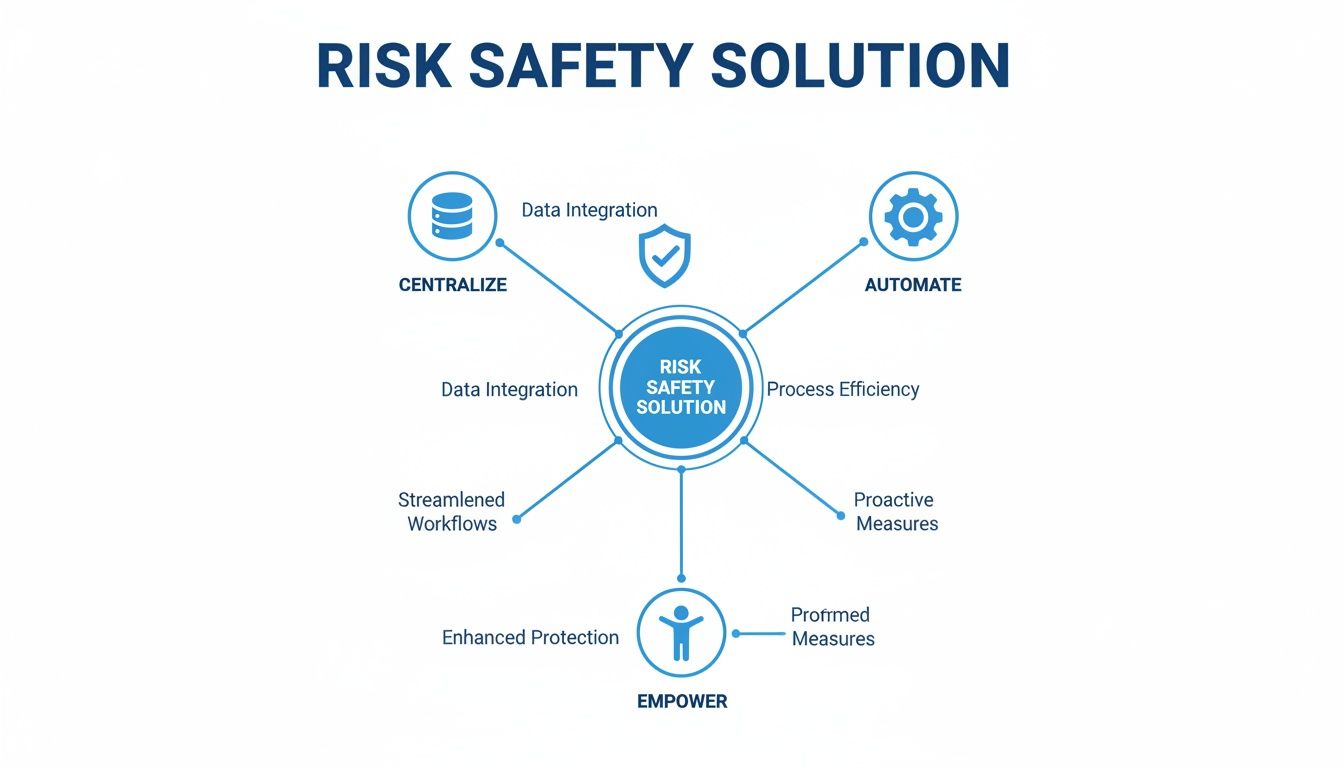
As you can see, it's not about having one or two of these features. It's about how they all work together to create a safety ecosystem that protects your team at every step.
Automated SDS Management and AI Data Extraction
Let's be honest, nobody has time to manually type data from a 16-section Safety Data Sheet into a clunky spreadsheet. And frankly, they shouldn't have to. A top-tier platform automates this entire process.
Just upload an SDS, and its AI engine gets to work, instantly scanning and pulling out dozens of critical data points. We’re talking CAS numbers, hazard classifications, first-aid measures, and more, all extracted in seconds. This isn't just a time-saver; it’s a lifesaver. It wipes out the inevitable human errors from manual entry and ensures your database is clean from the start.
If you want to dig deeper into how this works, our guide on SDS management software breaks it all down.
Real-Time Regulatory Monitoring
Keeping up with the alphabet soup of changing regulations is a full-time job. A modern platform acts as your 24/7 watchdog, automatically screening every chemical in your inventory against hundreds of global and regional regulatory lists.
This isn't just a one-and-done check. The system continuously monitors for changes to major frameworks like:
- REACH (Registration, Evaluation, Authorisation and Restriction of Chemicals)
- California’s Proposition 65
- Substances of Very High Concern (SVHC)
- The TSCA (Toxic Substances Control Act)
If a substance you use gets added to a list or its classification changes, you get an alert. Instantly. This proactive monitoring keeps you ahead of compliance deadlines and audit headaches, saving you from potentially massive fines.
Exposure-Based Risk Scoring
Knowing a chemical is hazardous is one thing. Understanding how dangerous it is in your facility, handled by your team, is something else entirely. An advanced risk safety solution calculates exposure-based risk scores to give you that real-world context.
This changes the conversation from "what's the hazard?" to "what's the actual risk to my people?" It looks beyond the SDS to consider factors like the quantity you use, how often you use it, and the safety controls you already have in place.
This data-driven approach lets you prioritize what matters most. You can focus your time, training, and resources on the highest-risk scenarios instead of guessing where the next incident might come from.
GHS and CLP Compliant Labeling
Creating compliant labels for secondary containers is a classic compliance headache. It's tedious and full of opportunities for error. A good platform makes this incredibly simple by automatically generating GHS/CLP-compliant labels right from the SDS data.
In just a few clicks, your team can print perfectly accurate labels with the correct pictograms, signal words, and hazard statements. It’s a small feature that plays a huge role in preventing accidents and satisfying regulators.
Chemical Storage and Compatibility Checks
Storing the wrong chemicals next to each other can lead to fires, toxic fumes, or worse. An intelligent safety platform acts as a digital chemist, running automated storage compatibility checks to prevent these disasters before they happen.
When you add a new chemical, the system instantly cross-references it with everything else stored nearby. If it finds a potential conflict based on established segregation rules, it flags it immediately, helping you organize your storage areas safely. For those wanting to learn more about the fundamentals, resources on Health Safety Management Systems offer valuable information.
Proactive Procurement Checks
The best way to control a risky chemical? Don't let it in the door. The most advanced platforms integrate safety directly into your purchasing process.
Before your procurement team even places an order, they can run the chemical through the system. The platform will instantly check if it's restricted, banned, or requires special handling you're not prepared for. This simple step stops problems at the source, protecting your team and simplifying compliance from day one.
The difference between managing safety with a modern platform versus outdated manual methods is night and day. One empowers you with proactive, data-driven tools, while the other leaves you reactive and exposed to risk.
Modern Risk Safety Solutions vs. Traditional Manual Methods
| Capability | Modern Solution | Traditional Method |
|---|---|---|
| SDS Management | AI-powered data extraction from any SDS format in seconds. | Manual data entry into spreadsheets; prone to errors and omissions. |
| Regulatory Checks | 24/7 automated monitoring against hundreds of global lists with real-time alerts. | Manual, periodic checks against a few key lists; easily outdated. |
| Risk Assessment | Calculates real-world, exposure-based risk scores for prioritization. | Relies on generic hazard ratings; lacks operational context. |
| Labeling | One-click generation of GHS/CLP-compliant secondary container labels. | Manual creation using templates; high risk of incorrect information. |
| Storage Safety | Automated flagging of incompatible chemical storage combinations. | Relies on manual chart lookups and employee memory; inconsistent. |
| Procurement | Proactive screening of new chemicals before they are purchased. | Reactive process; hazardous chemicals are often identified after arrival. |
As the table makes clear, relying on traditional methods in today's complex regulatory environment is no longer a viable strategy. It’s not just inefficient—it’s a significant business risk.
How to Choose the Right Solution for Your Business
Picking a risk safety solution can feel overwhelming, but it doesn’t need to be. If you know what to look for, you can quickly separate the truly useful platforms from the ones that just have flashy marketing. Think of this as a practical checklist for finding a system that actually solves your problems.
Ultimately, you're looking for a partner, not just a product. The right platform will adapt as your company grows and regulations change, turning safety management from a chore into a genuine advantage. Let's walk through the key things to look for.
Evaluate Implementation and Data Migration
The first real test of any new software is getting it running. A clunky or drawn-out implementation can kill a project's momentum, leaving your team frustrated and delaying any real return on your investment. A smooth start is everything.
When you're talking to potential vendors, be direct. Ask them, "What’s your process for migrating our data, and how much of that work falls on us?"
A good partner will have a well-oiled machine for pulling in your existing SDS library, whether it's in spreadsheets or an old system. They should handle the heavy lifting, ensuring the transition is quick and accurate so you can start using the platform right away.
Scrutinize the Regulatory Database
A platform's real value comes from its regulatory intelligence. If its database is limited or out-of-date, it completely misses the point of automating compliance. You need a system that's both comprehensive and constantly updated.
Dive deep into how they handle regulatory monitoring.
- Global and Regional Lists: Does the system cover major international regulations like REACH and CLP? What about specific state-level rules like California’s Proposition 65?
- Update Frequency: How long does it take for new or updated regulations to show up in the platform?
- Alerting Mechanism: How will you know when a chemical you’re using is suddenly affected by a regulatory change?
Your ideal solution is a watchdog, keeping an eye on thousands of regulatory lists so your team doesn't have to.
Assess AI and Automation Sophistication
Let's be clear: not all "AI" is the same. Some systems just offer basic automation, while others provide intelligent tools that fundamentally change how you work. You want features that get rid of the most tedious manual work, like hand-keying data from Safety Data Sheets. A truly powerful AI should be able to read an SDS and instantly pull dozens of data points without mistakes.
Here's a great question to ask a vendor: "Show me how your AI processes a complex or poorly formatted SDS. How much manual cleanup is typically needed afterward?"
This is where you can separate the contenders from the pretenders. A sophisticated system saves hundreds of hours of admin work and, more importantly, reduces the human error that can cripple a safety program. You can learn more about how this technology impacts day-to-day work in our guide to chemical inventory management software.
Confirm Mobile Accessibility and Integrations
Safety information that's stuck on a desktop in an office is practically useless in a real-world incident. Today, mobile access via QR codes is non-negotiable. Any employee should be able to scan a container with their phone and get immediate access to critical safety data.
Beyond that, a modern risk safety solution can't be an island. It has to talk to your other business systems. Ask about integrations with your ERP or procurement software. This is what enables powerful features like procurement checks, which can automatically flag and block a non-compliant chemical at the purchasing stage—before it ever even gets to your facility. This kind of connectivity makes your safety platform a central part of your operations, not just another piece of software.
Your Implementation Roadmap to Proactive Safety
Rolling out a new risk safety solution shouldn't feel like a daunting IT project that grinds your operations to a halt. The best platforms are designed for a structured, manageable rollout that starts delivering value almost immediately. It’s less about wrestling with complicated technology and more about a logical, step-by-step process that gets your team on board and delivers a fast return on your investment.
A smooth implementation is what turns a powerful tool into a core part of your daily safety culture. Before you can build a better future, you need a clear picture of where you stand today. That’s why a solid implementation roadmap always starts with a gap assessment to pinpoint what's working and what isn't. You can dive deeper into this with the modern guide to the gap assessment process.
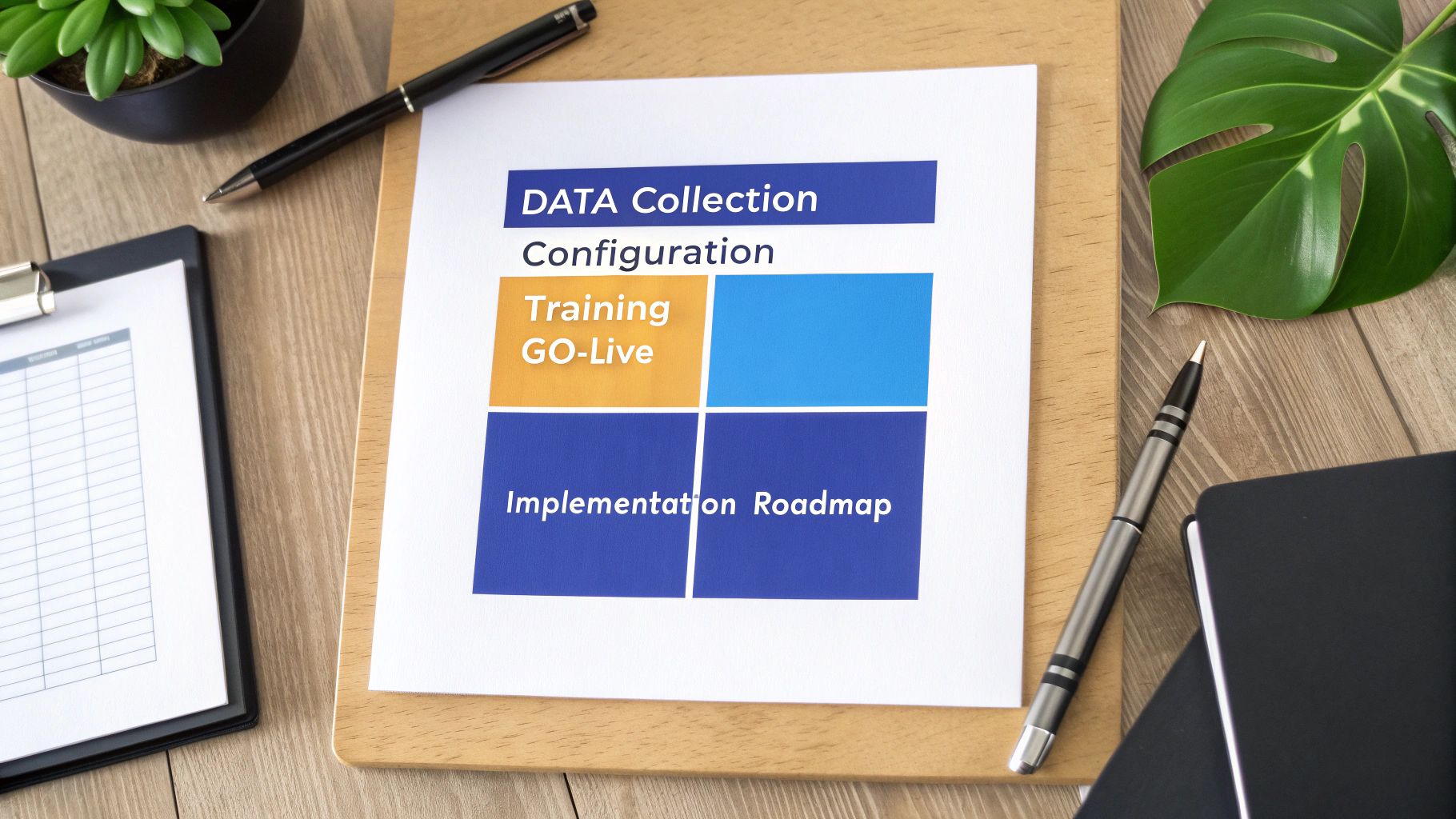
From there, the journey is typically broken down into four distinct phases, all designed to make the transition as seamless as possible.
Phase 1: Data Collection and Migration
First things first: we need to round up all your existing Safety Data Sheets. It doesn't matter if they're buried in spreadsheets, scattered across shared drives, or locked in an old, clunky system. Your vendor should handle the heavy lifting here. This phase is all about getting your chemical data out of those silos and into a single source of truth.
A dedicated implementation team takes charge of the bulk upload, making sure every document is properly loaded into the new platform. This initial migration creates the clean, organized, and searchable chemical library that will become the backbone of your new safety process. The point is to get your data where it needs to be, not to create a pile of busy work for your team.
Phase 2: System Configuration and Customization
With your data in place, it’s time to dial in the platform to match how you actually work. This isn't about complex coding; it's about configuring the system to reflect your company's structure and safety protocols. Key activities here usually include:
- Defining User Roles and Permissions: You get to decide who sees what. Control who can view, add, or manage chemical data, giving the right people the right level of access.
- Setting Up Custom Alerts: Tell the system what you care about. Configure notifications for specific regulatory lists or risk thresholds that matter most to your operations.
- Organizing by Location: Map your inventory to the real world. You can structure it by site, building, or even down to a specific storage cabinet for pinpoint accuracy.
The goal of configuration is to make the platform feel like it was built just for you. It should fit into your workflows, not force you to change them.
Phase 3: Team Training and Onboarding
Great technology is only as good as the people using it. That’s why a crucial part of any rollout is solid training that empowers everyone, from the lab technicians and warehouse staff to the folks in procurement. This step is all about making sure your team feels confident and ready to use the new tool from day one.
Modern training isn’t one-size-fits-all. It should be role-based, focusing on the specific features each person will use most often. This targeted approach keeps the information relevant and easy to absorb, which is key to getting everyone on board and driving immediate adoption across the company.
Phase 4: Go-Live and Initial Monitoring
This is it—the official launch. Your data has been migrated, the system is configured, and the team is trained. You’re ready to go live. But the work doesn't stop when you flip the switch. The first few weeks are all about monitoring how the system is being used and tracking key metrics to prove its value.
You’ll want to watch numbers like the time saved searching for an SDS, the number of proactive compliance alerts you're getting, or improvements in inventory accuracy. This data gives you hard evidence of the platform's impact and helps cement its role as a must-have safety asset. A good partner will stick with you through this transition, ensuring a smooth start and setting you up for long-term success.
The Tangible ROI of a Modern Safety Platform
Investing in a modern risk safety solution isn't just about ticking a compliance box. It's a smart business move that delivers a clear, measurable return. While keeping your team safe is always the number one priority, the financial and operational perks turn safety from a cost center into a real competitive advantage.
The most obvious payback is the massive cut in administrative busywork. Just think about the hours your team sinks into manually keying in data from Safety Data Sheets, checking them against endless regulatory lists, and scrambling to find documents for an audit. An automated platform does all that in seconds. This frees up your skilled EHS pros to focus on what really matters—improving safety protocols and training, not drowning in paperwork.
Minimizing Fines and Operational Disruptions
Let's be blunt: the financial risk of non-compliance is steep and getting steeper. Fines for breaking the rules can easily hit tens of thousands of dollars per day. Even worse, a shutdown from a failed audit or a safety incident can be a business killer. A good platform is your best insurance policy against these disasters.
By giving you real-time alerts on regulatory changes and flagging non-compliant chemicals before they’re even ordered, the system helps you get ahead of problems. This is about more than just dodging fines; it’s about building a resilient business that can run smoothly without costly, unexpected interruptions.
A modern safety platform shifts your entire approach from reactive damage control to proactive risk prevention. You stop managing incidents and start building a system where they're far less likely to happen at all.
The Financial Imperative to Digitize Safety
The market itself tells a powerful story. The global chemical safety and regulations market hit a staggering $2.8 billion in North America alone. That’s a huge investment companies are making just to keep up. This market is set to grow at a CAGR of 11.10% through 2033, which signals a massive industry-wide move away from manual spreadsheets.
As enforcement gets tougher—with customs officials now detaining non-compliant imports—businesses clinging to old methods risk having their products turned away at the border. You can explore more data on global chemical regulation trends and see why safety is now a key competitive edge.
Strengthening Your Supply Chain and Safety Culture
The benefits don't stop at your front door. When you build safety checks directly into your procurement process, you create a stronger, more reliable supply chain. You can screen new suppliers and materials for compliance right from the get-go, stopping hazardous or restricted chemicals from ever becoming a problem. This forward-thinking approach keeps operations running smoothly and protects your brand’s reputation.
Ultimately, giving your team instant, easy access to safety information builds a powerful safety culture. When any employee can scan a QR code on a container and immediately get handling instructions and PPE requirements, they feel empowered and valued. This leads to fewer incidents, higher morale, and a more engaged team—a return that you can't always measure on a balance sheet, but you'll definitely feel. Seeing these benefits firsthand is the best way to understand their impact. With a platform like NextSDS, you can move from theory to reality.
Answering Your Questions About Risk Safety Solutions
When you're thinking about moving on from spreadsheets and binders, a lot of questions pop up. It's only natural. Let's walk through some of the most common ones we hear from people trying to get a handle on their chemical safety.
How Long Does This Actually Take to Set Up?
This is usually the first question, and it's a good one. Nobody wants a project that drags on forever. The good news is, getting started with a modern platform isn't some massive IT nightmare. It's a focused, step-by-step process.
For most companies, we can get your core Safety Data Sheet (SDS) library moved over and your team set up with basic access in just a few weeks. The whole idea is to get you a "quick win." We focus on getting your most critical data into the system first so your team can immediately start using it and see how much easier things are. From there, we can tackle the more advanced stuff, like connecting to your ERP system, in later phases.
A well-managed setup should get you a central, searchable SDS library in under 30 days. The goal is to deliver real value, fast, and then build on that solid foundation.
Can These Platforms Keep Up With Global Regulations?
Absolutely. In fact, this is one of the biggest reasons people make the switch. Business doesn't stop at the border, and neither do regulations. Any worthwhile solution is built on a massive, constantly updated database of global, national, and even regional regulatory lists. This isn't just a nice-to-have; it's essential.
We're talking about all the major frameworks you need to worry about:
- REACH and CLP in Europe
- OSHA and TSCA in the United States
- WHMIS in Canada
- Even state-specific rules like California's Proposition 65
The system should automatically check every chemical in your inventory against these lists. If a substance you're using gets flagged on a list anywhere in the world, you should get an alert right away. For any company that sells or operates internationally, this kind of global watchdog is non-negotiable.
Is This Really Affordable for a Smaller Business?
Yes, because the real question is, "Can you afford not to?" The cost of a single fine, a production shutdown, or a workplace accident can be crippling for a small or mid-sized business.
Modern risk safety solutions are almost always sold as a subscription service (SaaS), which means you don't have to shell out a huge amount of cash upfront for hardware or software licenses. You pick a plan that makes sense for your size and budget, and it can grow with you.
Think about the return on that investment. When you add up all the hours your team gets back from tedious administrative work, the fines you avoid, and the prevention of one single costly incident, the platform pays for itself. It’s not just a cost—it’s an investment in keeping your business running smoothly and your people safe.
Ready to see how an intelligent safety platform can protect your team and simplify compliance? Explore NextSDS to find a smarter, more proactive way to manage chemical safety. Request a personalized demo today!